Luxury Wedding Cake Ideas: 67 Elegant Styles and Inspiration
A luxury wedding cake isn’t just dessert; it’s a centrepiece that tells your story, blending artistry, high-end ingredients, and custom design. Prices for these showstoppers usually start at $800 and can easily go beyond $4,000, especially with extras like hand-crafted sugar flowers, gold leaf, painting, or crystal details that make them stand out from the usual cakes.
Luxury wedding cakes have moved way past the classic white tiers. Couples today have a huge range of styles to consider, from dramatic metallics to bold, architectural shapes. Whether you’re into classic florals or want something modern and striking, there’s room for plenty of personal touches.
Getting familiar with what sets luxury cakes apart helps couples narrow down the options. Here, you’ll find a look at different design styles, from timelessly elegant to completely avant-garde, plus some practical stuff like flavours, budgeting, and how to collaborate with specialist bakers to get exactly what you want.

Signature Features of Luxury Wedding Cake Designs
Luxury wedding cakes really stand out thanks to details that go far beyond the basics. Think elaborate decoration, ambitious structures, and precious metal finishes that turn the cake into a true centrepiece.
Intricate Designs and Detailing
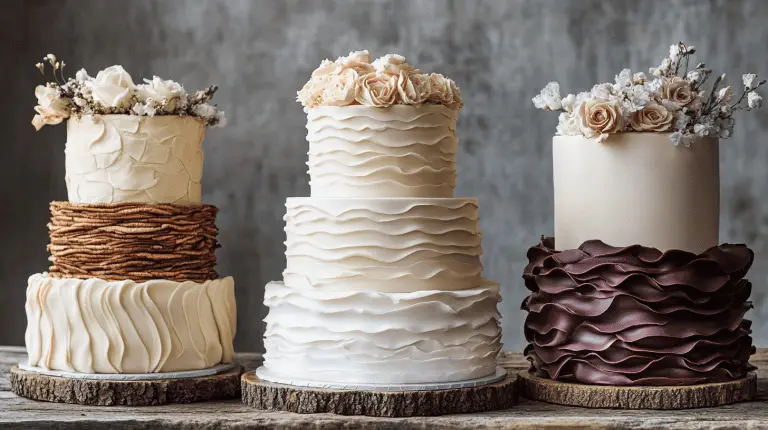
Talented cake artists often spend hours hand-piping royal icing, shaping delicate sugar work, and adding 3D embellishments. When they replicate lace from a wedding dress, it can take ages to get those textures and layers just right. Sugar flowers, made petal by petal, look surprisingly real—roses, peonies, orchids, you name it.
Hand-painted touches can turn a cake into a piece of art. Artists use food-safe paints for watercolour looks, damask patterns, or even illustrations that mean something to the couple. Bas-relief adds raised artwork right onto the fondant.
Crystal details and edible pearls bring in sparkle, either by highlighting certain features or creating a cascade down the tiers.
Statement Tiers and Shapes
While three tiers are traditional, luxury cakes often go bigger—five or more layers for more guests and a dramatic look. Shapes aren’t limited to circles, either: hexagons, squares, and even off-kilter stacks challenge the usual cake silhouette.
Floating tiers, supported by hidden structures, make layers look like they’re suspended in mid-air. Offset arrangements give a modern feel, and sculptural elements—geometric or organic—can echo the architecture of the venue itself.
Edible Metallic Accents
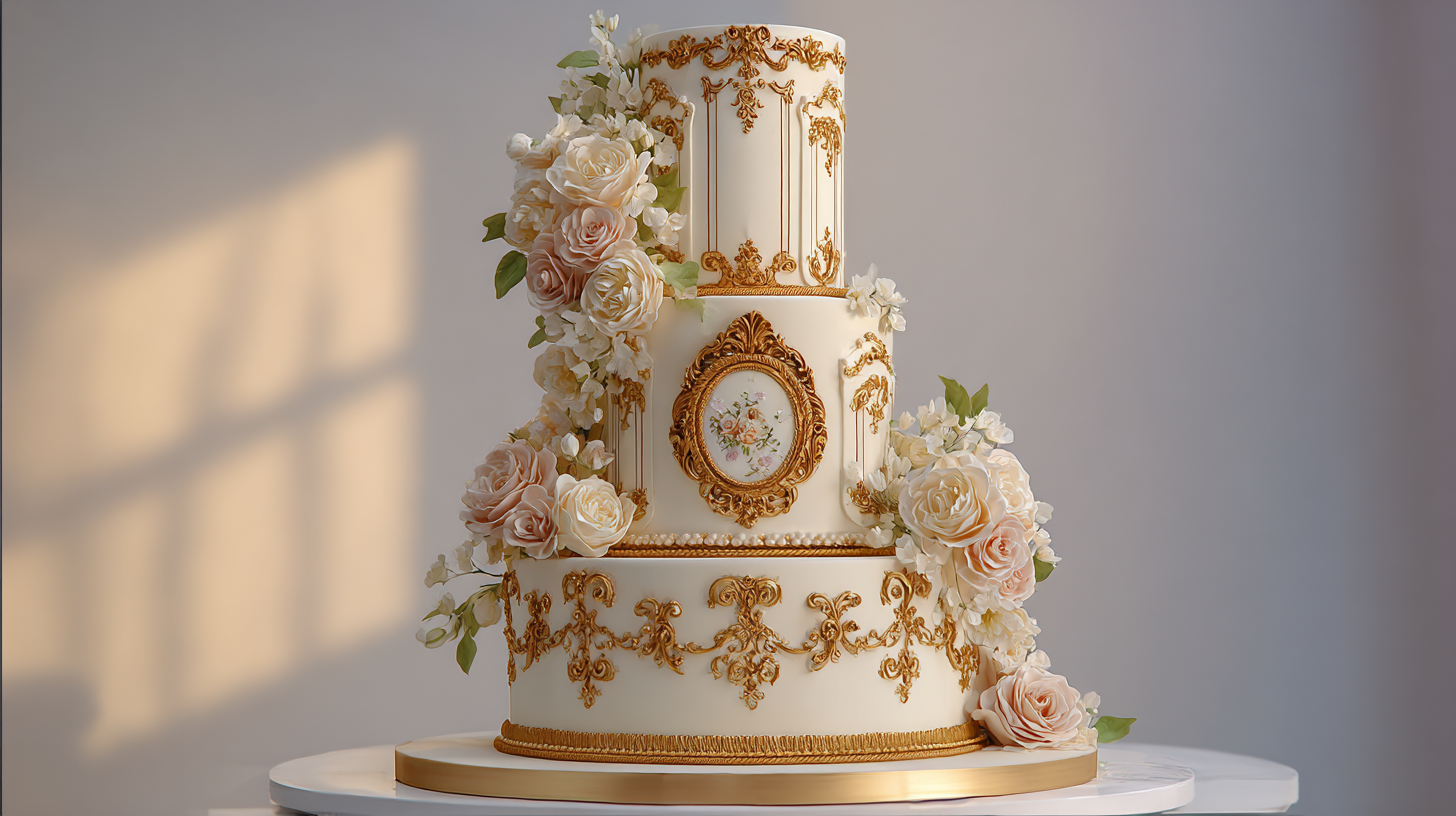
Applying edible gold leaf takes a careful hand; it’s easy to tear, but when done right, it gives a seamless metallic surface. Bakers brush it onto fondant or use fragments for textured effects. Sometimes they cover whole tiers in gold, while other times they just highlight a detail.
Silver is another favourite, either as edible leaf or brushed on with lustre dust for a cool-toned shimmer. Some cakes combine gold and silver for a modern contrast. Metallics might show up as painted strokes, drips, or geometric patterns that catch the light.
Rose gold brings warmth, landing somewhere between gold and silver. Painted metallic borders give crisp definition to the edges of tiers.
1. Classic Grand Ballroom White Wedding Cakes
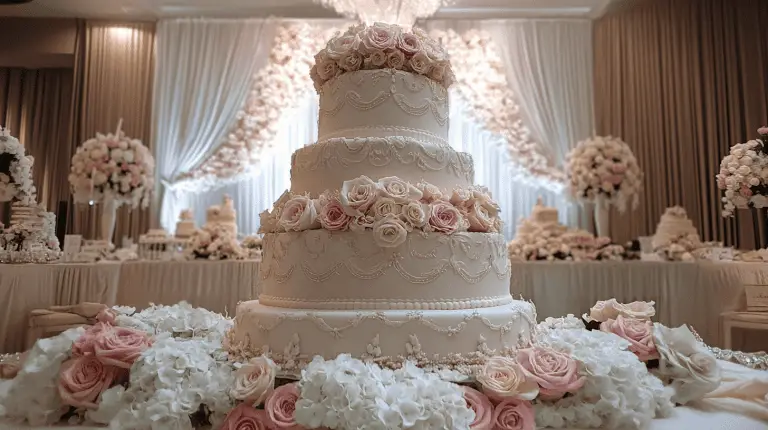
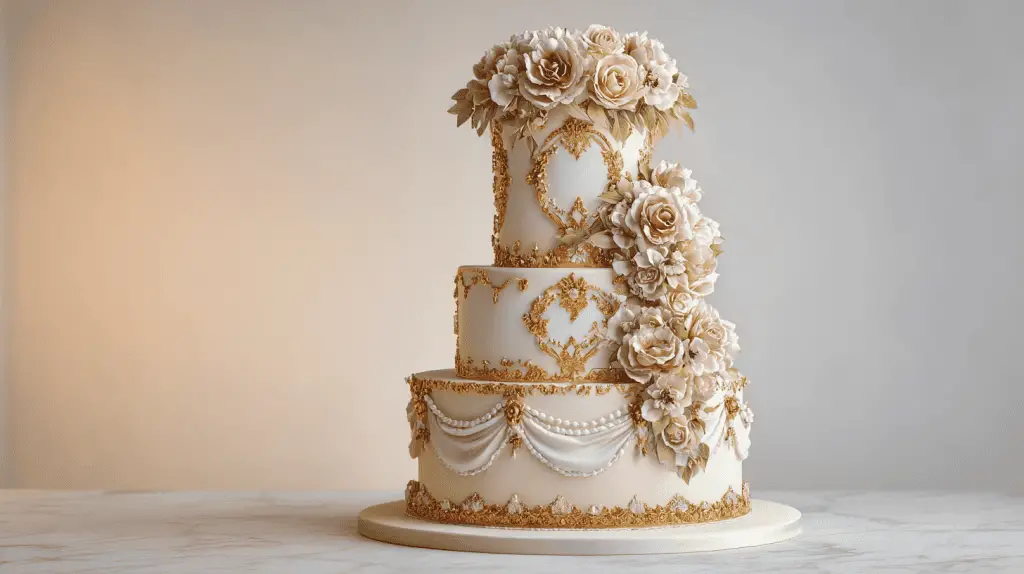
White wedding cakes still hold their place as the go-to for grand ballroom receptions. They’re timeless, fitting right in with formal venues and elevating the whole room.
Usually, these cakes have four to seven tiers, making for an impressive presence. Smooth fondant creates a flawless finish, reflecting the elegance of the event. Clean lines and sharp construction keep the look polished from start to finish.
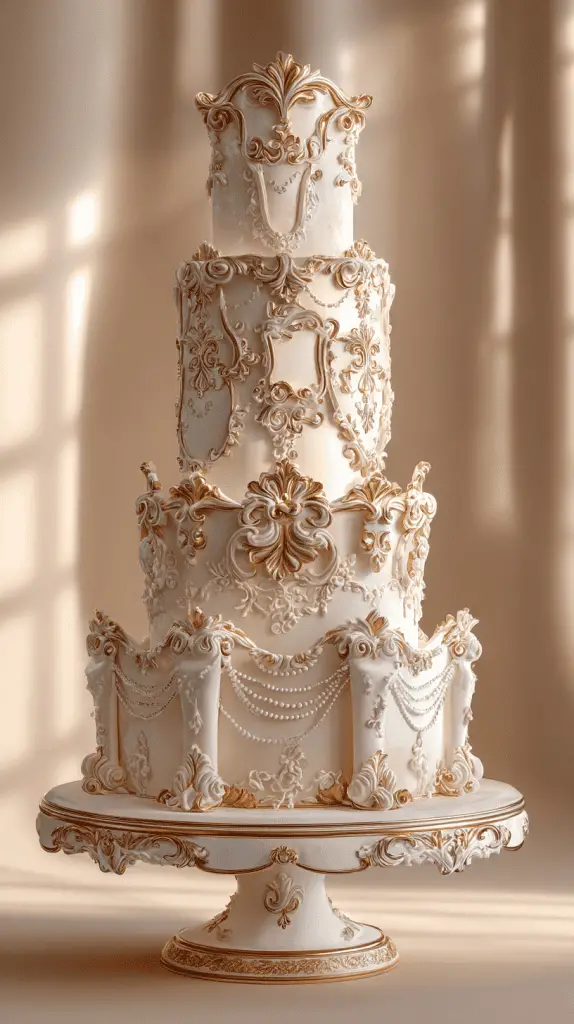


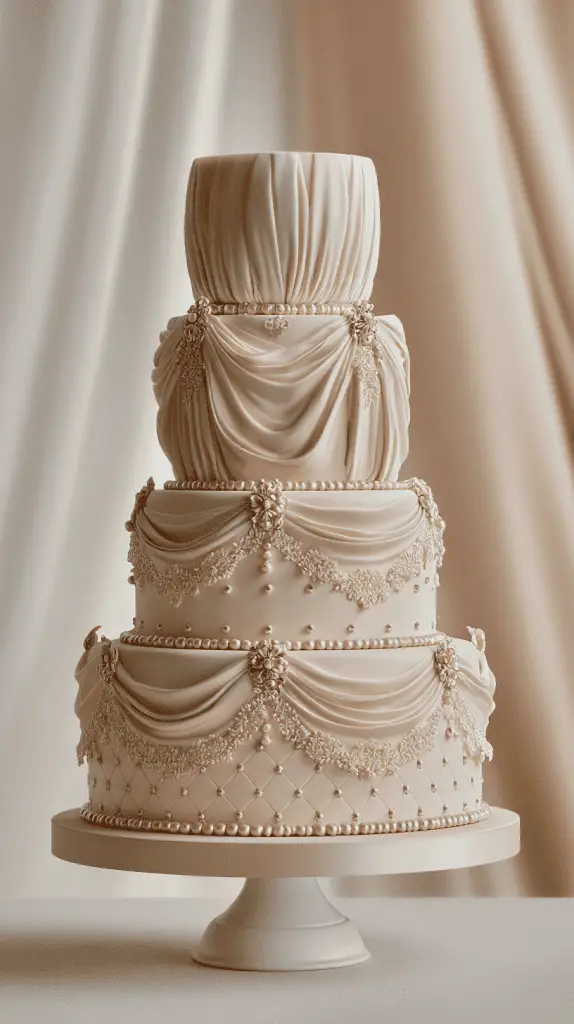
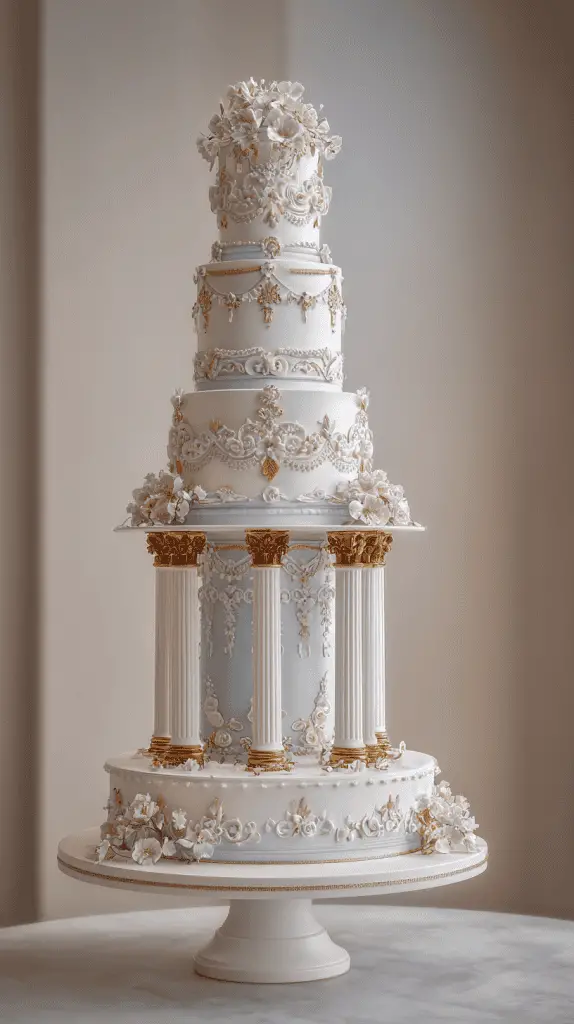
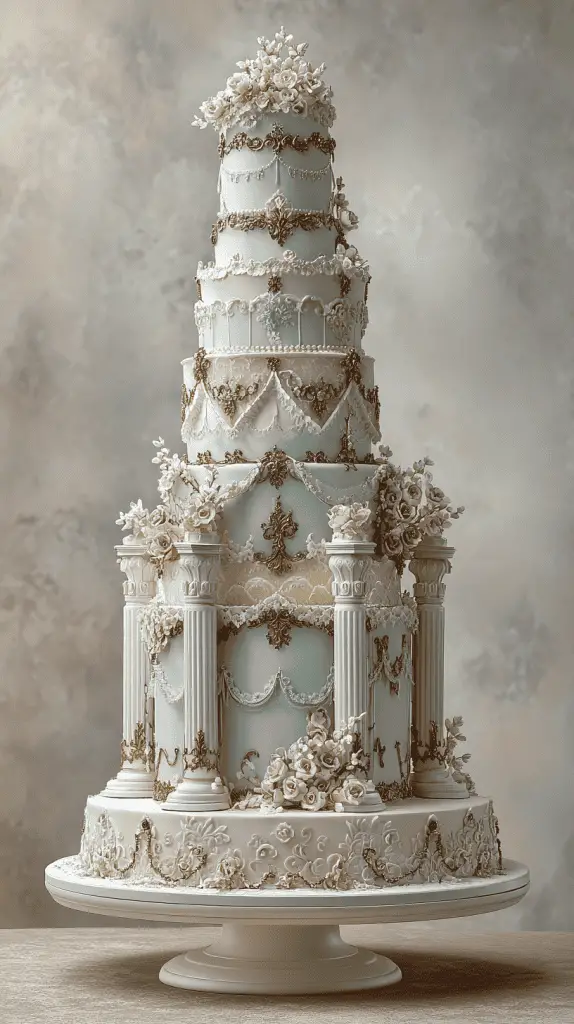
Traditional design elements include:
- Delicate piped borders and royal icing details
- Sugar flowers cascading down tiers
- Subtle textured patterns like quilting or lace impressions
- Pearl accents and elegant beading
- Architectural pillars or separators between tiers
White cakes are surprisingly flexible—you can go stark white for a modern vibe or choose ivory or cream for something warmer and more classic.
These grand cakes often feature structural touches that boost their stately feel. Tiers in gradually changing sizes keep the look balanced, and the smooth fondant reflects the ballroom lighting beautifully. The neutral palette works with any décor, from gold and crystal to bold florals.
Getting these cakes right takes real skill. Fondant needs to be flawless, and every detail should show off the baker’s craftsmanship. Transport and setup can be tricky too, especially since big venues usually have strict delivery and presentation rules.
2. Gilded & Metallic Showpiece Cakes
Metallic finishes turn wedding cakes into bold showpieces that grab attention. Gold, silver, and copper details reflect light, bringing drama and looking incredible in photos.
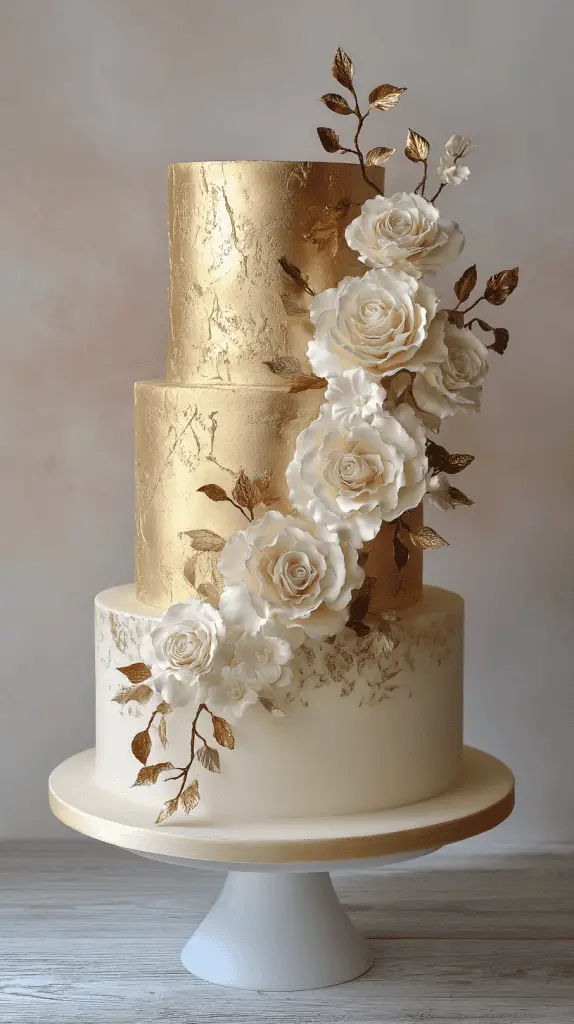
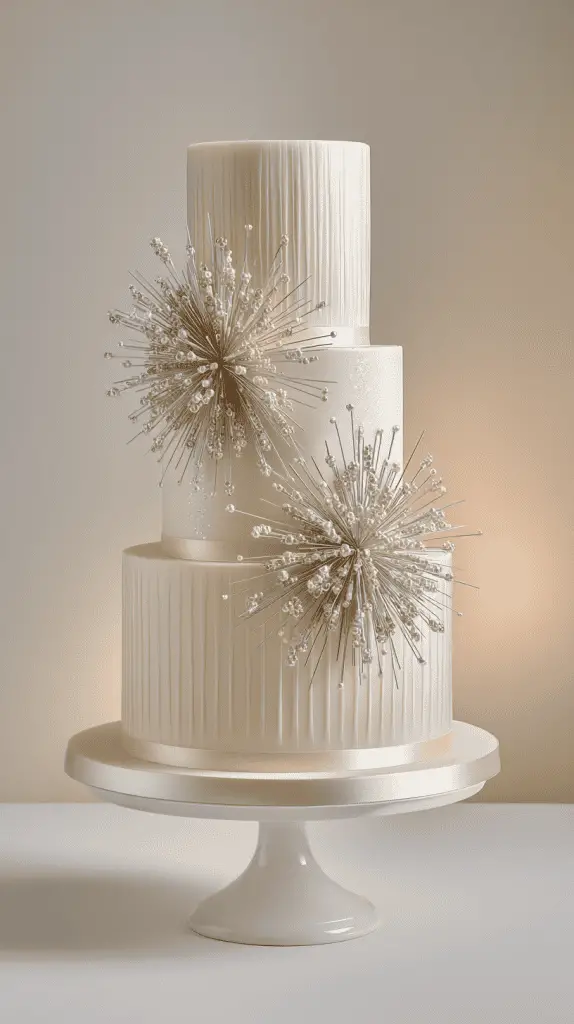
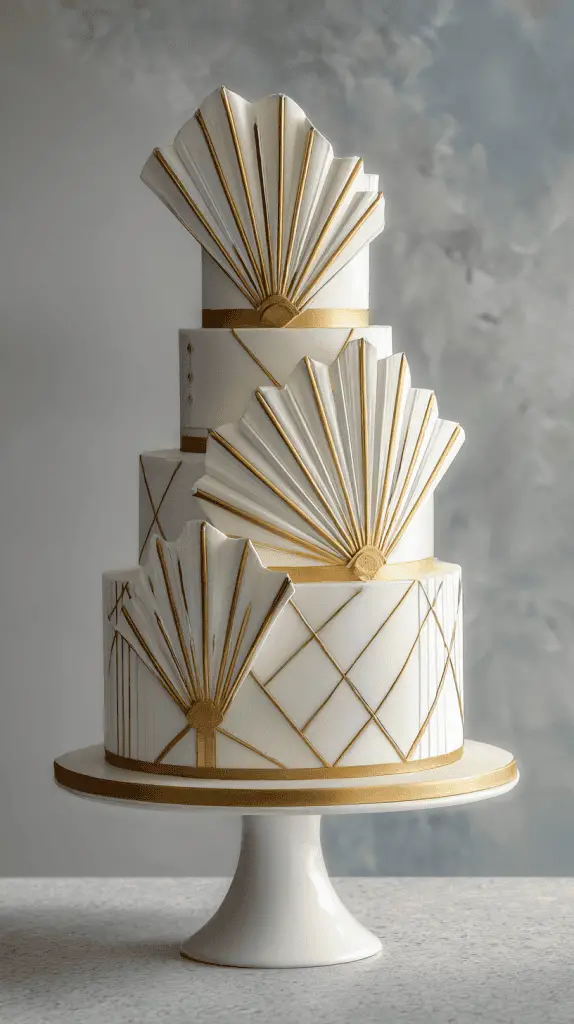
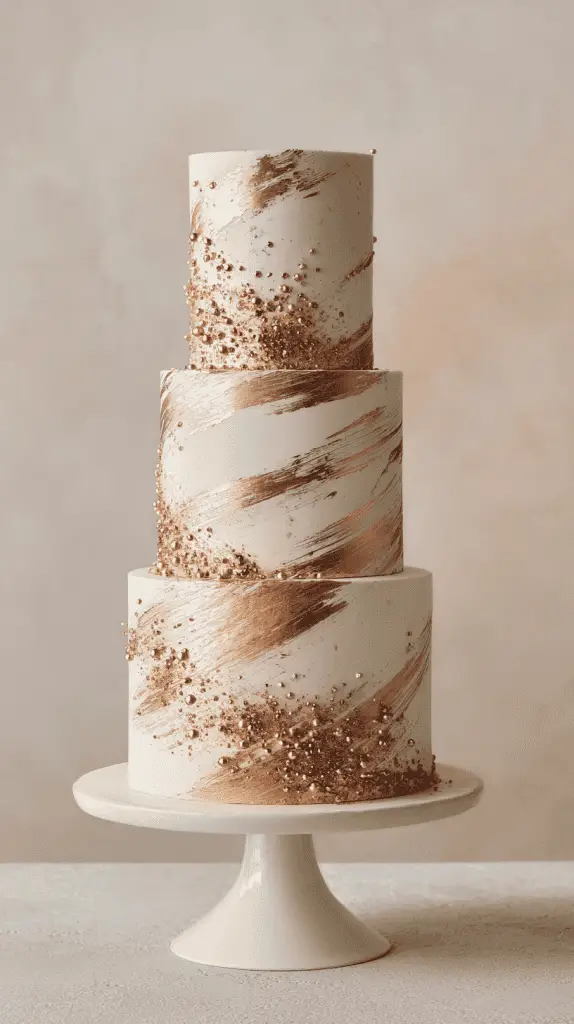

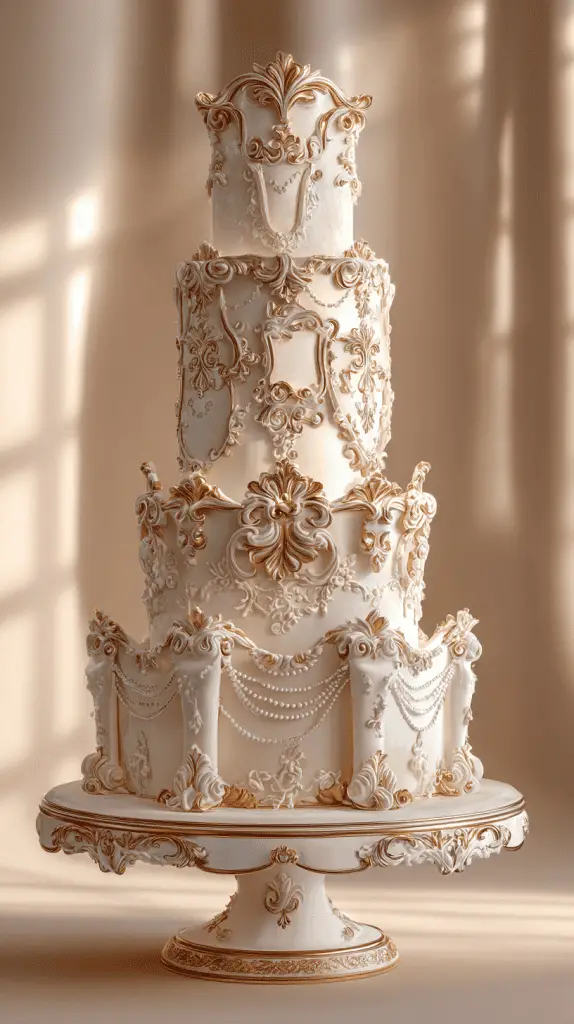
Popular Metallic Applications:
- Edible gold leaf applied in sheets or flakes for full coverage
- Metallic lustre dust brushed onto fondant for subtle shimmer
- Gold paint hand-applied for intricate patterns and designs
- Metallic foil pressed into buttercream or ganache for texture
Adding a single metallic tier can make the whole cake pop, especially when paired with colours like ivory, navy, or blush. Silver looks great with marble grey or pure white, while copper pairs nicely with sage, dusty pink, or cream.
Some couples want full-on metallic, while others prefer just a few accents. Scrollwork, geometric designs, and piped details really come alive with a touch of gold. Quilted fondant gets more depth with metallic edges, and pearls or stencilled patterns look extra special in shimmer finishes.
Honestly, the trick is balance. Go overboard with shine and it can look too flashy; too little, and the effect is lost. Skilled decorators know just how to spread out metallic touches for the right mix of impact and elegance.
Metallic Pairing Guide:
| Metal | Best Colour Matches |
|---|---|
| Gold | Ivory, blush, navy, black, burgundy |
| Silver | White, grey, ice blue, lavender |
| Copper | Sage, dusty pink, cream, terracotta |
| Rose gold | Champagne, nude, soft peach, taupe |
3. Crystal, Gemstone & Pearl-Encrusted Cakes
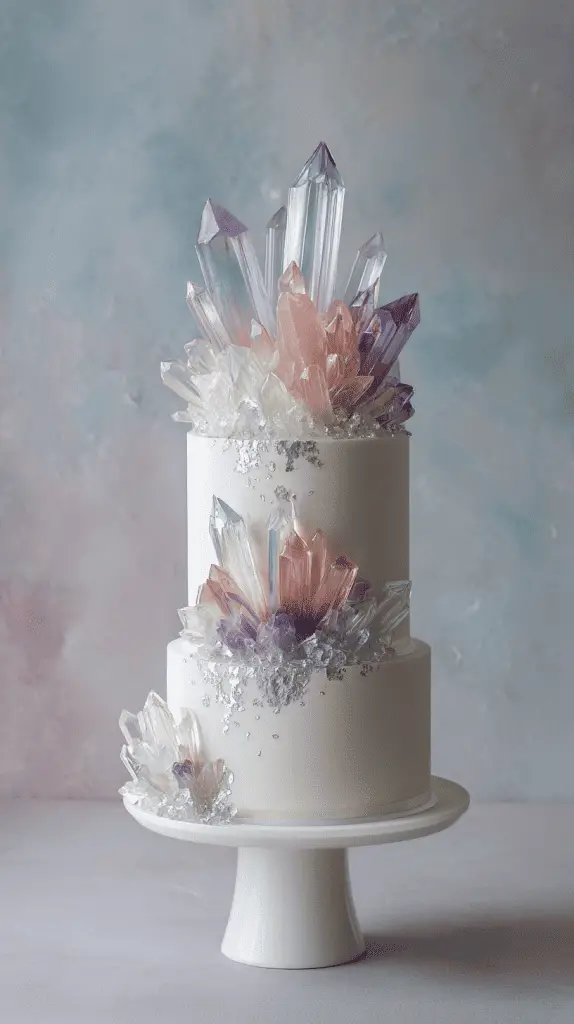
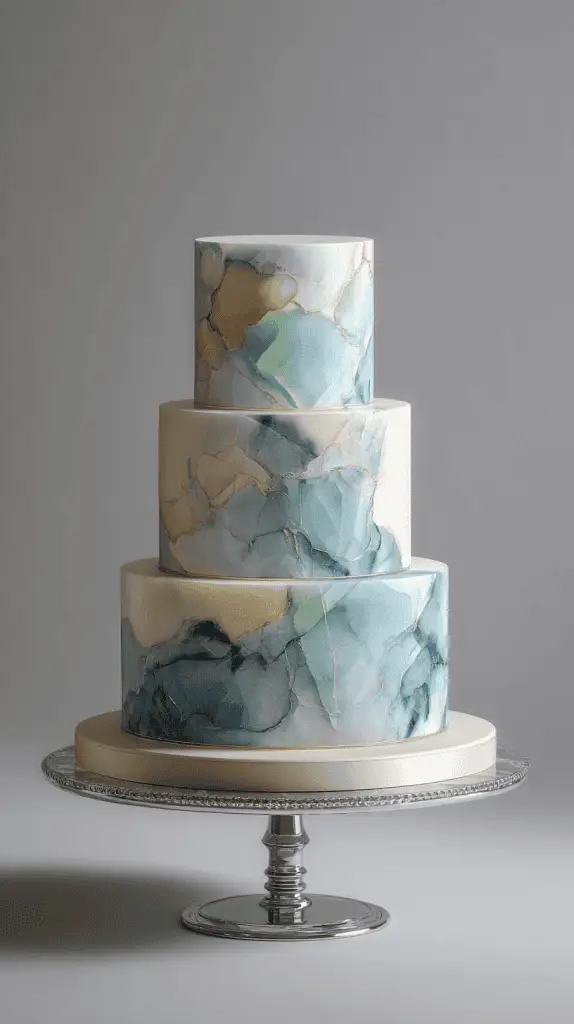
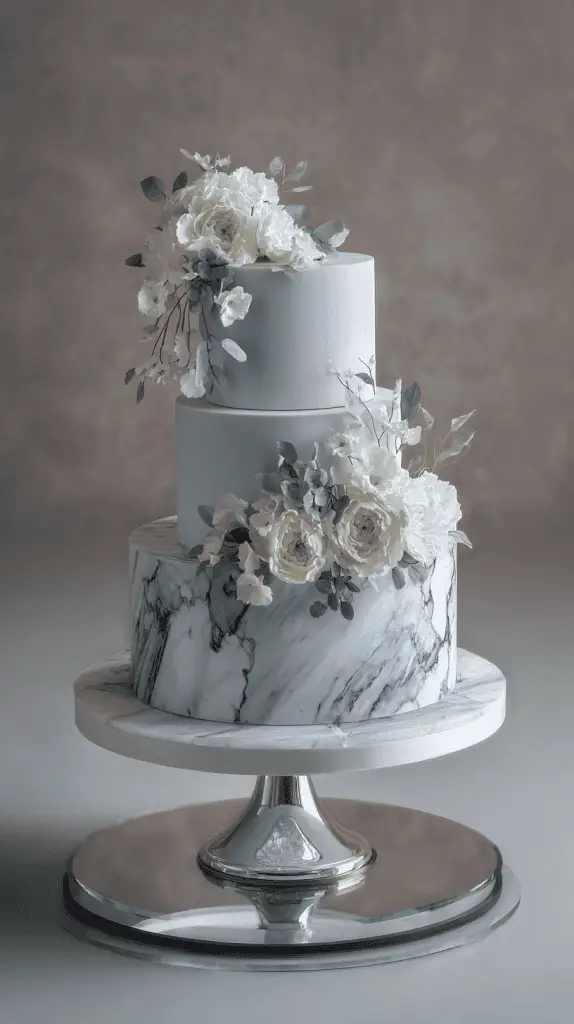
Edible pearls, crystals, and gemstones can turn a wedding cake into a sophisticated centrepiece that plays with light in all the right ways. These decorations add texture and depth, but still keep things elegant.
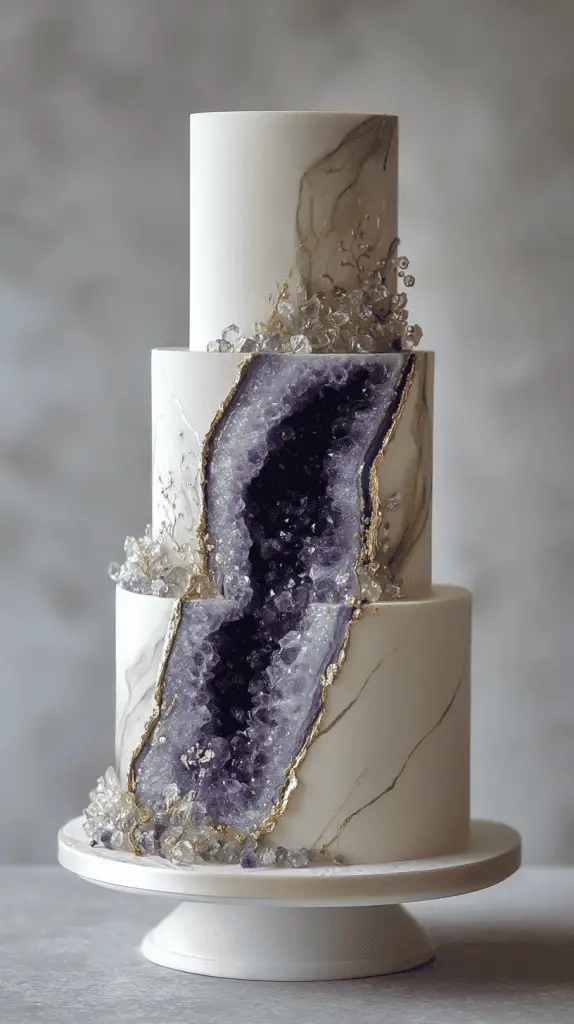
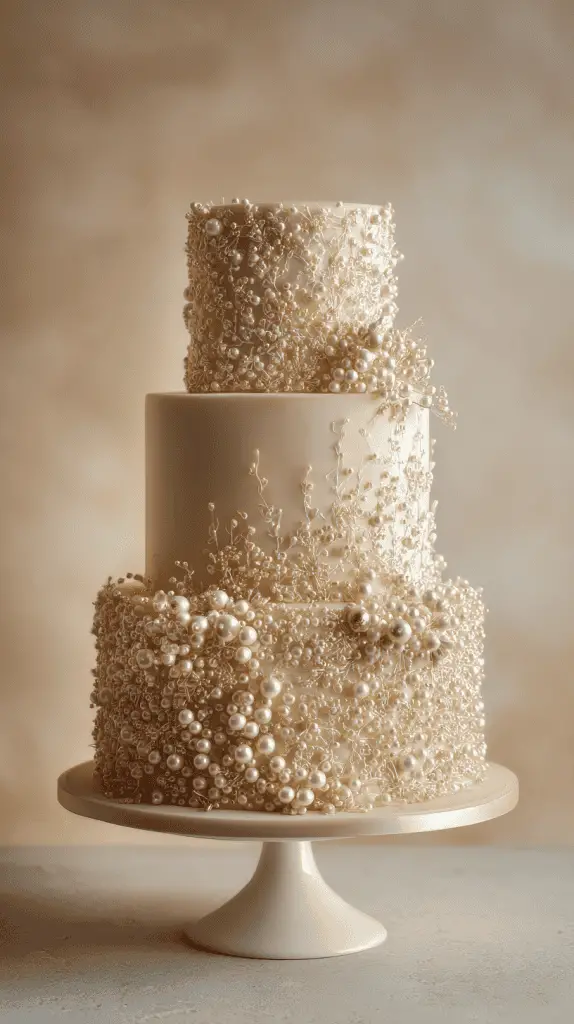
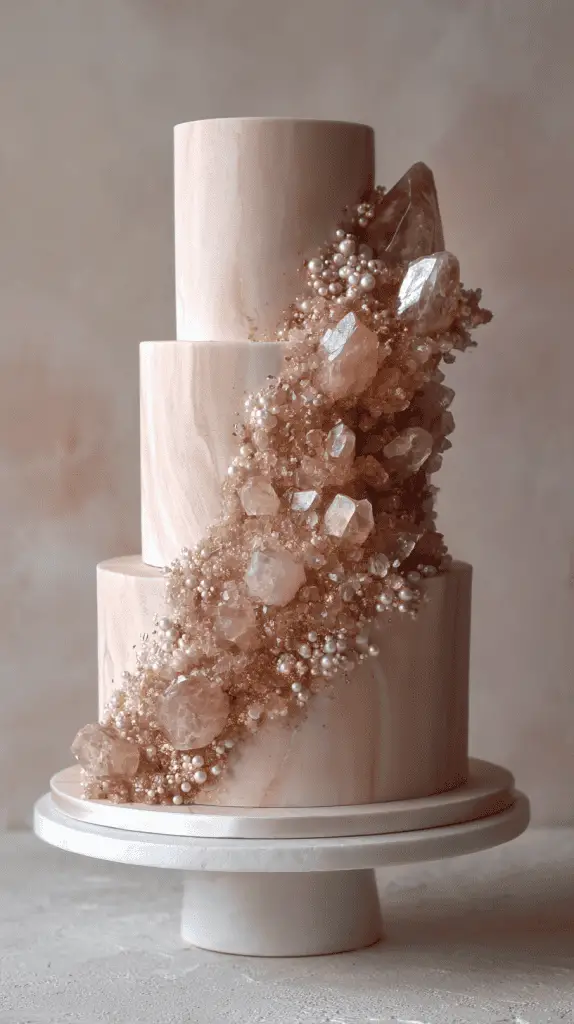
Pearl Applications
Edible pearls come in all sizes, from tiny dragées to big statement pieces. Bakers might arrange them in cascades, cluster them at the base of each tier, or scatter them for a more minimalist look. Sugar pearls are made from sugar, milk, and eggs—they’re totally edible.
Often, bakers mix pearls with other details like sugar flowers, lace, or metallics. They stick the pearls on with edible glue or syrup, so they stay put all night.
Crystal and Gemstone Details
Rock candy crystals create some seriously cool effects, especially when arranged to look like waterfalls or geodes. These edible crystals come clear or tinted to match the wedding palette.
If you want faux gemstone accents, just double-check they’re food-safe if they’re touching the cake. Some cakes have crystal-studded bands around each tier, while others use gems more sparingly.
Styling Considerations
Your choice between pearls, crystals, or gemstones should vibe with your overall wedding style. Pearls feel classic and romantic, while bold crystals suit modern themes. Mixing in metallic touches like gold or silver leaf adds even more depth and a sense of luxury.
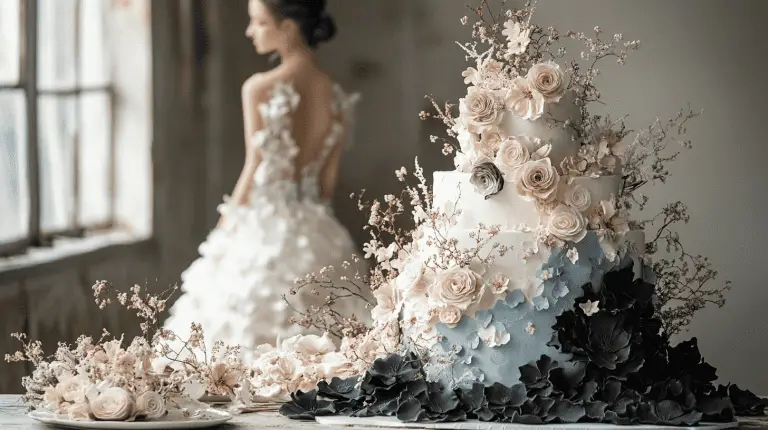
4. Lush Floral Couture Wedding Cakes
Lush floral couture cakes bring a high-fashion edge to the dessert table, with flowers taking centre stage and making a big visual impact.
Bakers use fresh flowers, sugar flowers, or sometimes both. Fresh blooms give natural scent and colour, while sugar flowers allow for more intricate detail and last longer. Seasonal flowers are a popular pick to tie in with the rest of the wedding.

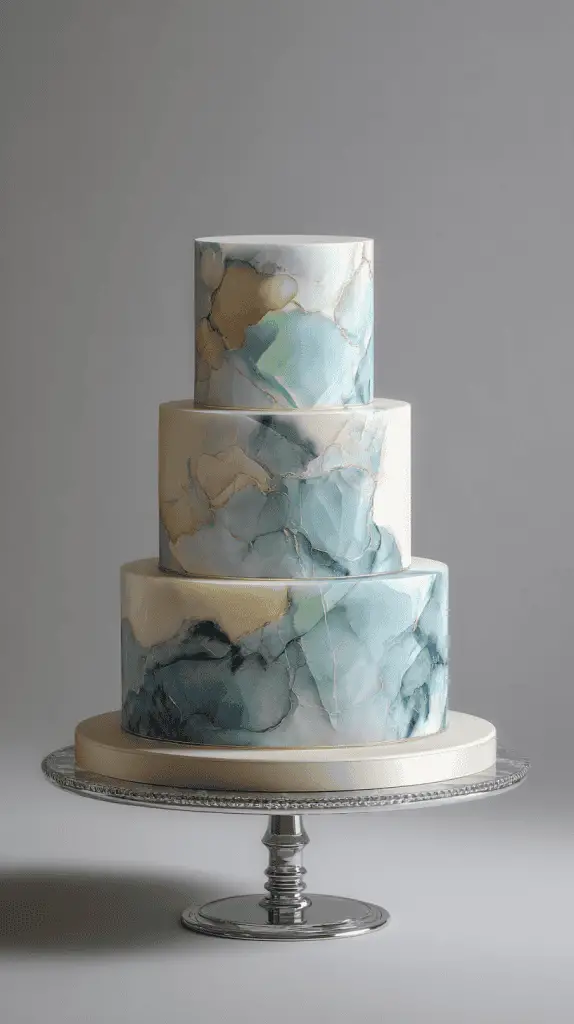
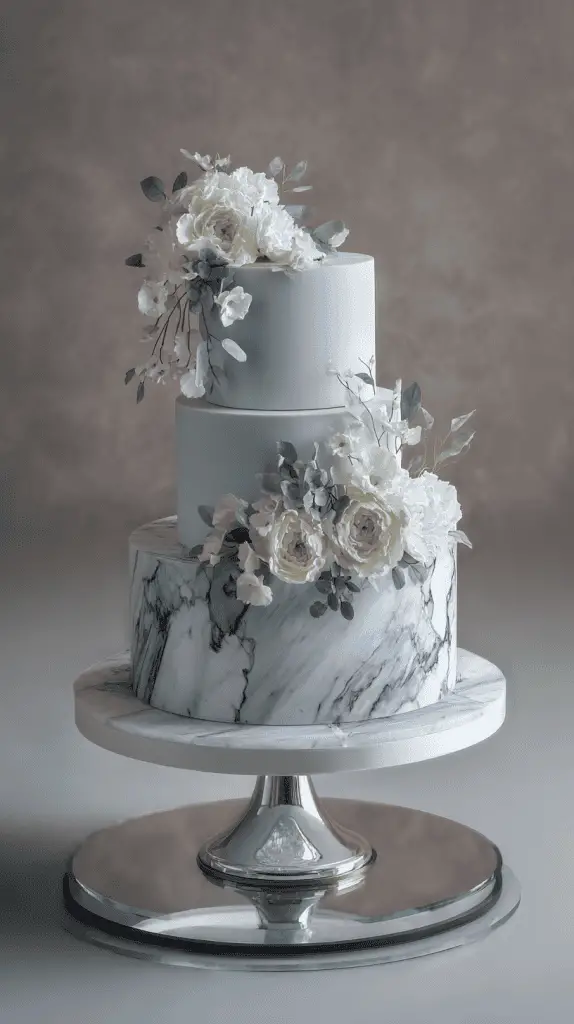
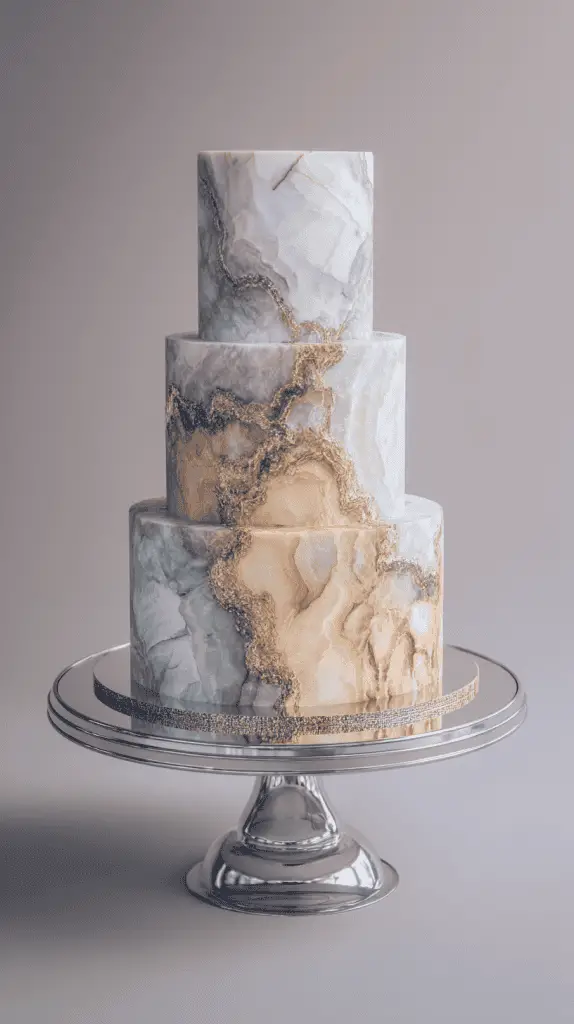
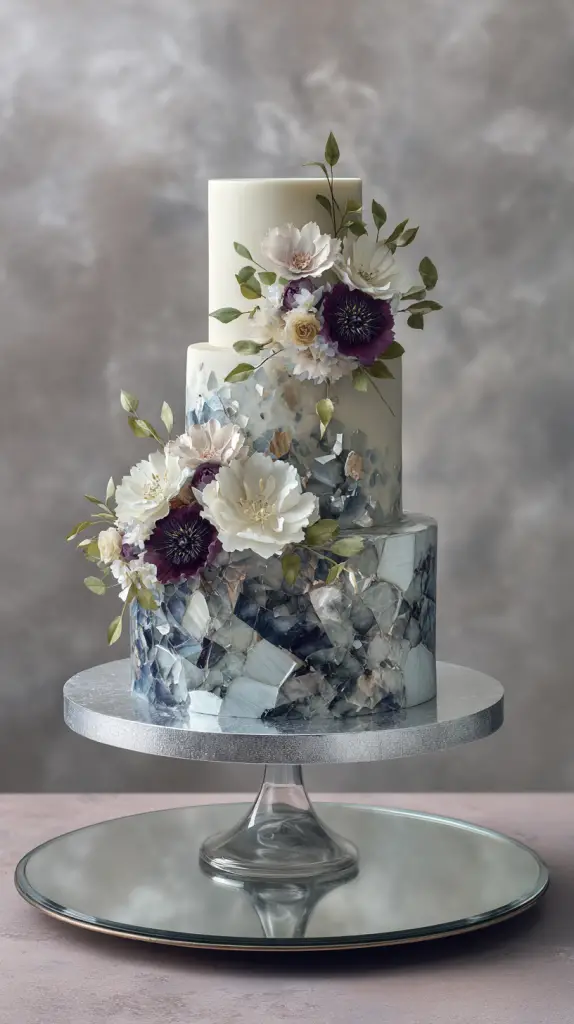

Key design elements include:
- Cascading arrangements – Flowers flow down multiple tiers in an asymmetrical pattern
- Full coverage – Dense floral application covers most or all cake surfaces
- Statement blooms – Large focal flowers like peonies, garden roses, or dahlias
- Texture layering – Mixed flower types create depth and visual interest
The colour palette can go from all-white and cream to rich jewel tones. Pastels like blush, lavender, and sage are always in demand. Sometimes you’ll see metallic touches—gold leaf or painted details—tucked in among the flowers.
These cakes are perfect for garden or outdoor weddings, or any romantic venue. The size is totally adjustable, whether it’s a small gathering or a huge party. Bakers usually team up with florists to make sure everything looks cohesive.
If you’re using fresh flowers, it’s crucial to pick food-safe varieties, clean them well, and keep them separated from the cake with barriers or careful placement.
5. Celestial & Iridescent Dream Cakes
Celestial wedding cakes bring a bit of starlight to the table, with designs inspired by moons, stars, and constellations. These cakes often feature deep navy or black bases with metallic gold or silver for a bold contrast. Hand-painted galaxies, gold leaf, and sugar-crafted lunar phases turn the cake into a true showpiece.
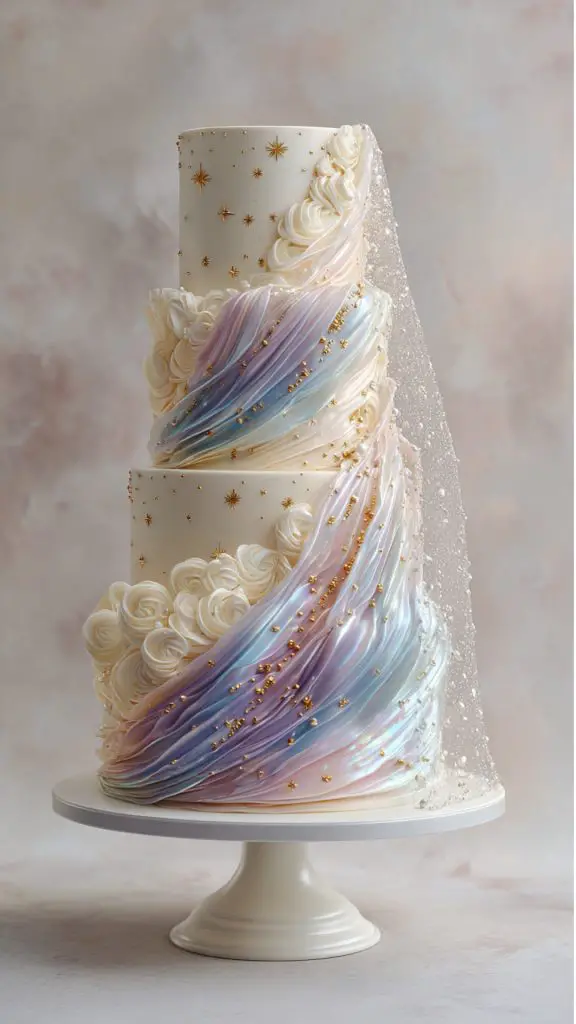

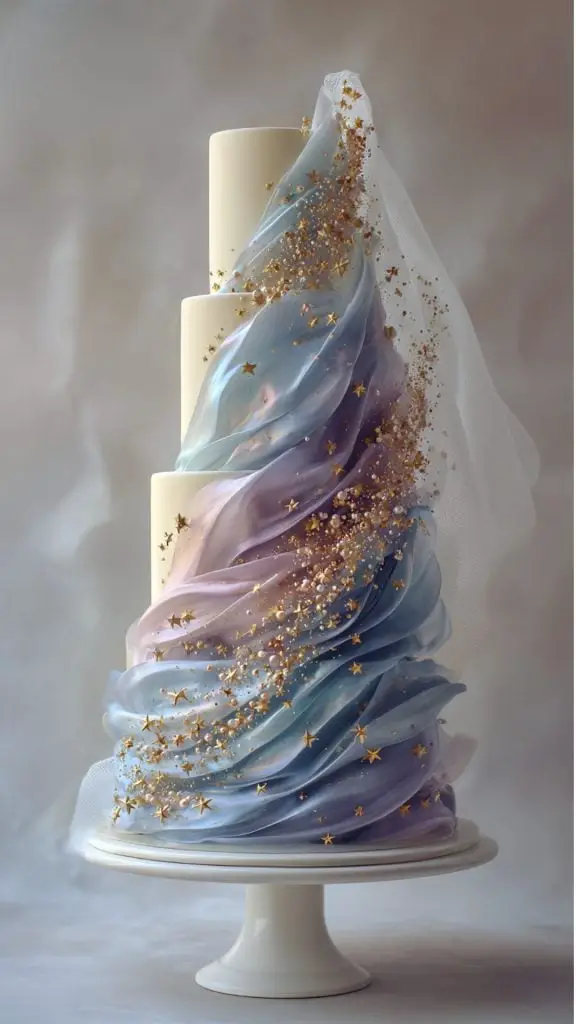
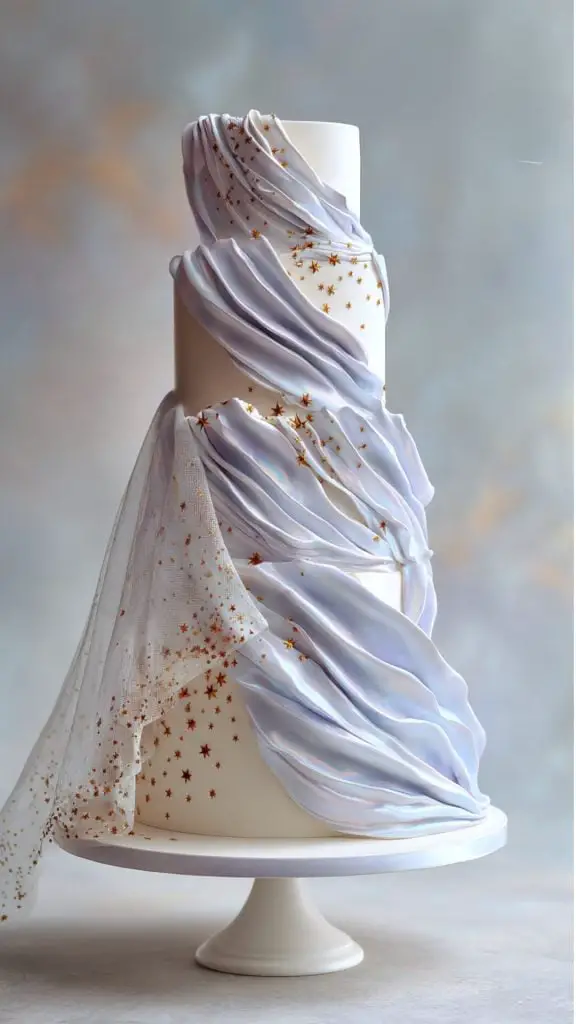

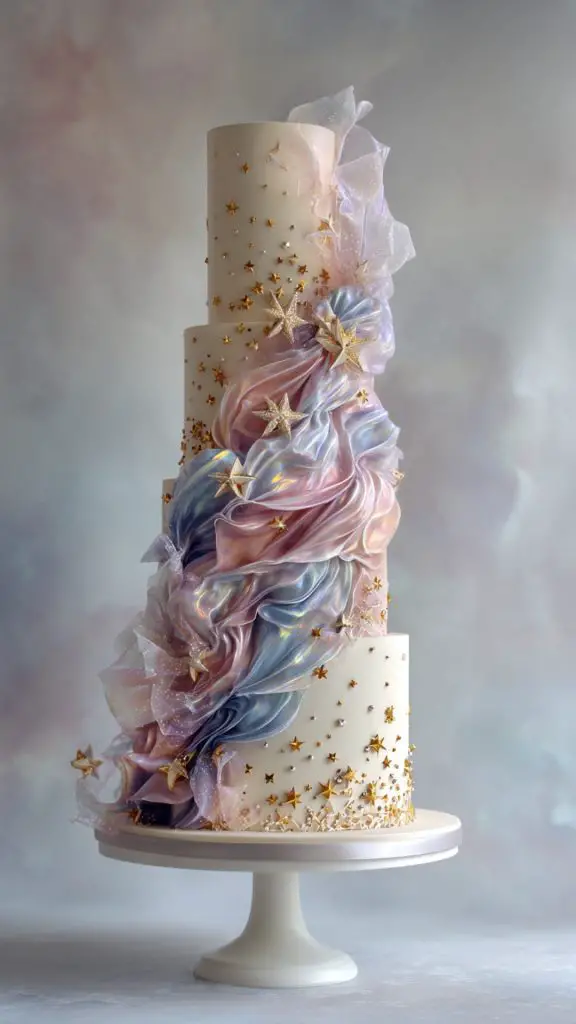
Popular celestial design elements include:
- Moon phases in vertical or horizontal arrangements
- Hand-painted constellations and star clusters
- Geode accents with crystalline sugar work
- Metallic foils in copper, gold, or silver
- Abstract galaxy swirls in deep purples and blues
Iridescent finishes add an almost magical shimmer, shifting colours in different lighting. These work beautifully on white or ivory cakes if you want a celestial vibe without going too dark. Edible glitter and shimmer sprays add to the dreamlike feel while keeping it classy.
The geometric style mixes celestial themes with modern shapes. Sharp edges and clean lines play off organic touches like dried flowers or flowing sugar blooms. Some cakes even use custom separators shaped like moons or stars, or carve out sections with fairy lights for extra magic.
Material options for embellishment:
| Element | Application |
|---|---|
| Edible gold leaf | Falling star effects, moon details |
| Isomalt crystals | Texture and light reflection |
| Sugar sheeting | Geode patterns |
| Metallic charms | Moon, star, and constellation accents |
These cakes are perfect for couples who want a dramatic, unforgettable look without losing that sense of luxury and elegance.
6. Dark, Moody & Gothic Luxe Cakes
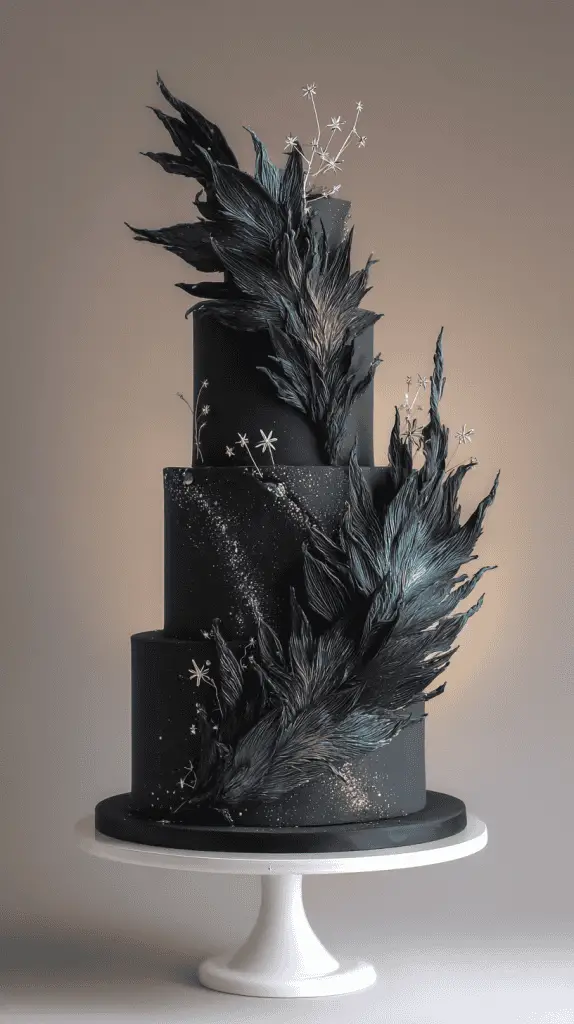
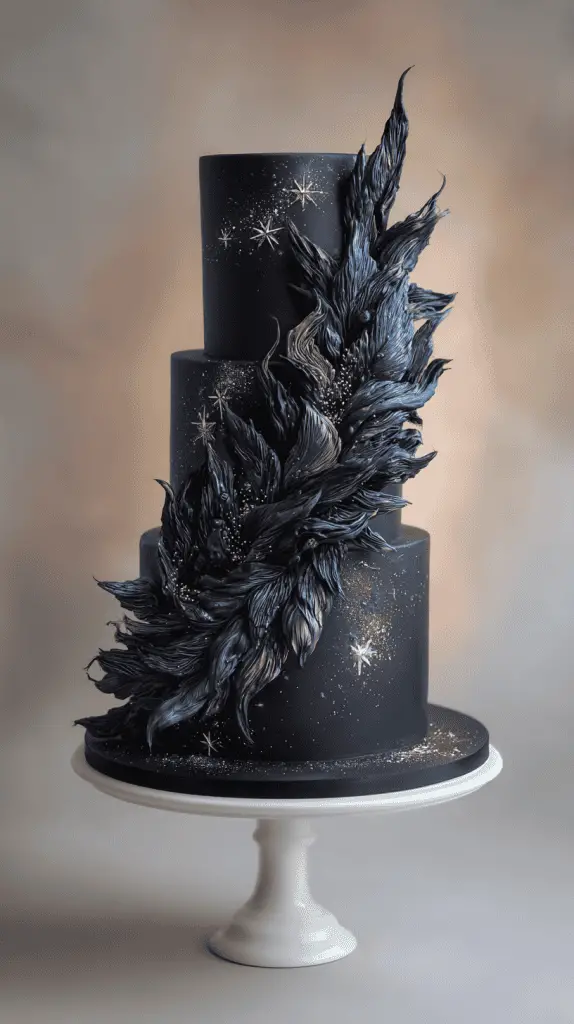
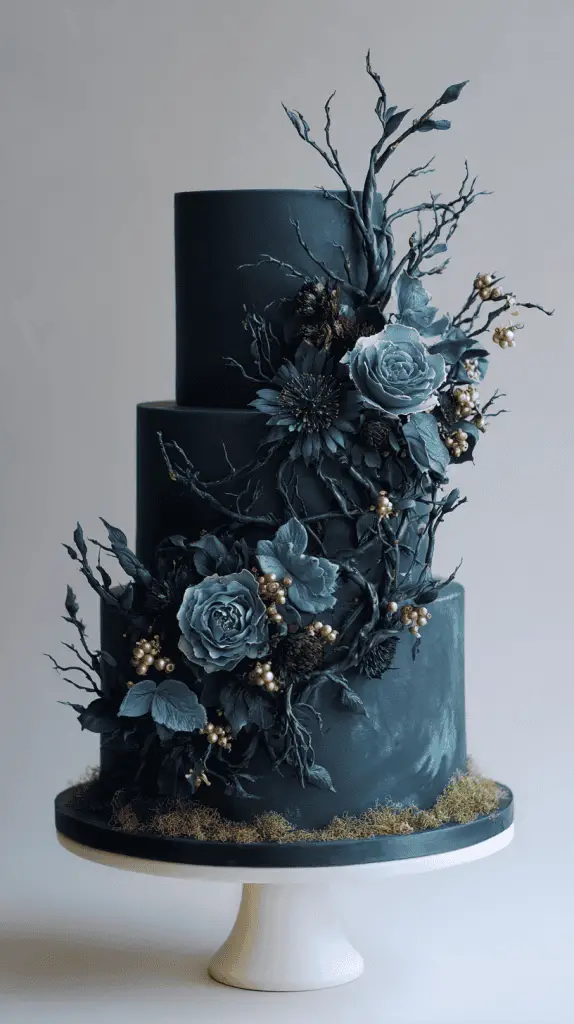
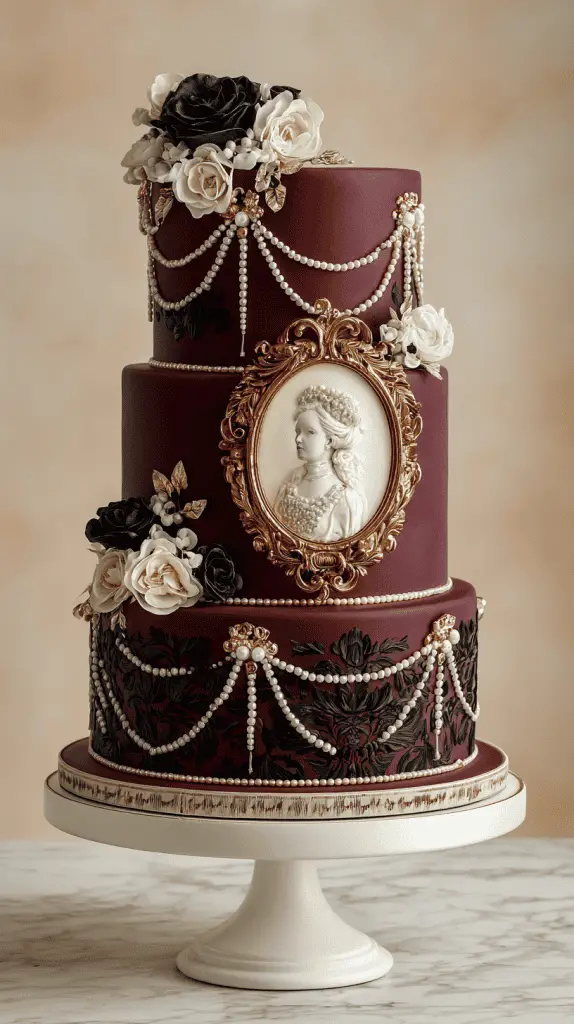
Gothic wedding cakes give couples a sophisticated, offbeat alternative to the everyday white tier. These dramatic centrepieces lean into rich, deep colours and bold aesthetics that really grab attention.


Colour Palettes
The heart of gothic luxury is its unmistakable colour schemes. Black steals the show more often than not, usually teamed with metallic gold or silver for a luxe finish. Deep burgundy, plum, and oxblood red add romantic drama, while a stark black-and-white combo keeps things timeless. Honestly, it’s hard to go wrong with these shades if you’re after moody vibes.
Design Elements
Gothic cakes show off all sorts of details to up the dark glamour:
- Intricate lace patterns with black fondant or piped buttercream
- Hand-crafted sugar skulls and skeletons
- Cascading dark florals like black roses, anemones, and ranunculus
- Metallic gilding and ornate Victorian-inspired touches
- Dramatic drip effects using dark chocolate or black ganache
Flavour Profiles
No need to sacrifice taste for looks. Black forest, dark chocolate with raspberry, and red velvet fit the gothic theme and taste as decadent as they sound. The bold flavours echo the cake’s visual drama.
Texture and Finish
Sleek black fondant gives a modern, polished vibe, while textured buttercream feels a bit more organic and relaxed. Mixing matte black tiers with shiny metallics adds extra depth. Some bakers even go for dramatic cracks or exposed “insides” to push the edgy factor further.
These cakes really shine at evening ceremonies or moody venues. They’re perfect for couples who want something alternative but still crave a touch of elegance.
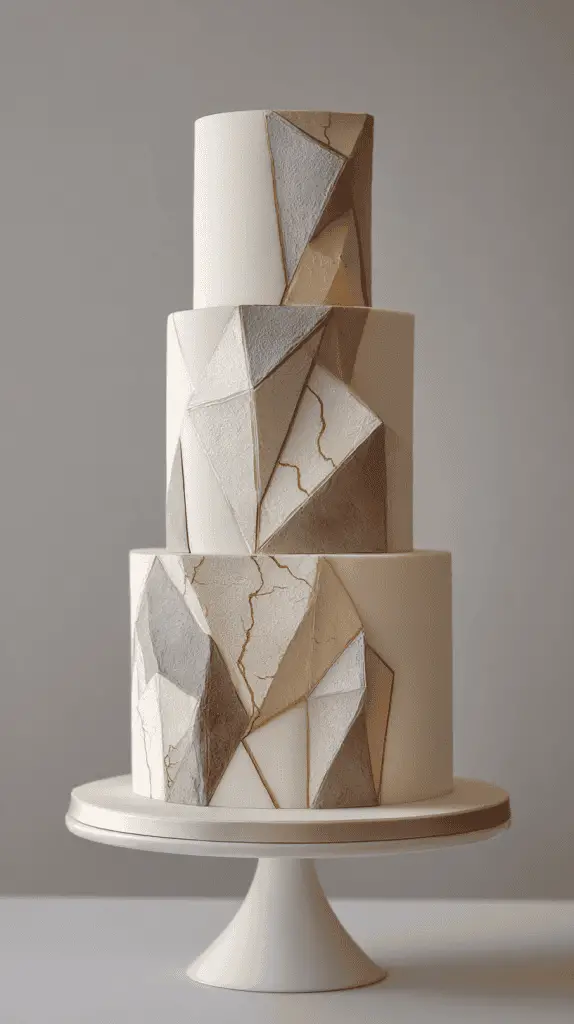
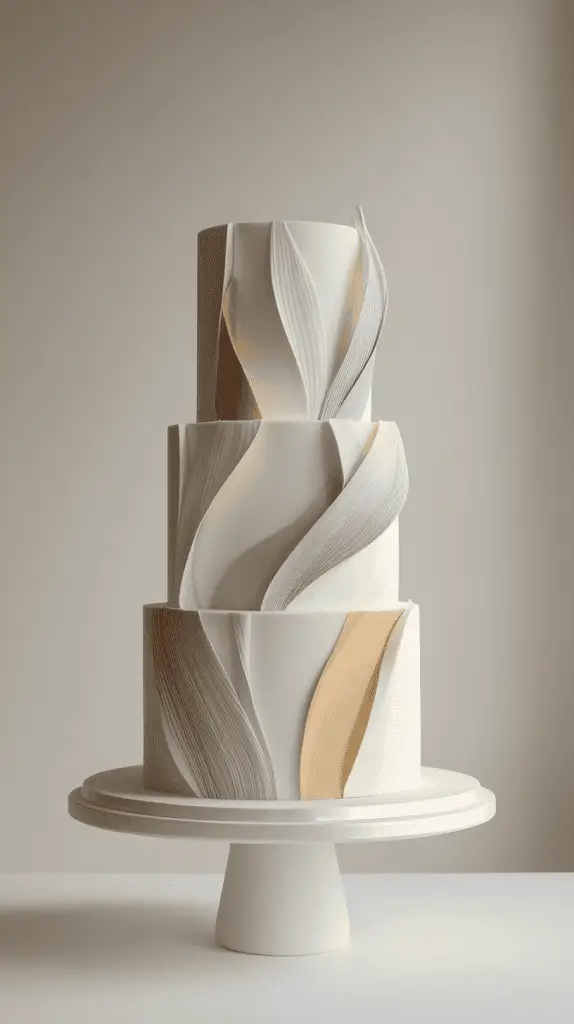
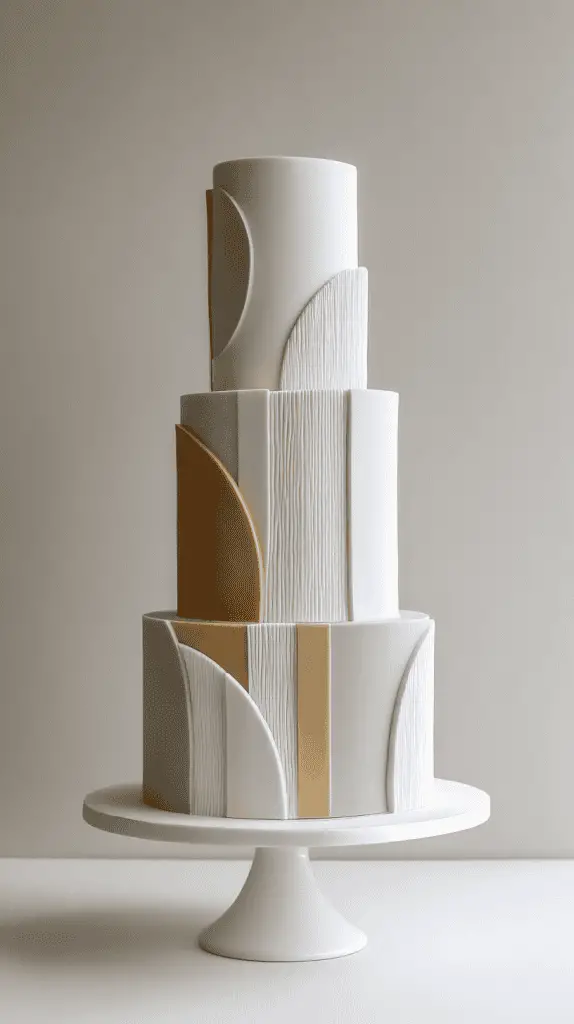
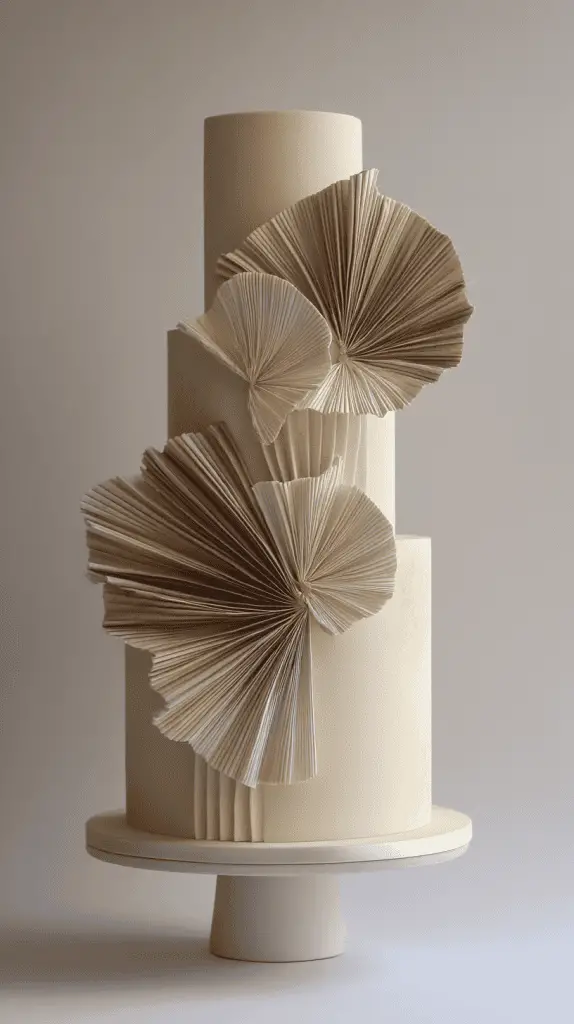
7. Modern Architectural & Sculptural Cakes
Modern sculptural cakes have turned wedding desserts into wild, attention-grabbing installations. These designs ditch the standard stacked tiers and instead play with geometric shapes, off-kilter compositions, and bold architectural details that people can’t help but talk about.
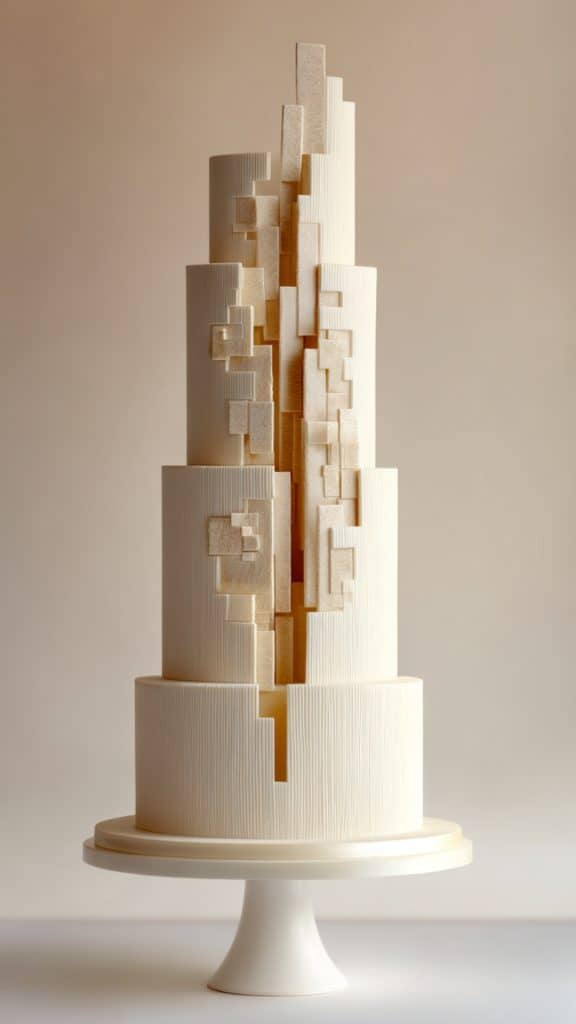
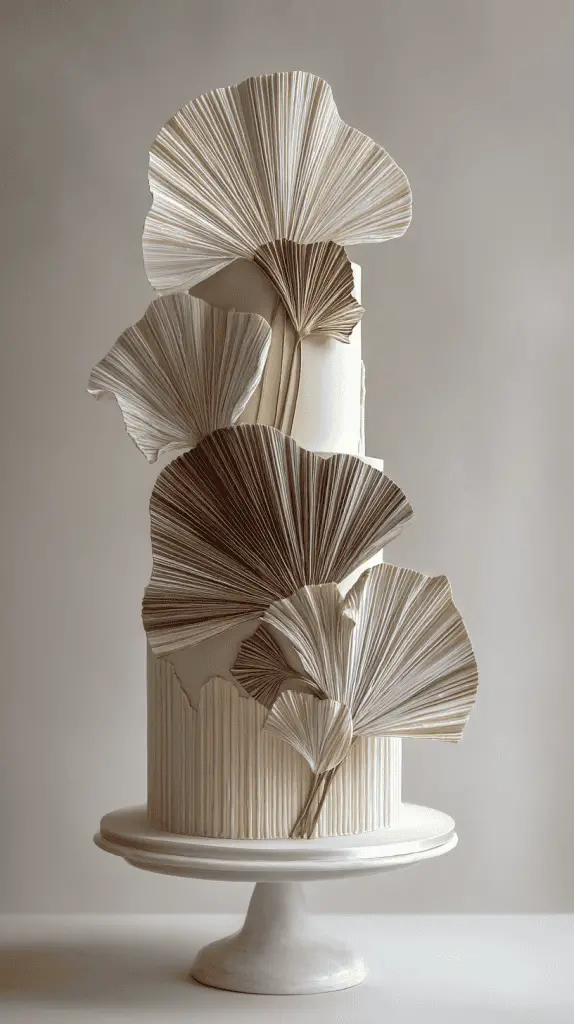
Key Design Elements:
- Geometric patterns like hexagons, triangles, and abstract shapes
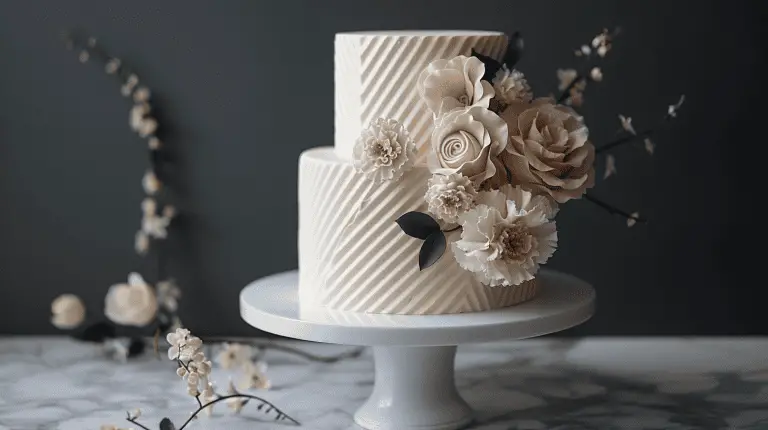
- Textured surfaces featuring pleating, ridges, or carved details
- Asymmetrical tiers stacked at quirky angles
- Minimalist colour palettes with monochrome or subtle gradients
Couples who pick these cakes usually work with cake artists who know their way around both design and structure. These cakes need hidden supports to handle those dramatic angles and gravity-defying shapes.
Popular Sculptural Styles:
| Style | Characteristics |
|---|---|
| Abstract Modern | Irregular shapes, smooth fondant, metallic accents |
| Textured Concrete | Rough finishes inspired by brutalist architecture |
| Layered Paper | Thin, delicate tiers that look like folded paper art |
| Architectural Lines | Sharp edges, clean corners, structured symmetry |
These cakes feel right at home in contemporary venues—think art galleries, industrial lofts, or sleek hotels. They’re edible centrepieces that fit minimalist décor but still make a statement.
Lots of sculptural cakes feature hand-painted details, metallic leaf, or subtle piping to boost their three-dimensional vibe. The focus is mostly on form and structure, not piling on decorations, which lets the architectural features stand out. Bakers pull off these looks with super precise cutting, creative stacking, and clever supports hidden inside the cake.
8. Cultural & Royal-Inspired Statement Cakes
Royal-inspired wedding cakes channel centuries of regal tradition, bringing all the grandeur and polish you’d expect from a historic celebration. These cakes usually go big on tiers, which just screams prestige. White fondant is the classic base, setting the stage for intricate details.
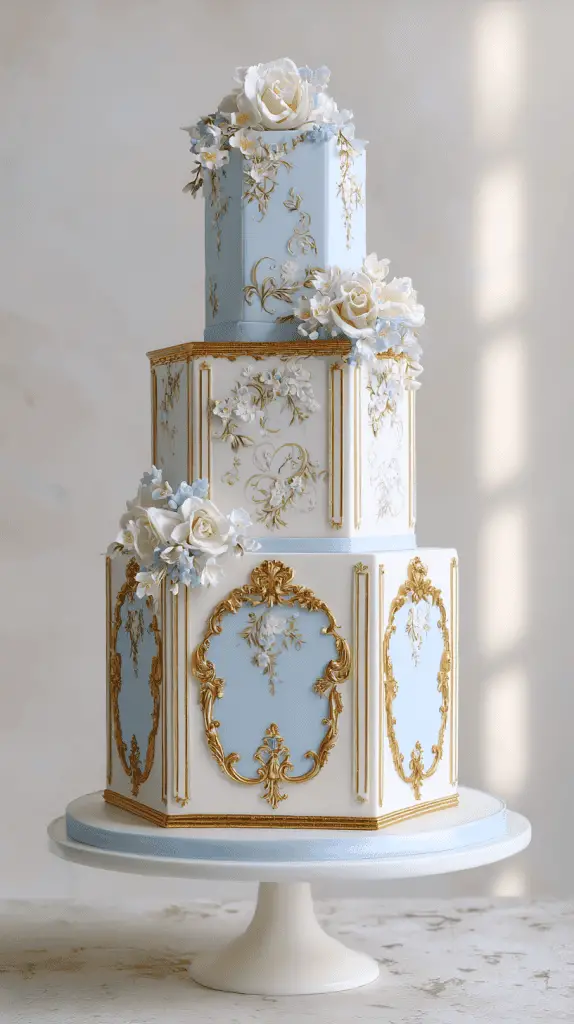
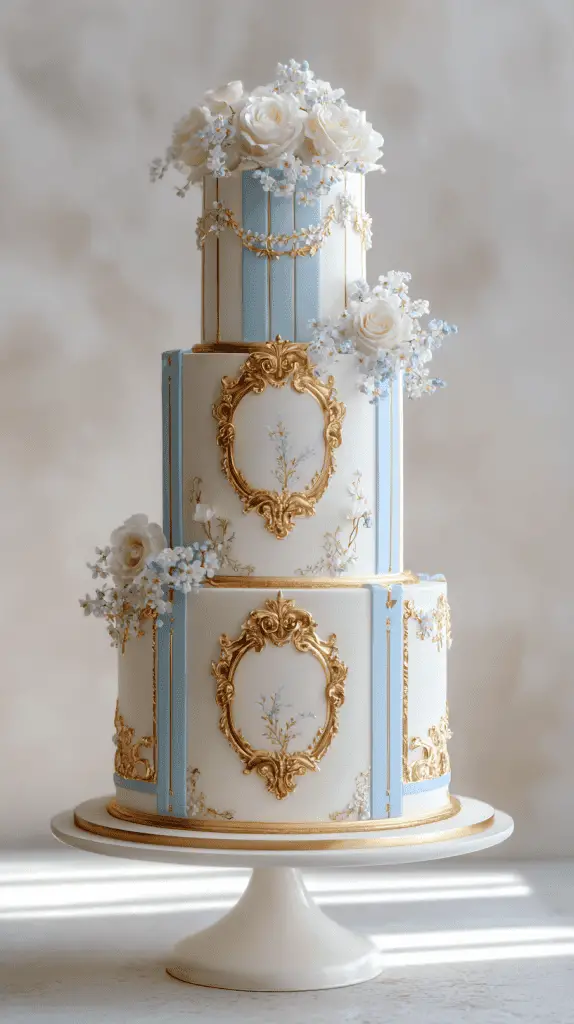

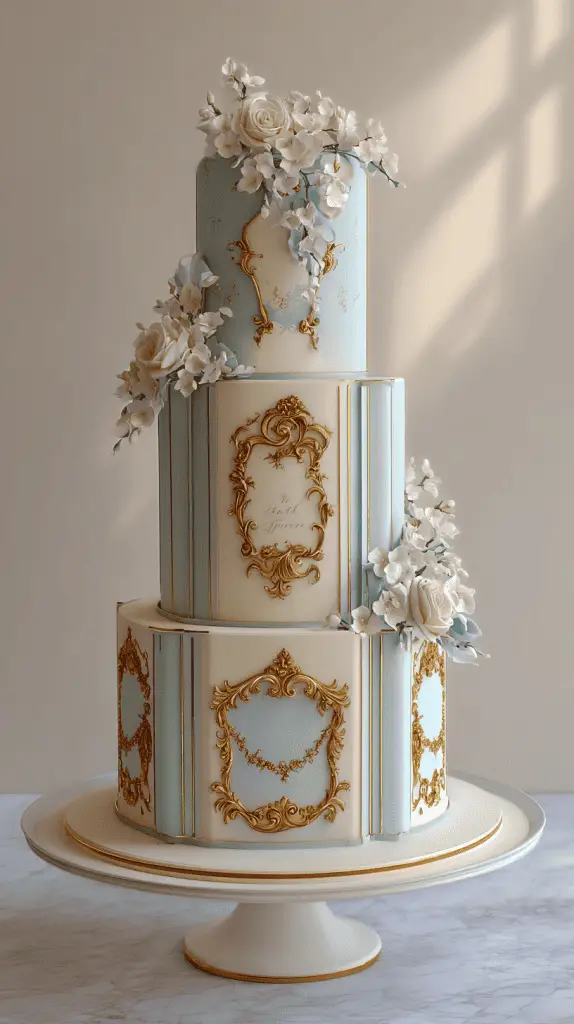
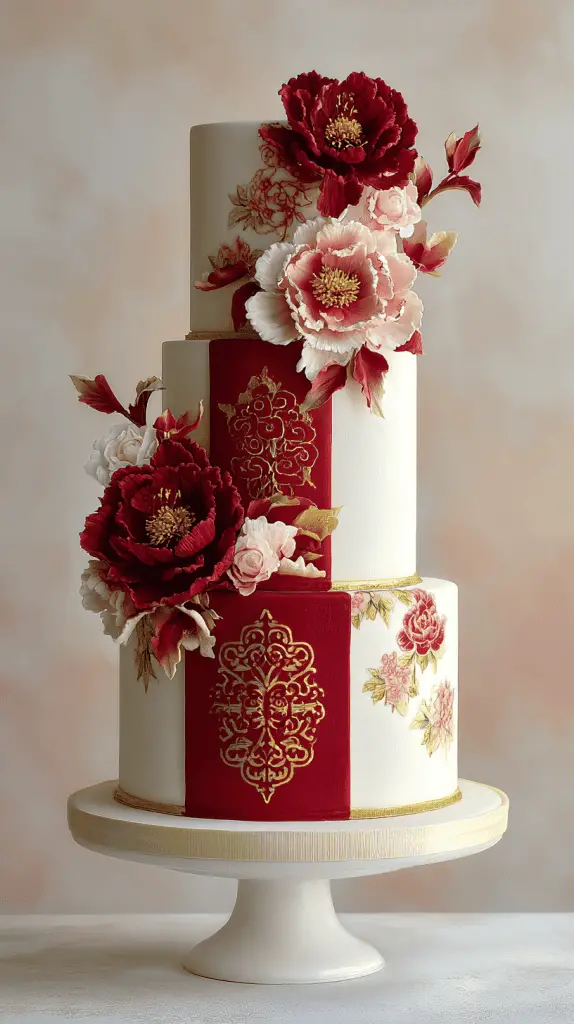
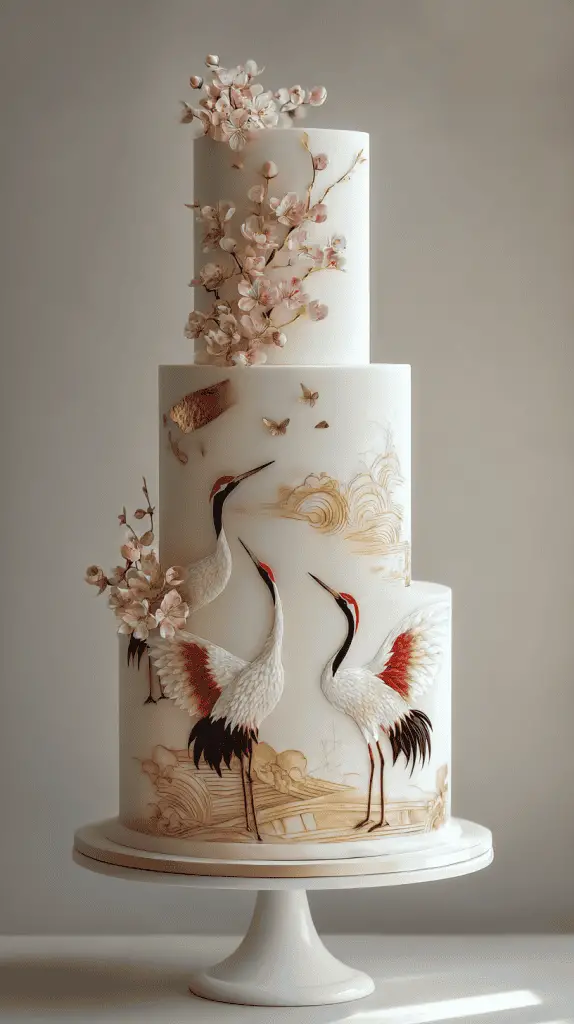
Traditional royal elements cover delicate piping, monograms, and family emblems that nod to heritage and ancestry. Gold leaf adds unmistakable luxury, whether it’s just a touch or slathered across whole tiers. Sugar flowers like roses, peonies, and orange blossoms aren’t just pretty—they stand for love, purity, and new beginnings.
Fruitcake has long been the go-to flavour for royal weddings, thanks to its rich texture and impressive staying power. It’s a classic that lets couples save slices as keepsakes or share leftovers well after the big day. Plus, the dense cake holds up under all those fancy decorations.
Cultural influences go way beyond British royalty. Couples might weave in:
- French-inspired touches with delicate pastries and macaron tiers
- Indian designs full of vibrant colours and henna-style patterns
- Middle Eastern styles with geometric patterns and rose water flavours
- Asian influences like cherry blossoms and minimalist elegance
Crown toppers and regal extras finish off these showstoppers. Modern takes often mix classic elements with fresh twists—marbled fondant, unexpected colour combos, that sort of thing. The trick is balancing tradition with personal style, all while keeping things elegant enough for a grand occasion.
These cakes double as centrepieces and conversation starters, showing off the couple’s heritage and leaving a real impression.
Frequently Asked Questions
Luxury wedding cakes demand a thoughtful approach to trends, metallic finishes, flavour pairings, sizing, personalisation, and all the little details that make the final cake pop.
1. What are the top trends in luxury wedding cake design for this season?
Hand-painted details and watercolour effects are everywhere right now. Bakers use these techniques to create custom patterns, from delicate florals to wild geometric shapes.
Textured buttercream is edging out classic smooth fondant in a lot of high-end cakes. The artisanal look adds depth while still feeling polished.
Sugar flowers that match the wedding arrangements tie everything together visually. Crystal and jewel accents add some sparkle without going overboard.
2. How can one incorporate metallics into a wedding cake for an elegant look?
Gold leaf is the gold standard for adding metallics. Bakers can use it just on the edges or go all-in across whole tiers.
Metallic painted details offer more control for intricate patterns. Silver, rose gold, and champagne shades all play nicely with different themes and palettes.
Edible metallic lustre dust gives a shimmer when brushed over textured details. It’s a great trick for sugar flowers, piped accents, or hand-painted designs that need a little extra pop.
3. What are some unique flavour combinations for a high-end wedding cake?
Earl Grey and lavender is a sophisticated, British-inspired pairing with lovely floral notes. The tea-infused sponge works beautifully with vanilla or lemon buttercream.
Salted caramel and dark chocolate ganache is pure indulgence, balanced by that hint of salt. It’s especially good for autumn or winter weddings.
Champagne and elderflower feels light and celebratory. Pistachio with rose water is a bit more adventurous but still refined.
Blood orange and olive oil brings bright Mediterranean flavour. Honey and thyme adds herbal depth to classic vanilla or almond cakes.
4. How do you select the right cake size and tiers for an opulent wedding reception?
Start with your guest count. Bakers usually figure on 90-100 slices per 100 guests if the cake is the main dessert.
Three to five tiers look the most impressive for luxury weddings. Taller cakes with different tier diameters create dramatic proportions and hold up well.
Ceiling height and table placement matter too. Tall cakes need vertical space, while smaller venues might call for wider, shorter designs.
Some couples use extra sheet cakes in the kitchen to cover serving needs and keep the display cake looking perfect. That way, you can splurge on decorations where people will actually see them.
5. Can you suggest ways to personalise a wedding cake to reflect a couple’s tastes?
Adding meaningful motifs from your story makes the cake feel truly yours. Hand-painted scenes of proposal spots, shared hobbies, or favourite places add real personality.
Monograms or custom crests bring a bespoke vibe. You can keep it subtle on one tier or go bold across the whole cake.
Choosing flavours that nod to favourite desserts or family traditions makes things extra special. Maybe something from your first date or honeymoon destination?
Bespoke sugar flowers that match the bride’s bouquet or ceremony florals keep everything cohesive. Even ribbon colours, toppers, and little details can echo your wedding colours or style.
6. What are the options for edible flowers or decorations on a luxurious wedding cake?
Fresh flowers bring a natural elegance, but you have to pick food-safe varieties. Roses, peonies, ranunculus, and orchids can look stunning if you prep them right and use protective barriers.
Sugar flowers give you endless design choices, no matter the season. Talented sugar artists can make lifelike versions of almost any bloom, whether you want classic garden roses or something more tropical and unexpected.
Crystallised flowers and petals add a delicate crunch and a hint of sweetness. Violets, rose petals, and pansies really shine with this old-fashioned, almost Victorian touch.
Wafer paper lets you create light, almost see-through petals that catch the light in a lovely way. It’s a pretty modern approach and makes it possible to have huge, dramatic blooms without worrying about the cake’s structure.