80 Ocean Opalite Cake Ideas: Gemstone Glow & Beach Elegance
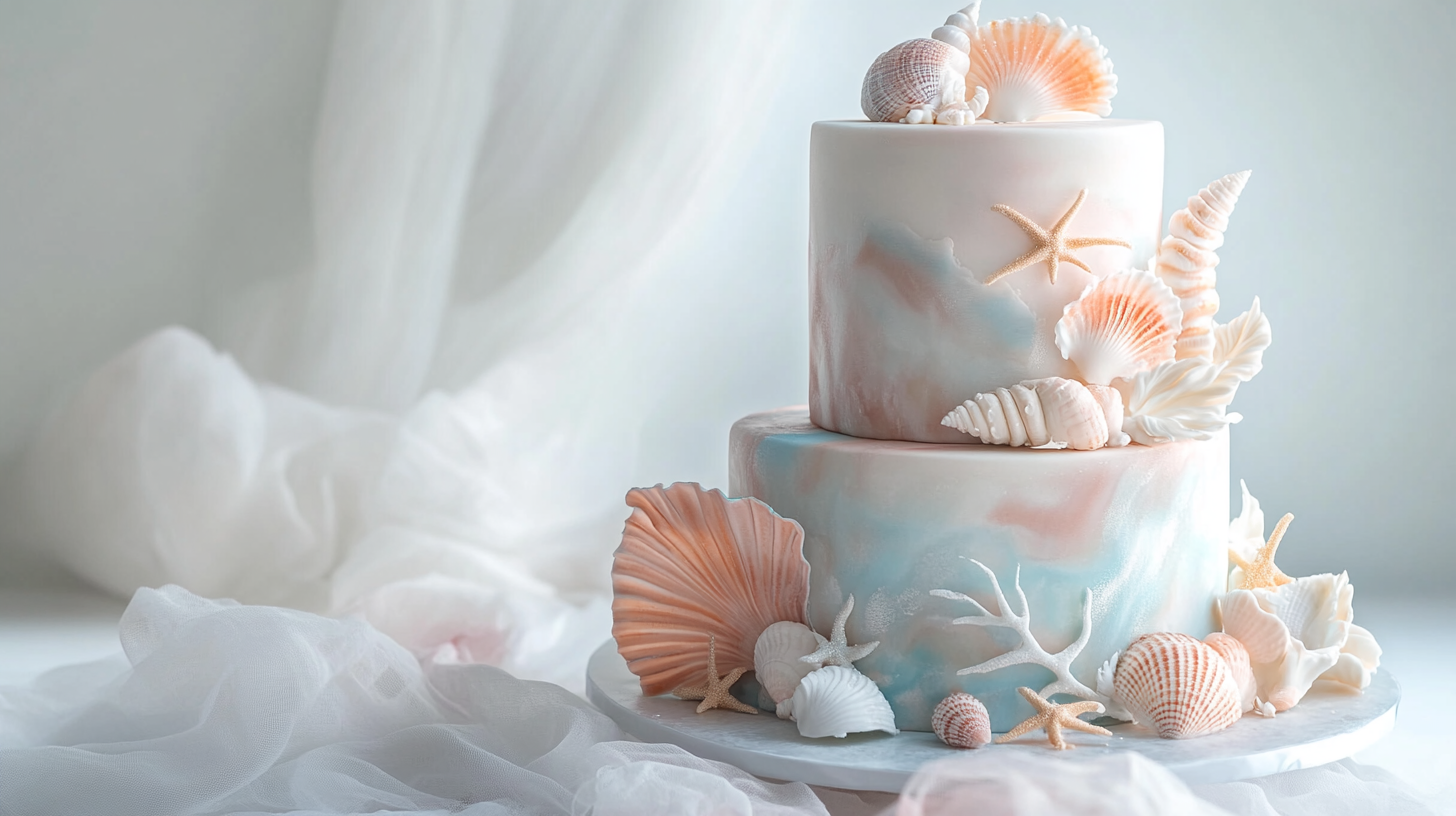
Ocean opalite wedding cakes blend the mystical qualities of opalite gemstone with coastal elements to create stunning desserts perfect for seaside celebrations. These designs capture the translucent beauty of opalite’s characteristic milky appearance whilst incorporating ocean-inspired details like waves, shells, and coral formations. The result is a cake that reflects both the ethereal glow of the gemstone and the natural beauty of the sea.
Ocean opalite wedding cakes combine opalite’s signature blue and white iridescence with beach elements such as seashells, coral, and wave patterns to create unique coastal centrepieces. The designs work particularly well for couples planning beach ceremonies or those who want to bring oceanic elegance to their reception. The translucent quality of opalite effects naturally complements water-inspired themes through its colour-shifting properties.
From dramatic geode structures filled with blue-tinted crystals to subtle watercolour ombre tiers that mirror ocean depths, ocean opalite cakes offer remarkable versatility. Designers achieve these effects through various techniques including airbrushing, sugar work, and hand-painted details that capture the movement of water whilst maintaining opalite’s luminous character. The combination creates cakes that appear to glow with the same ethereal quality as sunlight filtering through ocean waves.
What Is an Ocean Opalite Wedding Cake?
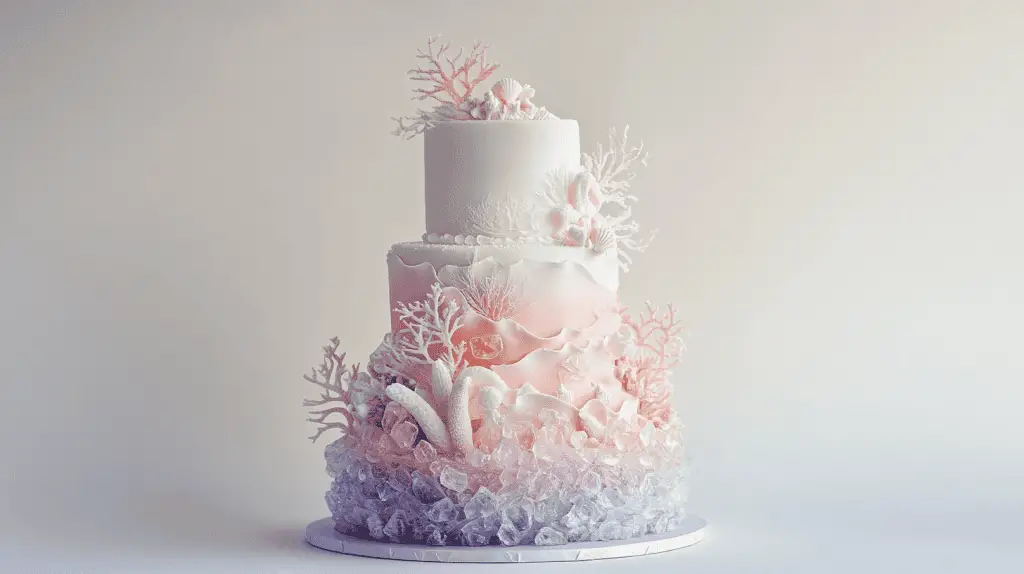
An ocean opalite wedding cake combines the translucent, milky appearance of opalite gemstone with oceanic colour palettes and coastal design elements. These cakes feature opalite’s signature blue-to-amber colour shifts enhanced by sea-inspired details like waves, pearl accents, and aquatic textures.
Distinctive Features and Aesthetic
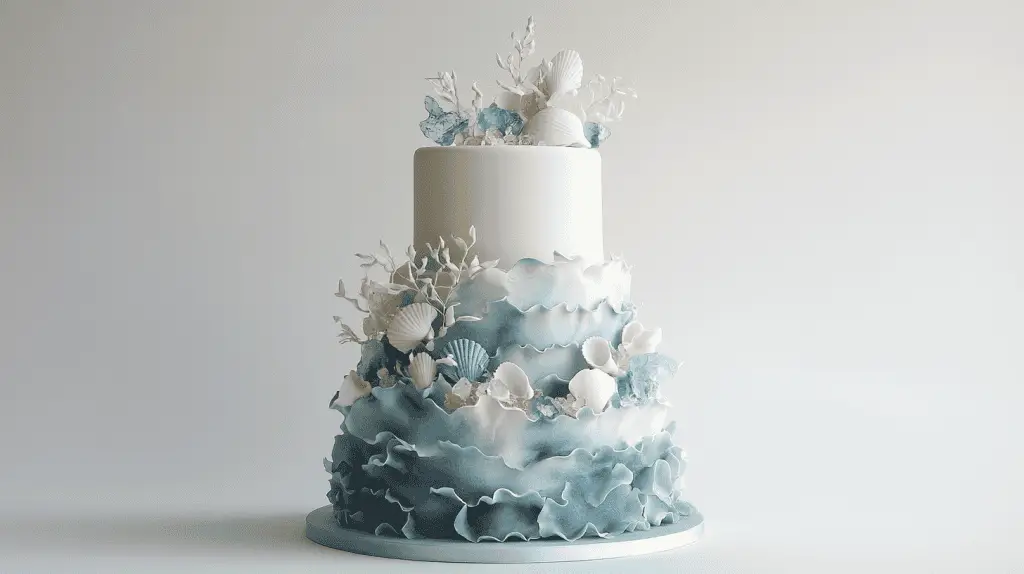
Ocean opalite wedding cakes showcase a translucent milky-white base with soft blue undertones that mirror both the gemstone and ocean waters. The colour palette typically incorporates pale blues, seafoam greens, and pearl whites with subtle iridescent finishes that shift in lighting.
Designers achieve the oceanic opalite effect through specific techniques. Watercolour ombre gradients create flowing transitions between blue and white tones. Pearl lustre dust mixed with edible alcohol produces the characteristic opalescent shimmer. Airbrushing adds depth whilst maintaining the translucent quality.
Common decorative elements include:
- Edible sugar crystals resembling sea glass
- Fondant or chocolate seashells in pearl finishes
- Wafer paper ruffles mimicking ocean waves
- Isomalt geode sections in aquatic blues
- Gold or silver accents suggesting beach sand
The texture ranges from smooth fondant surfaces to architectural ruffles that create movement. Multiple thin layers of colour and lustre dust build the stone’s natural depth. These cakes work particularly well for beach weddings held during evening receptions, where artificial lighting enhances the colour-shifting properties.
Origins and Recent Trends
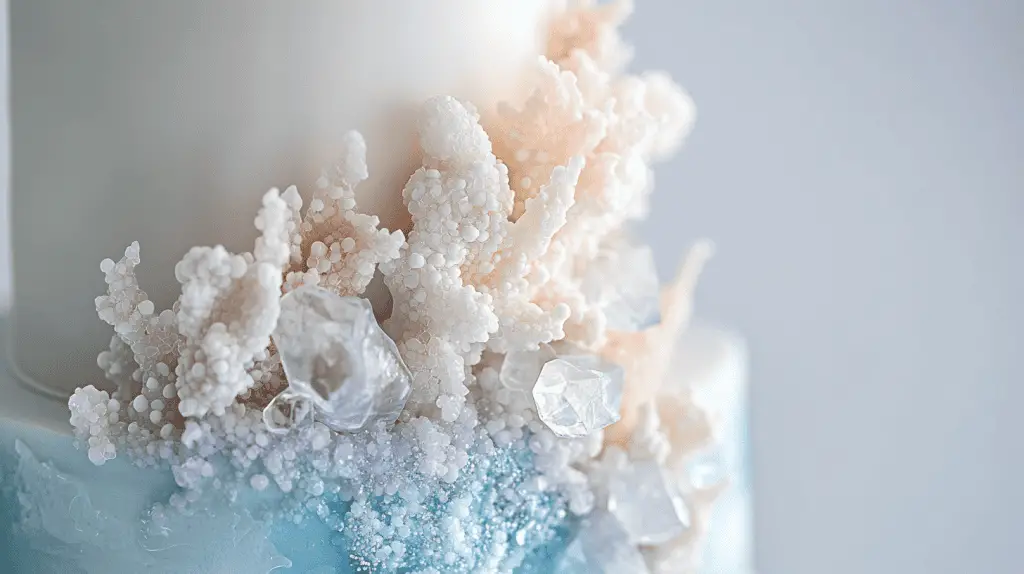
Opalite wedding cakes emerged from the broader geode cake trend that gained popularity amongst couples seeking alternatives to traditional floral designs. The ocean variant developed as bakers recognised opalite’s natural blue tones aligned perfectly with coastal wedding themes.
Beach weddings have increasingly incorporated opalite-inspired designs rather than conventional seashell decorations. Modern couples prefer the sophisticated, contemporary aesthetic of opalite effects over traditional beach wedding cake motifs. The gemstone’s translucent properties offer versatility that complements both elegant coastal celebrations and relaxed seaside ceremonies.
Recent trends show bakers combining opalite techniques with other ocean elements. Sugar coral branches paired with opalite geodes create underwater-inspired designs. Translucent wafer paper veils layered with pearl dust mimic both the gemstone and sea foam.
Differences from Other Beach Wedding Cakes
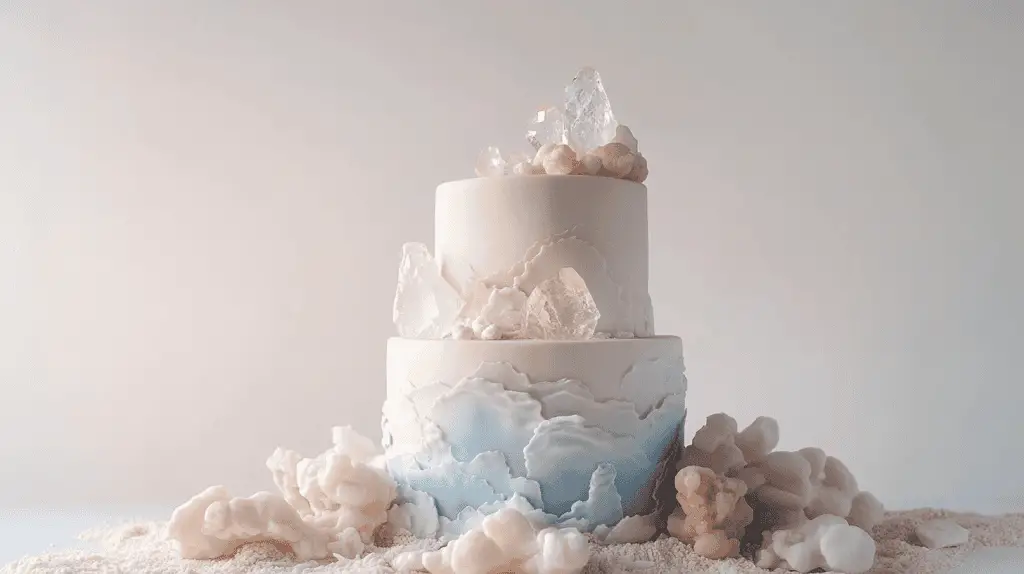
Ocean opalite wedding cakes distinguish themselves from standard beach wedding cakes through their emphasis on translucent, ethereal qualities rather than literal coastal imagery. Traditional beach cakes feature obvious seashells, starfish, and sandy textures in beige and bright blue colours.
Opalite designs prioritise subtle shimmer and colour-shifting effects. Where conventional beach cakes might display fondant seashells in realistic browns and creams, ocean opalite cakes use pearl-finished sugar work with iridescent qualities. The colour palette stays within soft blues, whites, and subtle pinks rather than the bolder nautical tones common in typical beach themes.
The structural approach differs as well. Beach wedding cakes often incorporate rustic elements like rope details or driftwood-inspired textures. Ocean opalite designs favour smooth, polished surfaces with geometric crystal formations or flowing watercolour effects. These cakes suit couples wanting coastal connections without overtly themed decorations that might feel too casual for formal beach weddings.
Popular Ocean Opalite Wedding Cake Designs
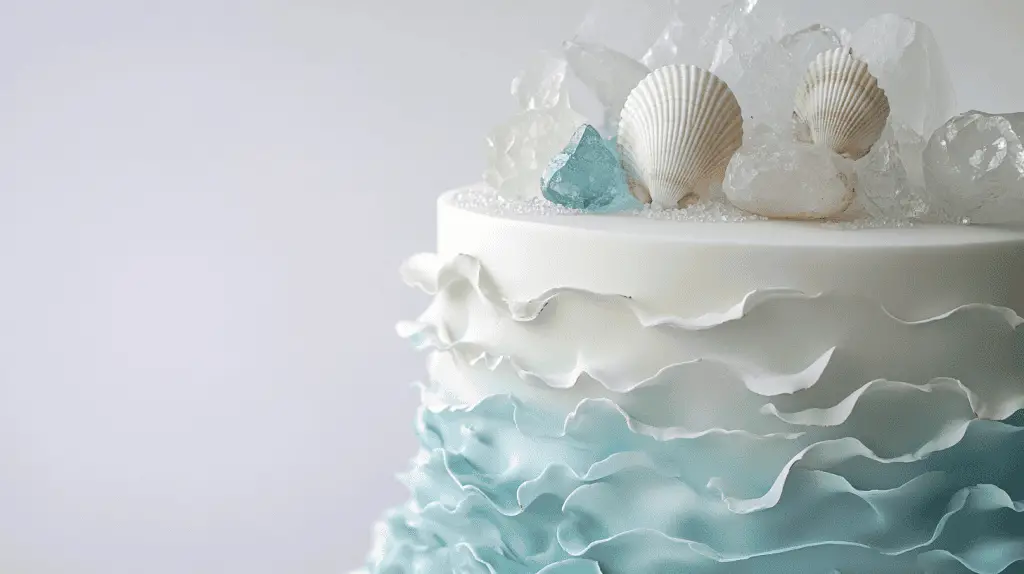
Ocean opalite wedding cakes combine the translucent shimmer of opalite gemstones with coastal elements to create designs that capture both mystical luminescence and seaside beauty. These cakes feature specific textural treatments, carefully selected colour schemes, and decorative details that evoke the ocean’s natural elegance.
1. Opalescent Finishes and Textures
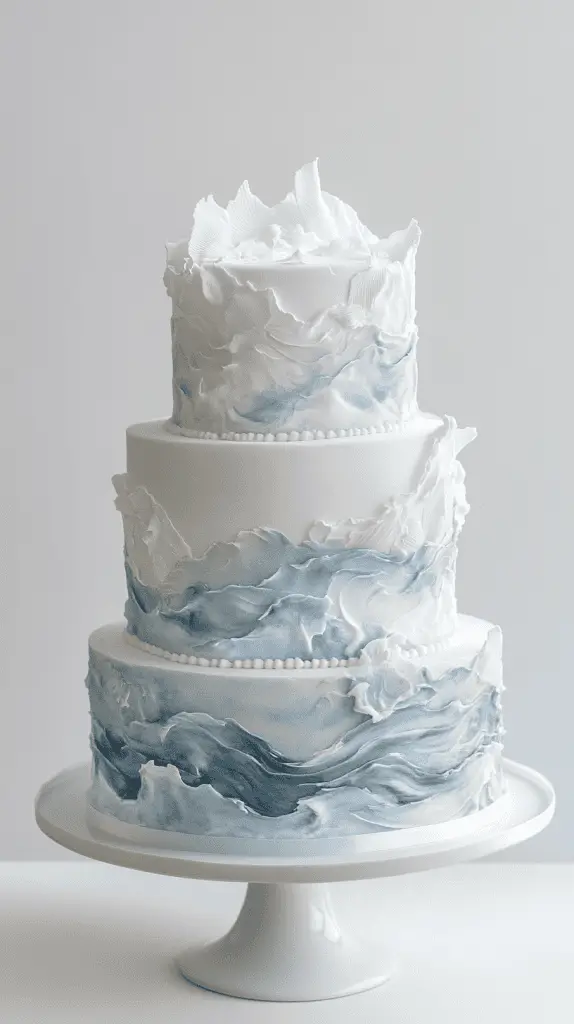
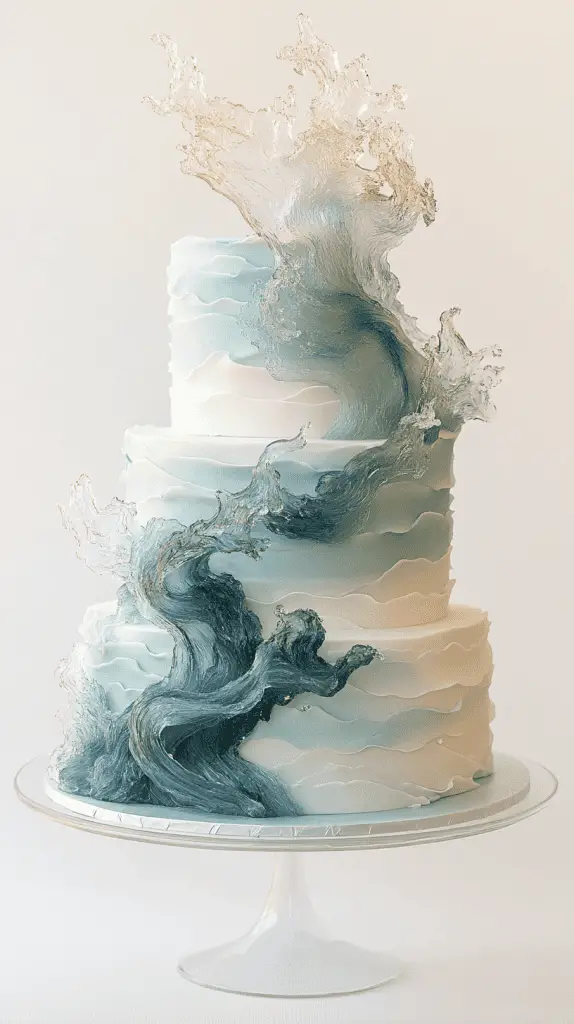
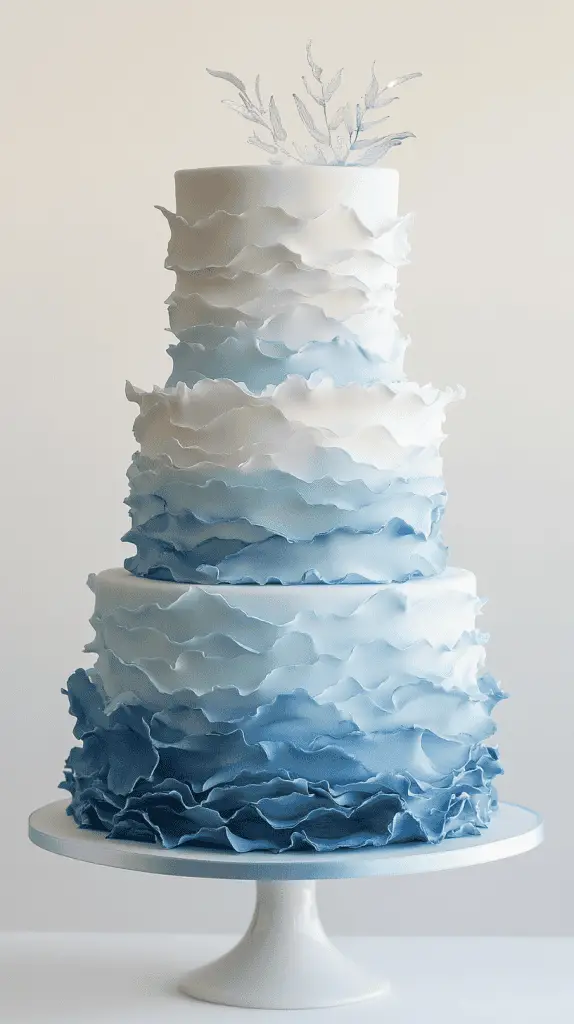
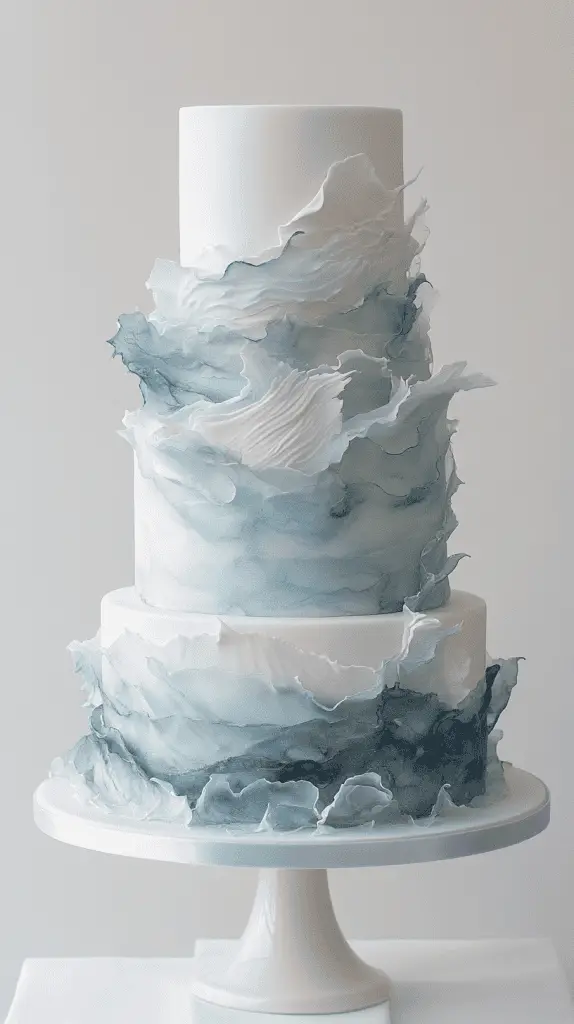
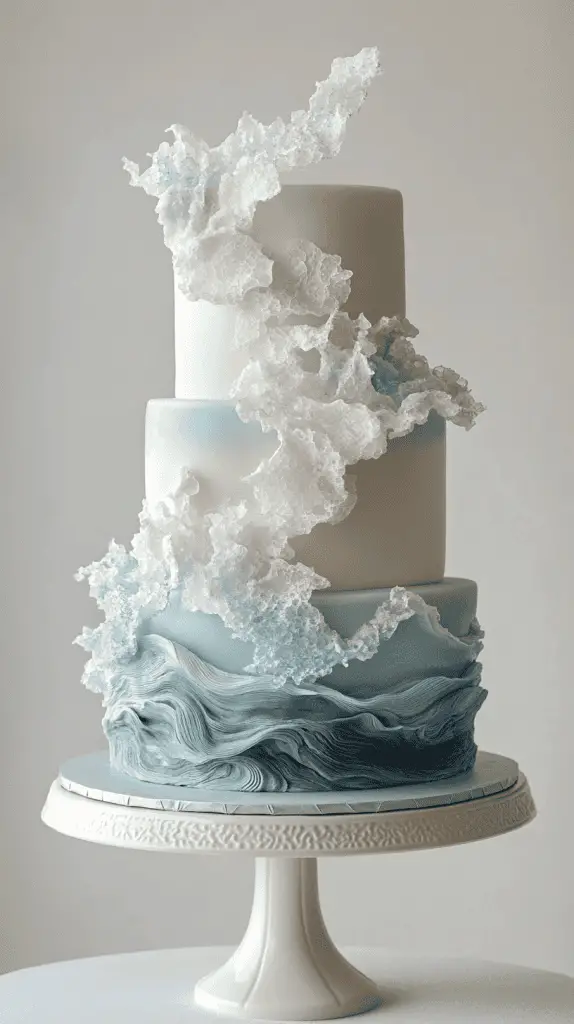
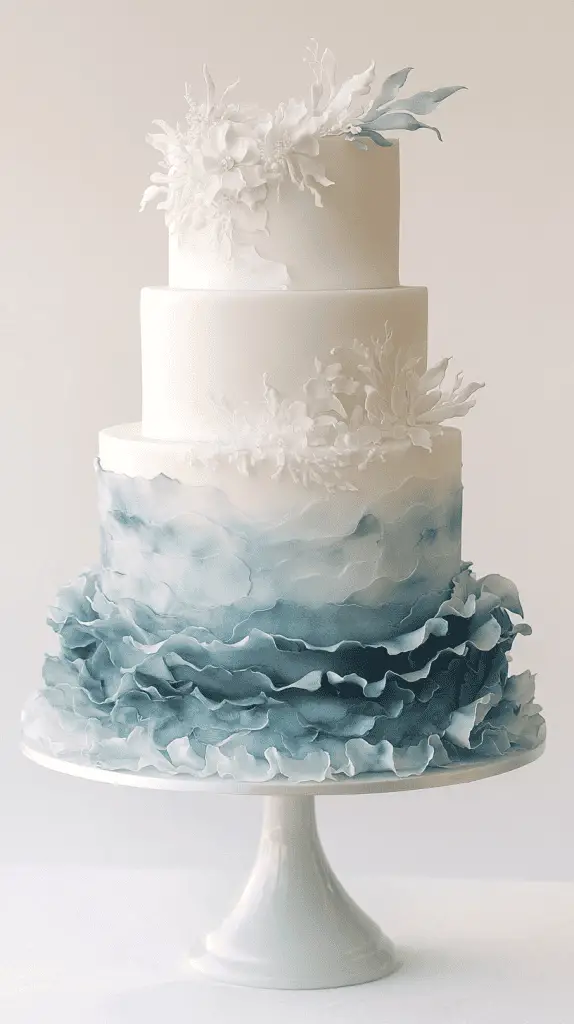
The signature opalescent finish requires layering techniques that mimic opalite’s characteristic light-shifting properties. Bakers achieve this effect through pearl dust mixed with clear alcohol, applied over smooth fondant or buttercream surfaces. The translucent quality creates depth when light passes through multiple thin layers.
Watercolour ombre applications work particularly well for ocean themes. Soft washes of blue transition into creamy whites, creating organic patterns that resemble both opalite formations and ocean currents. Airbrushing with pearl lustre produces the subtle shimmer essential to authentic opalite effects.
Textural elements enhance the opalescent appearance through specific decorating methods. Swiss meringue buttercream allows for swirled colour techniques that maintain the stone’s milky appearance. Wafer paper creates flowing veils and ruffles that catch light beautifully whilst adding dimensional interest.
The finish should appear semi-transparent rather than opaque. This distinction separates successful ocean opalite cakes from standard blue wedding cakes. Edible glitter applied sparingly replicates the inner glow without overwhelming the design’s ethereal quality.
2. Ocean-Inspired Colour Palettes
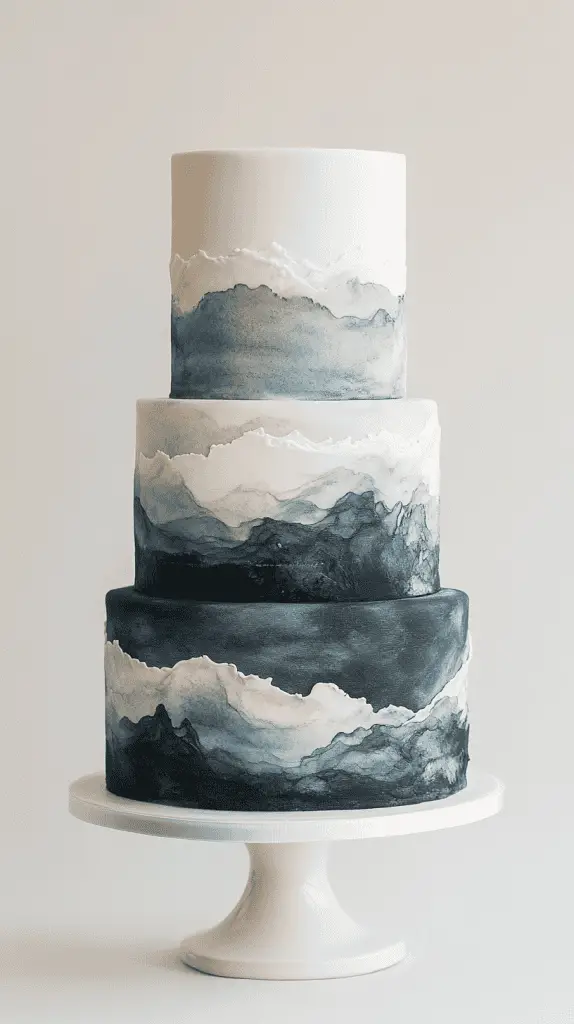
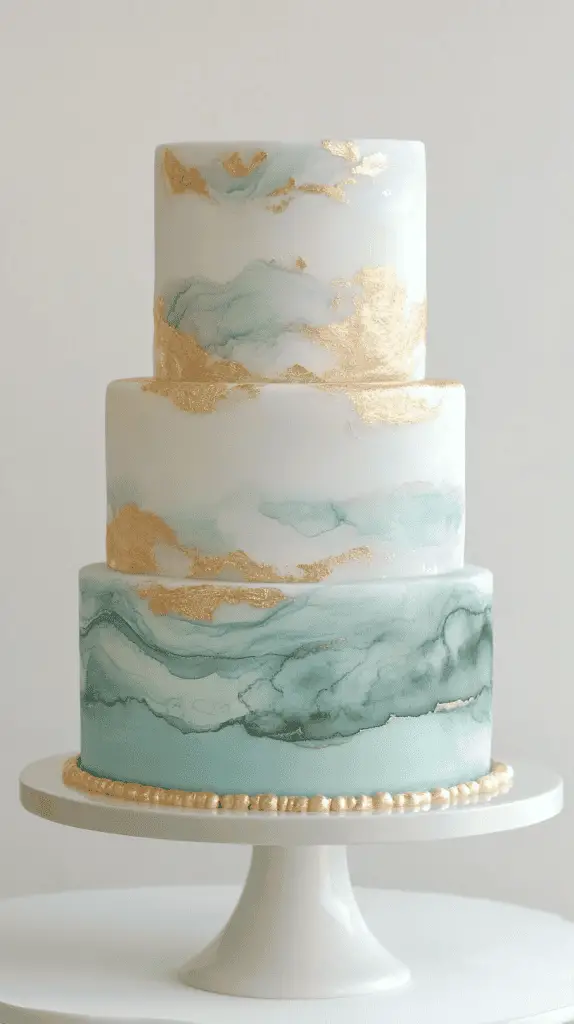
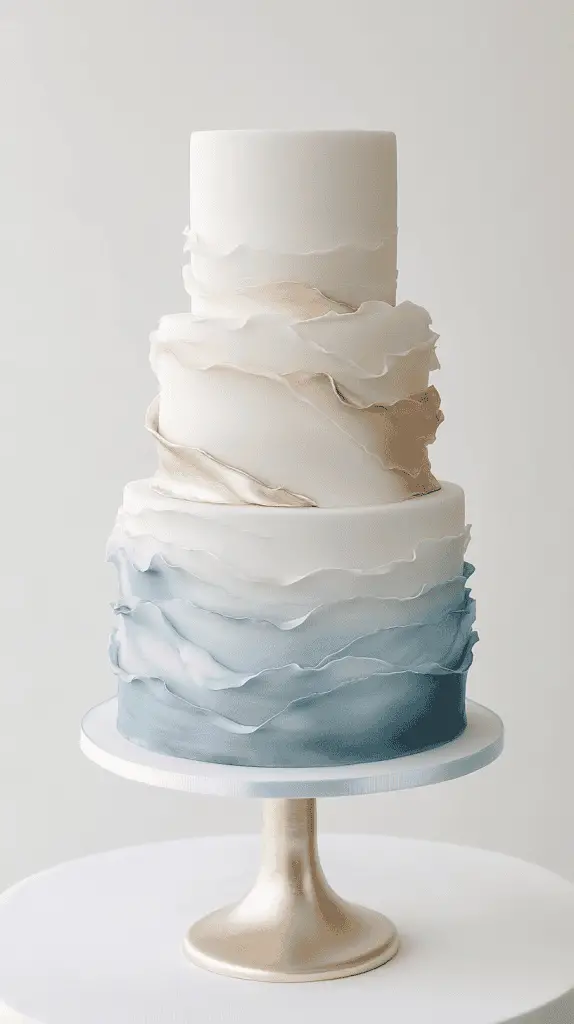
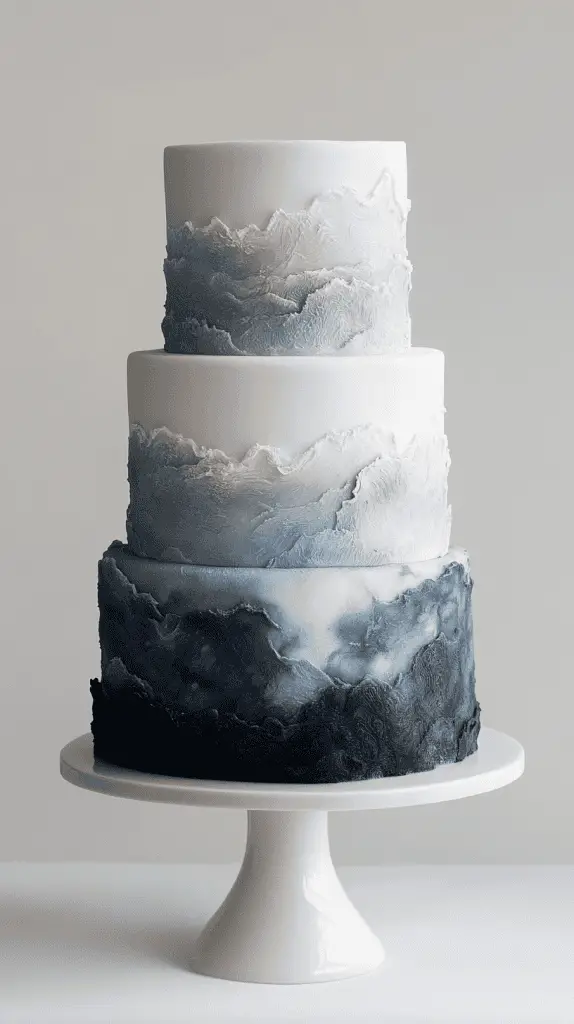
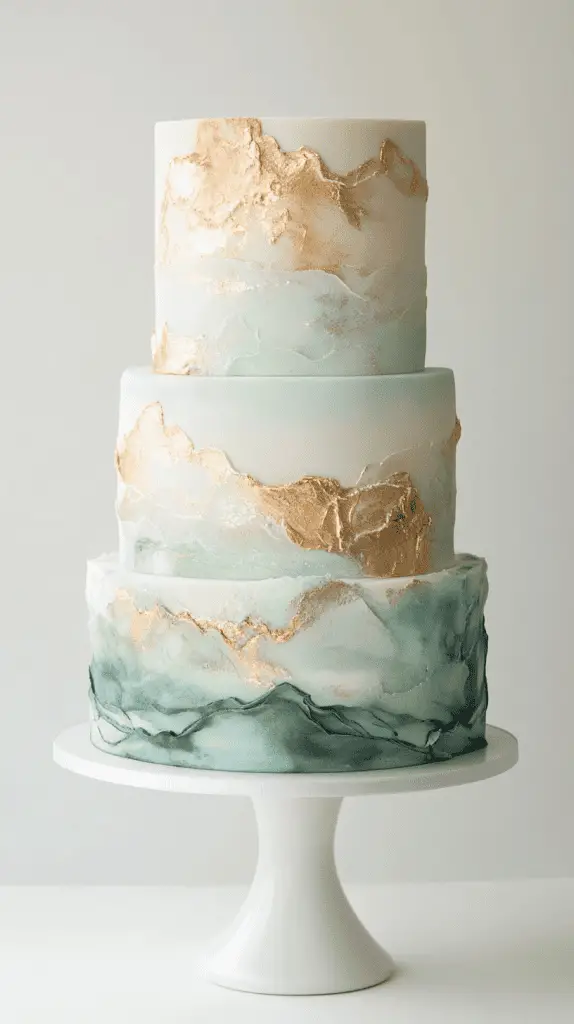
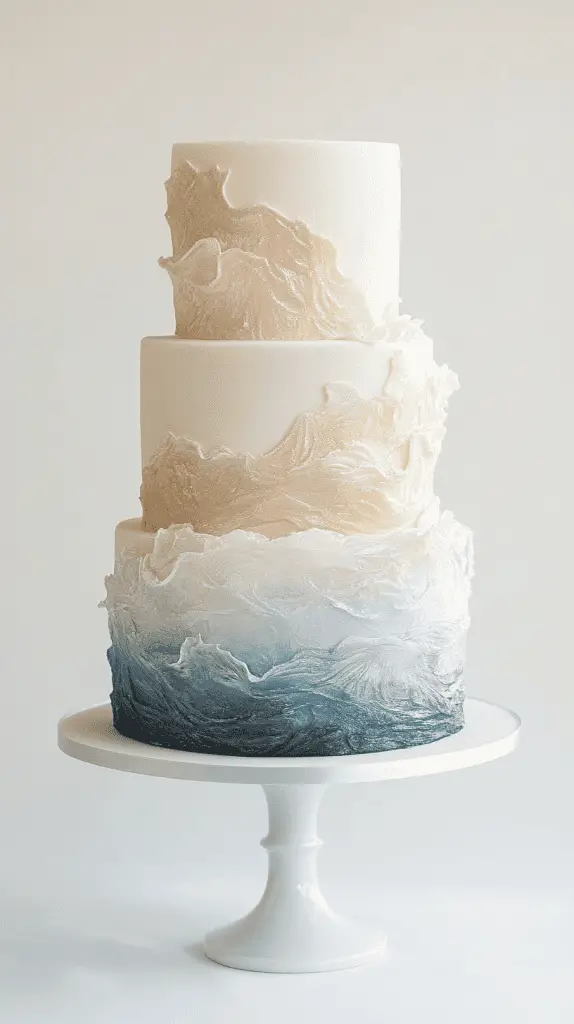
Ocean opalite designs centre on soft blues paired with warm undertones. The most successful combinations include pale blue with pearl white, creating visual depth whilst maintaining the gentle luminescence characteristic of opalite. Dusty lavender with golden highlights adds sophistication to coastal themes.
| Primary Colour | Accent Colour | Best For |
| Soft blue | Champagne | Evening receptions |
| Aqua | Pearl white | Beach ceremonies |
| Pale turquoise | Gold | Tropical settings |
| Grey-blue | Cream | Elegant coastal venues |
The colour palette should reflect natural ocean variations. Shallow water tones work for beach ceremonies, whilst deeper blues suit formal coastal venues. Iridescent blue undertones over cream bases mimic opalite’s colour-changing properties depending on lighting conditions.
Pinterest boards showcase popular ocean opalite combinations that couples frequently request. These typically feature gradual transitions rather than harsh colour boundaries. Multiple thin layers of complementary shades create the stone’s natural depth when viewed from different angles.
3. Wave, Shell, and Coral Details
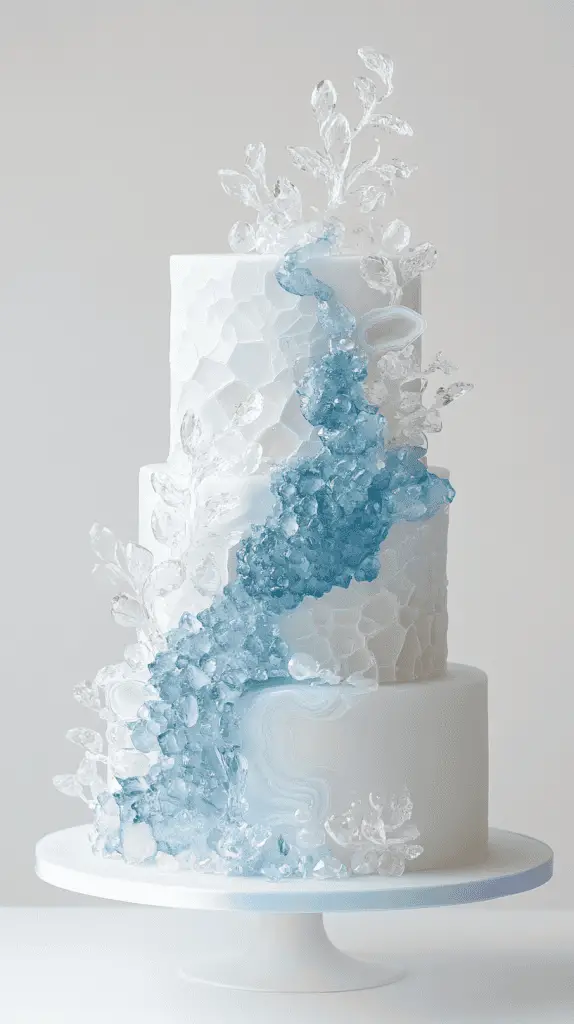
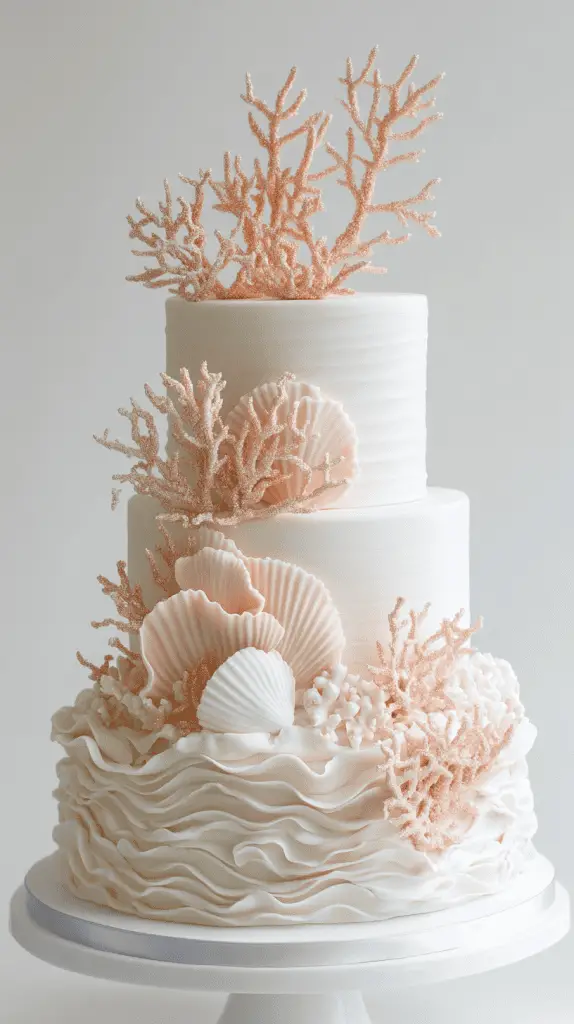
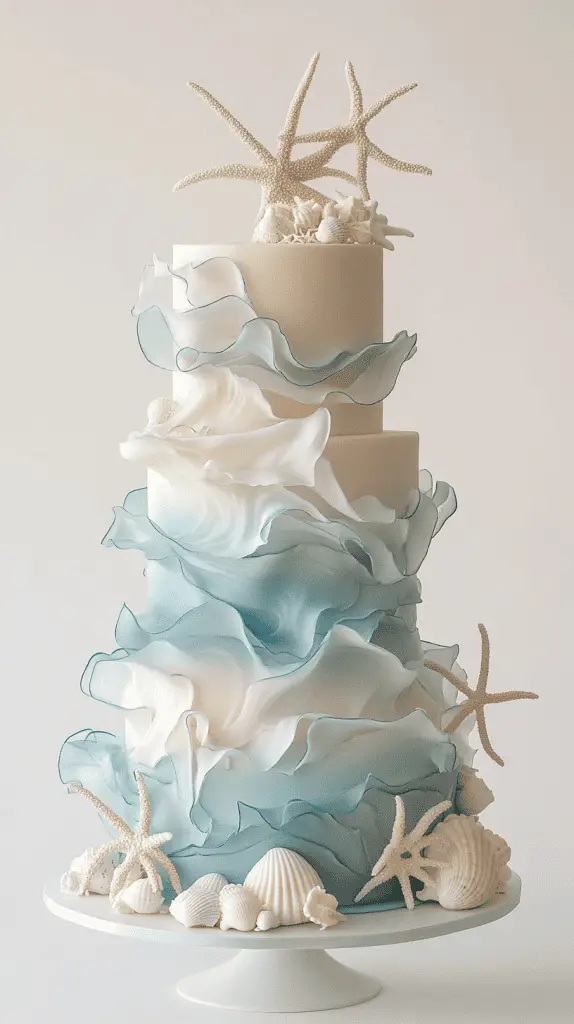
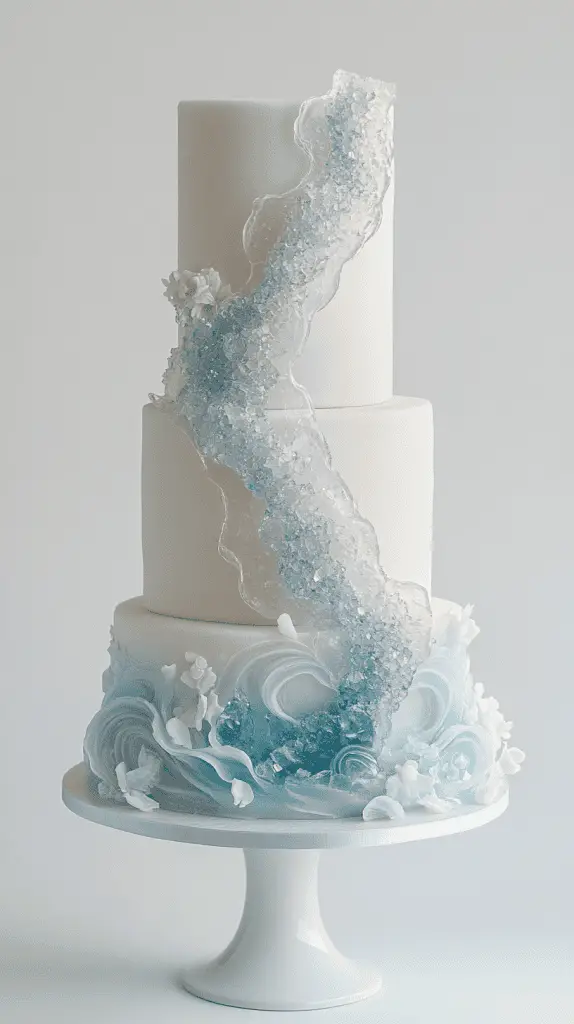
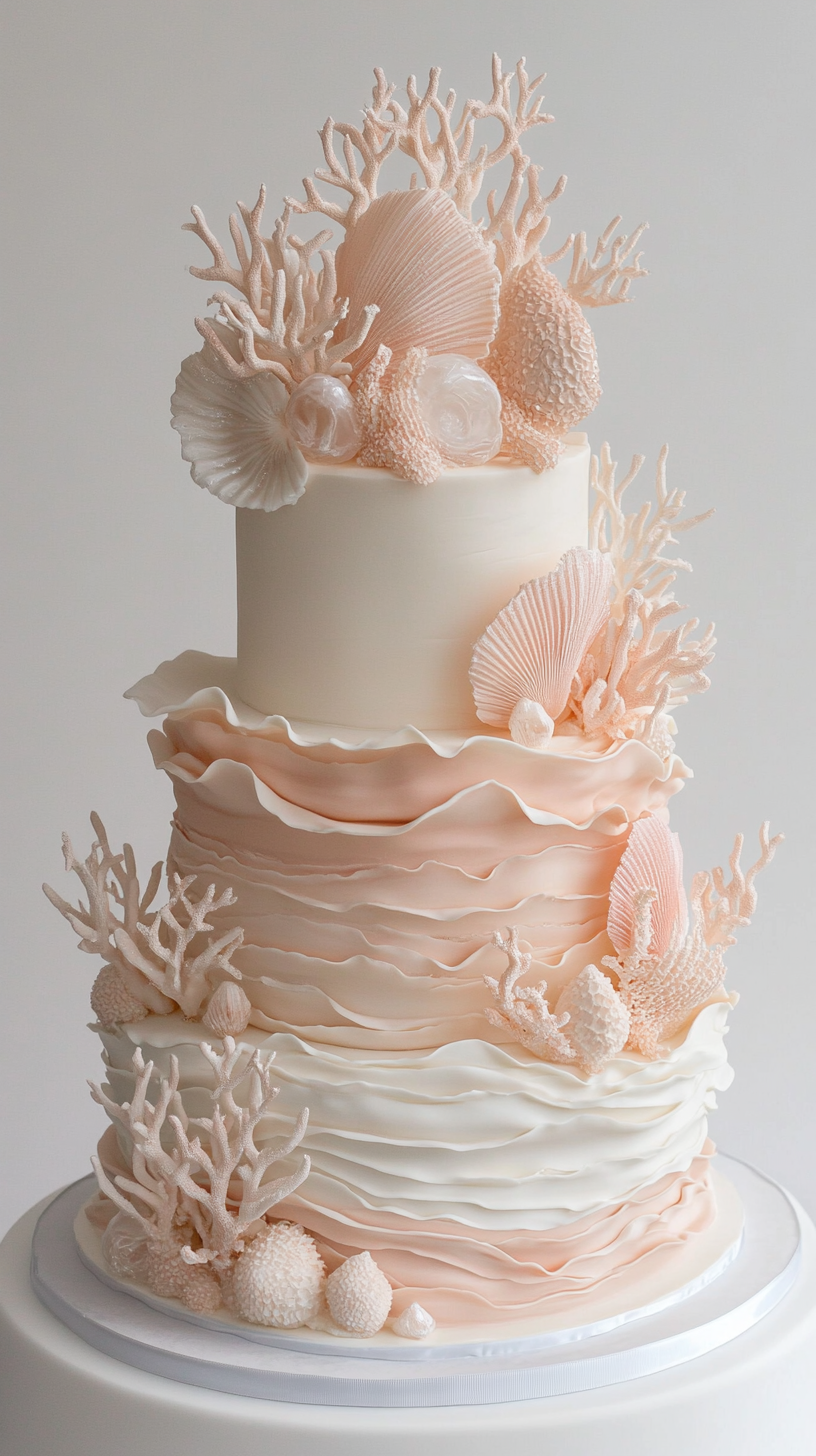
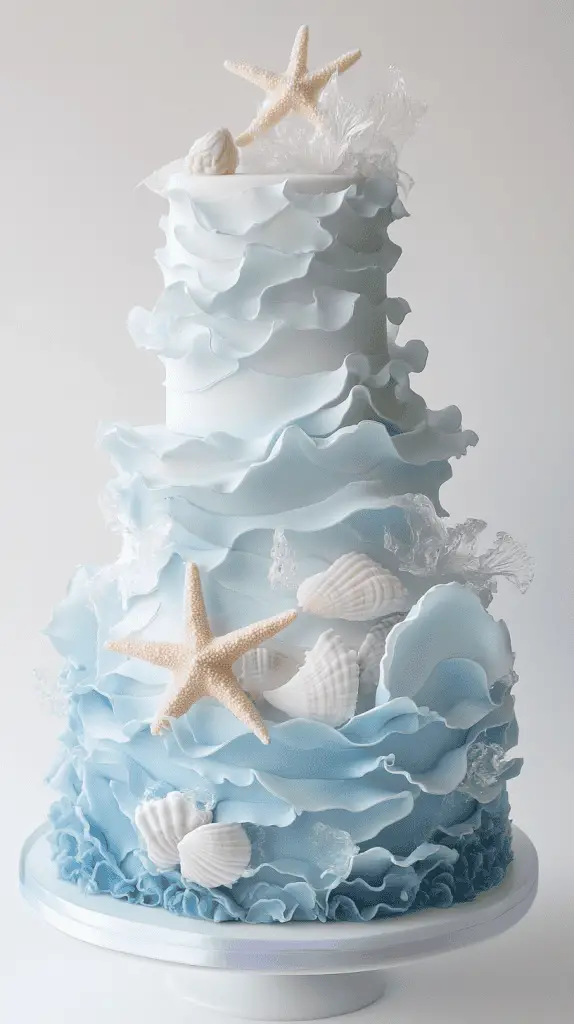
Wave patterns integrate seamlessly with opalite’s flowing aesthetic. Bakers create architectural ruffles using fondant or buttercream that cascade down cake tiers, mimicking ocean movement. These ruffles should maintain the translucent quality through pearl lustre applications rather than solid colours.
Edible seashells and starfish complement opalite designs when positioned strategically. Sugar glass shells tinted in opalescent tones match the stone’s appearance better than stark white alternatives. Placement along tier bases or cascading between layers creates natural-looking arrangements.
Coral elements add texture without overwhelming the opalite focus. Sugar coral formations in soft pink or cream tones enhance coastal themes whilst maintaining colour cohesion. These work particularly well alongside opalite geode sections for dimensional interest.
Isomalt crystals shaped into organic forms replicate natural ocean crystals. Clear or lightly tinted pieces positioned near opalite accents create unified designs. The key lies in balancing decorative elements so each component enhances rather than competes with the opalite’s luminous quality.
4. Shoreline Ombre Opalite Wedding Cake
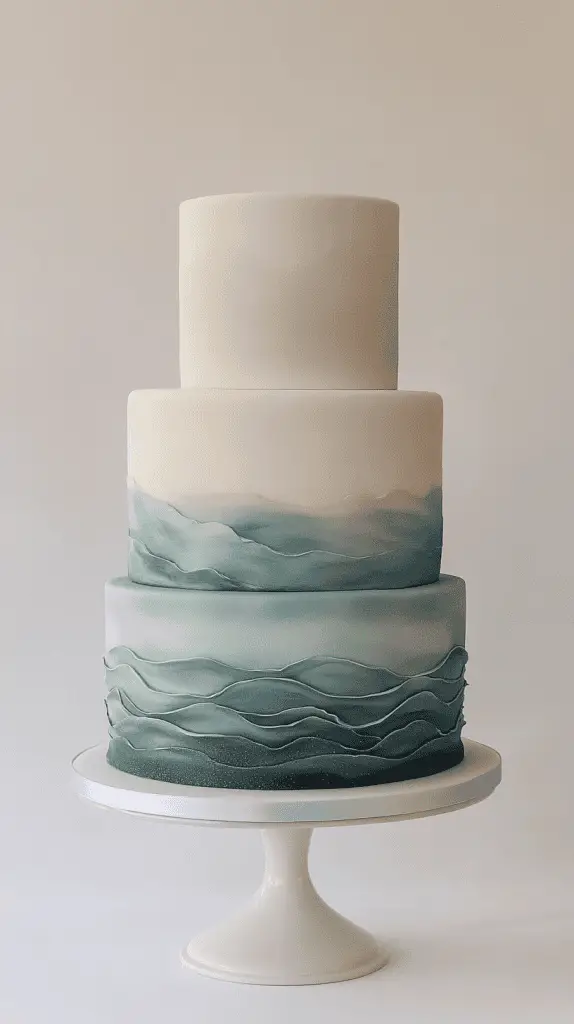
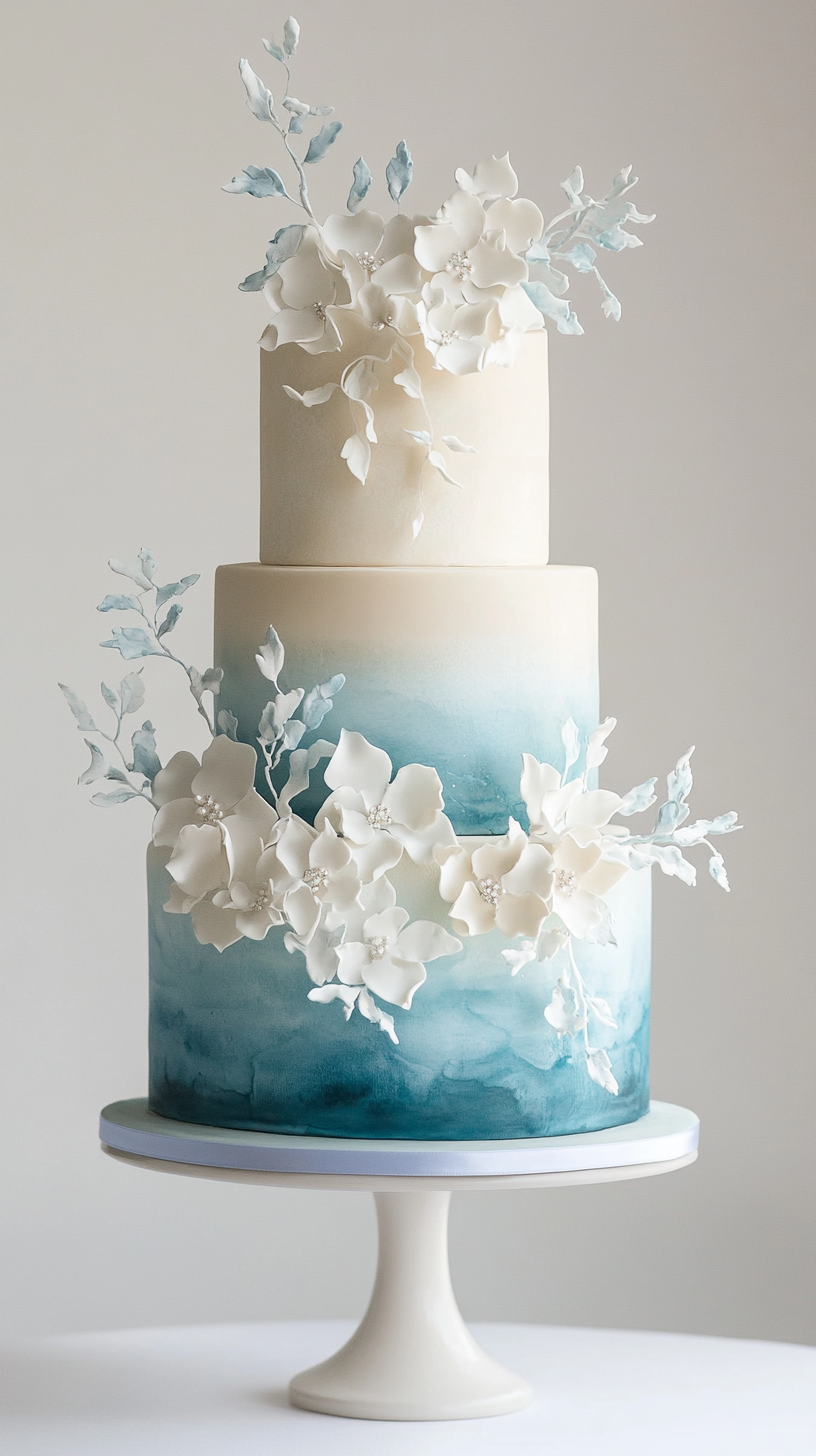
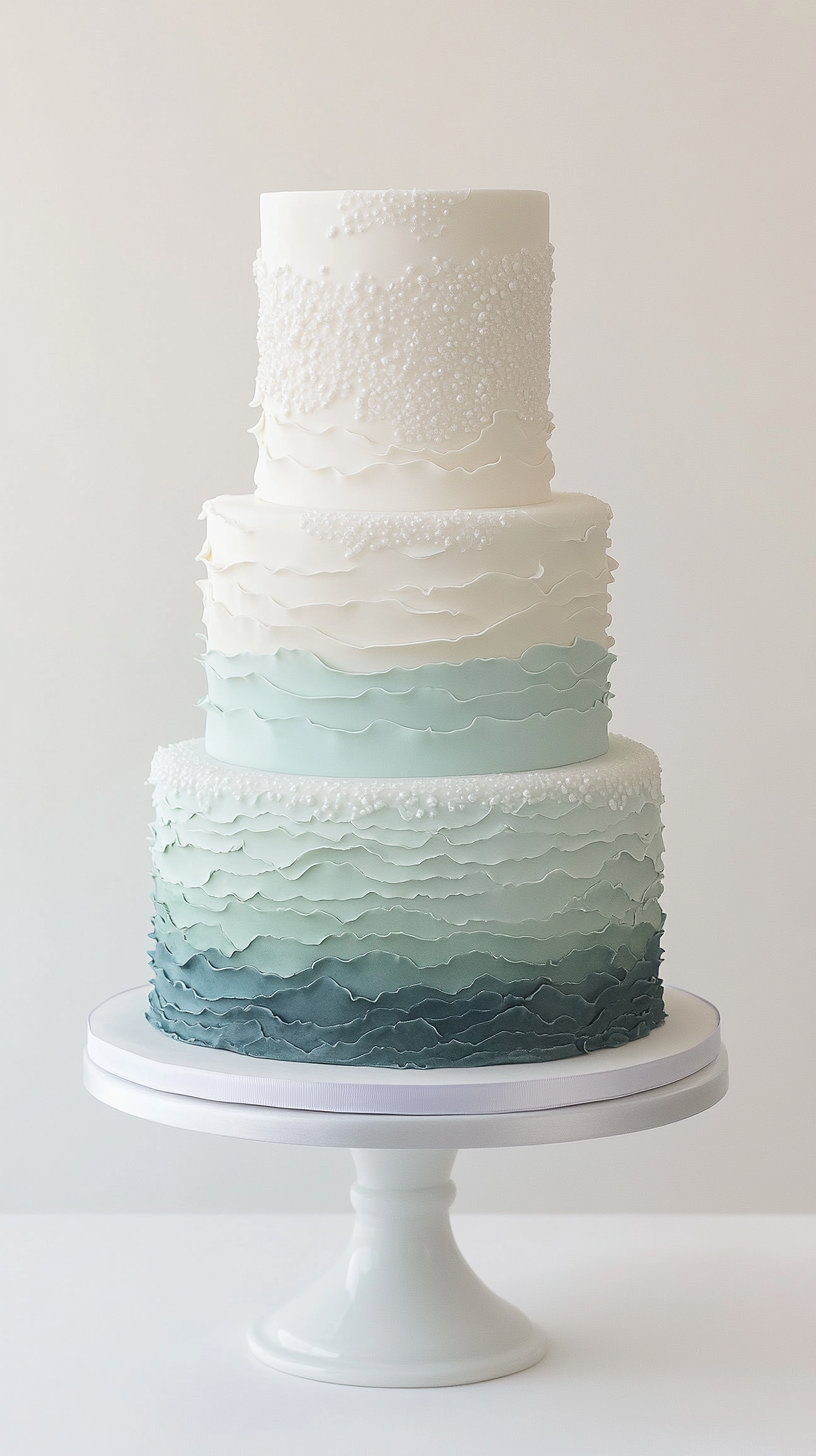
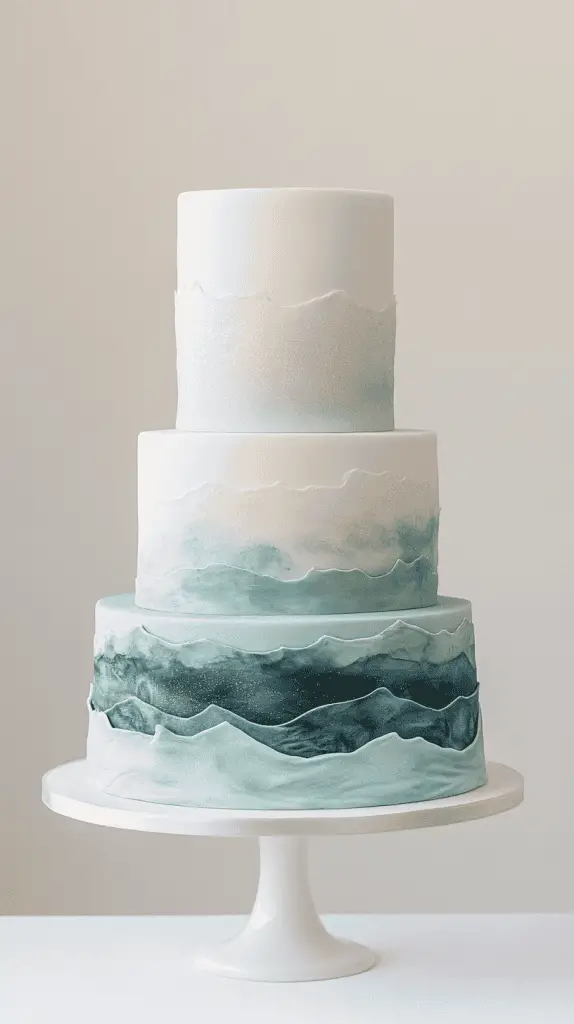
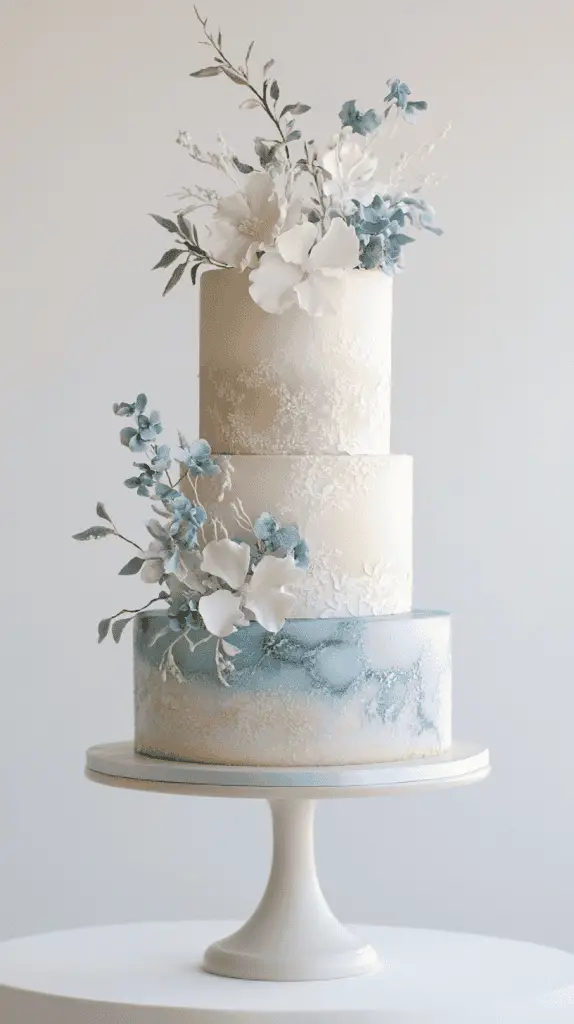
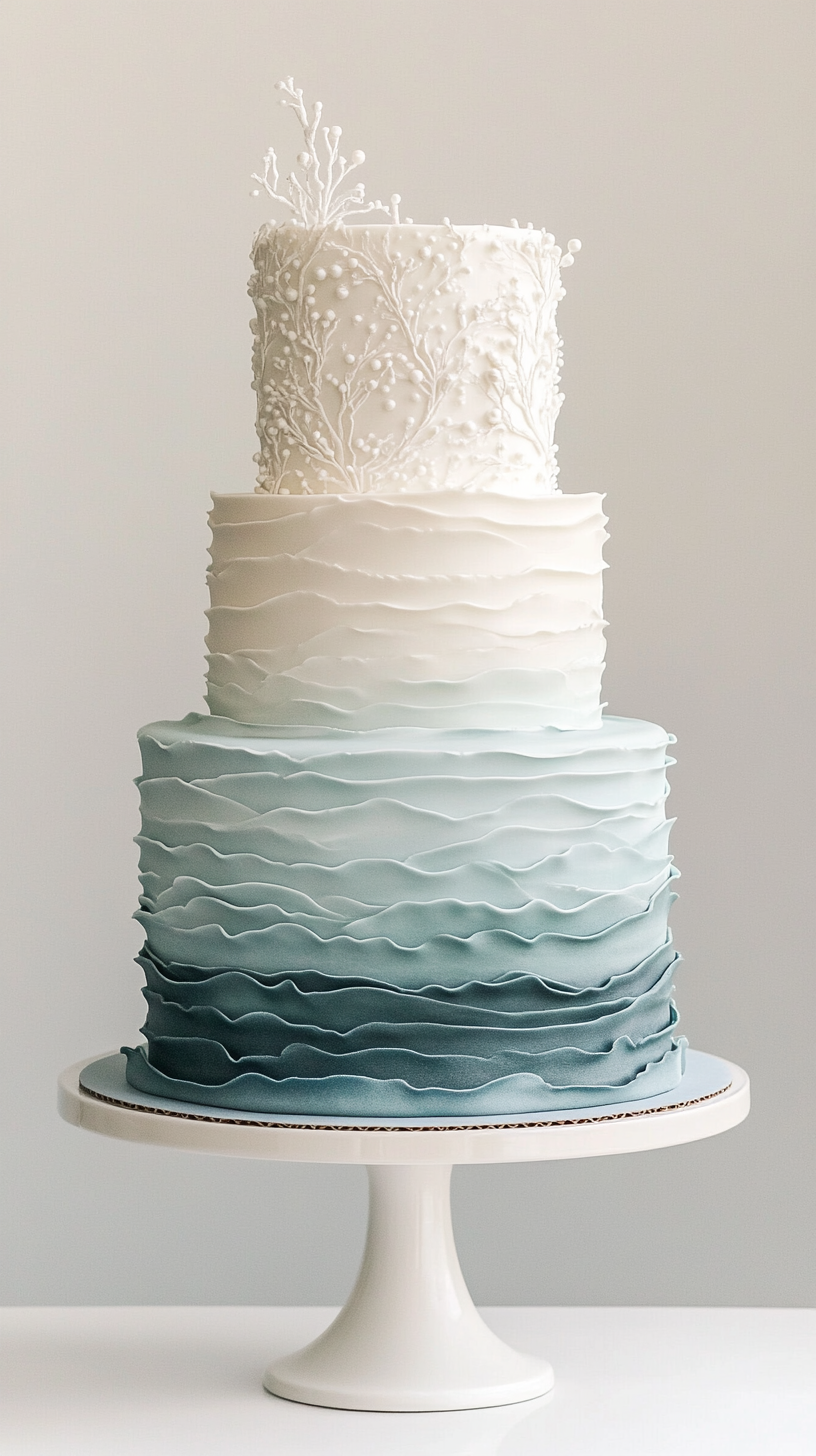
Shoreline ombre opalite wedding cakes combine the mystical qualities of opalite gemstones with coastal colour gradients. These designs mirror the natural transition from sandy beaches to deep ocean waters through carefully layered tones.
The technique involves blending soft blues, aqua tones, and sandy beige across multiple tiers. Bakers achieve this effect through airbrush application or hand-painted watercolour techniques that create seamless colour transitions. Each layer represents a different depth of ocean water.
Essential colour progression includes:
- Creamy sand tones at the base
- Pale seafoam green in the middle section
- Deep ocean blue towards the top tier
- Pearl white accents with opalescent shimmer
Beach weddings benefit particularly from this design approach. The shoreline aesthetic complements seaside venues whilst the opalite finish adds sophisticated elegance. The translucent quality catches natural sunlight beautifully during outdoor ceremonies.
Decorators enhance the shoreline effect through edible pearl dust and subtle glitter applications. These elements replicate opalite’s characteristic luminosity whilst maintaining the oceanic theme. The finish appears to shift colour depending on viewing angle and lighting conditions.
Pinterest boards frequently showcase this style for couples seeking coastal wedding inspiration. The design works equally well for intimate beach weddings and larger seaside receptions. Fresh flowers in white and blue hues complement the colour palette without overwhelming the cake’s natural beauty.
Professional bakers often incorporate subtle wave patterns or organic texturing into the fondant surface. This adds depth whilst preserving the smooth colour transitions that define shoreline ombre designs. The result captures both opalite’s ethereal qualities and the ocean’s timeless appeal.
5. Sea Glass Opalite Wedding Cake with Shell Details
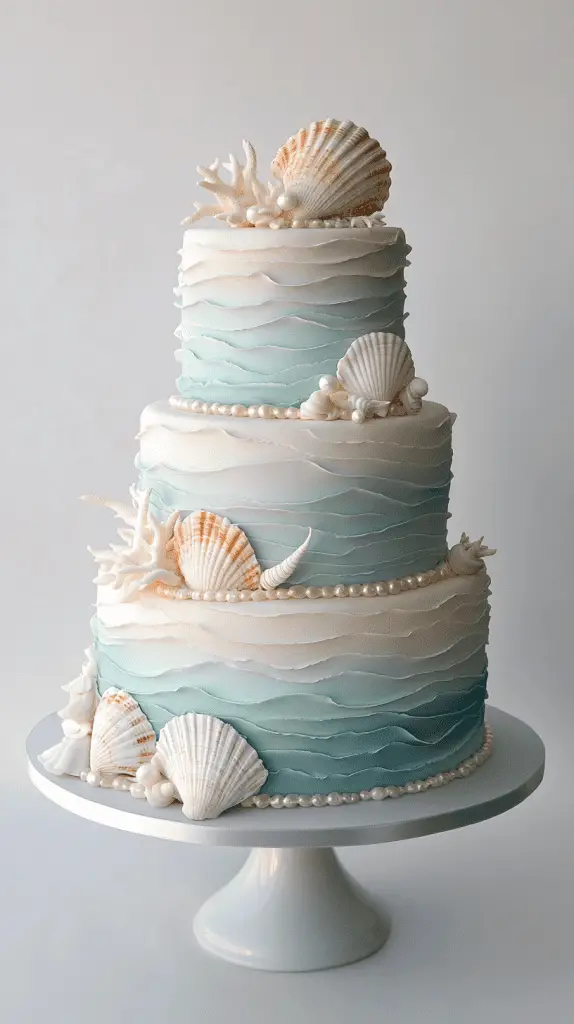
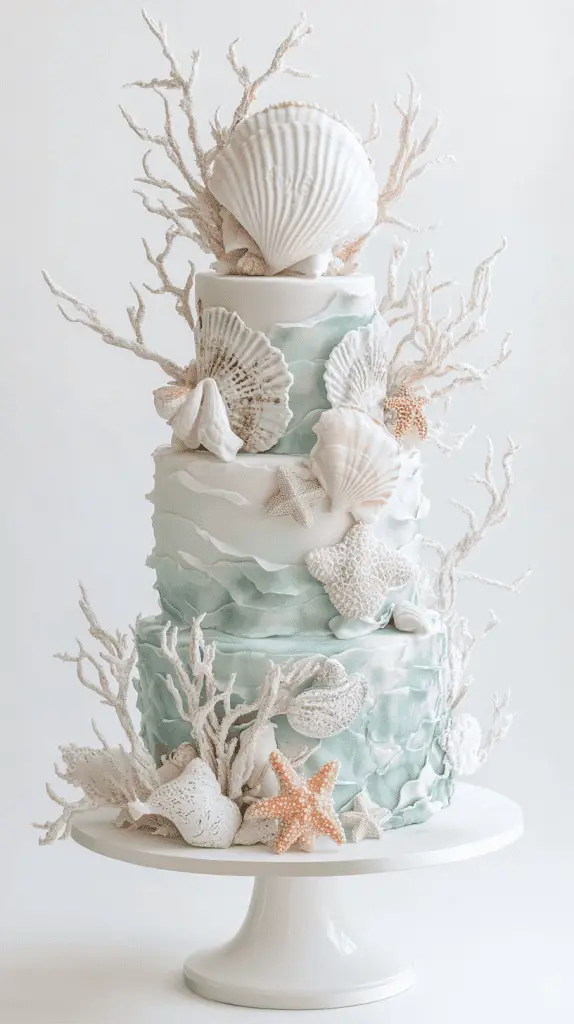
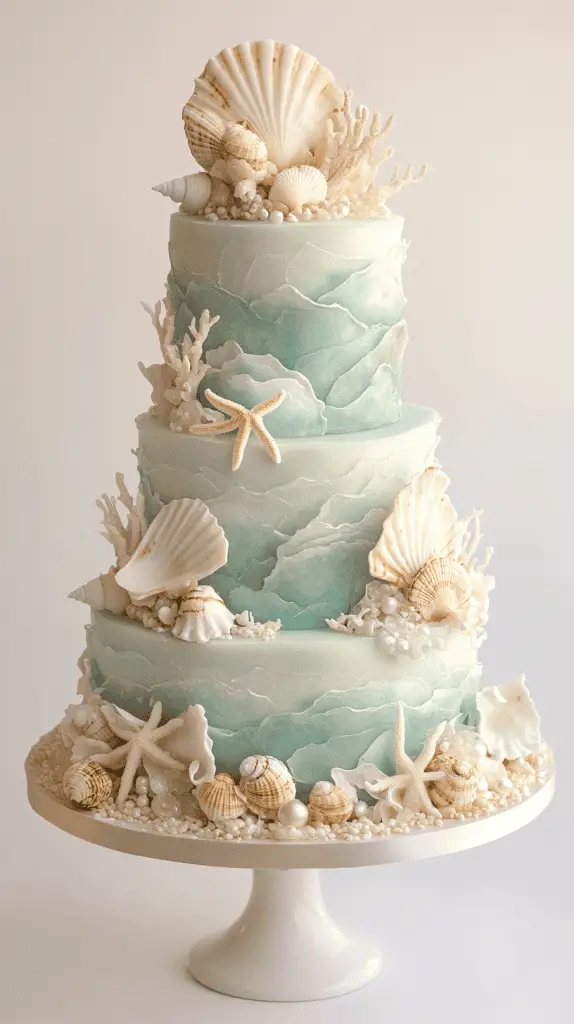
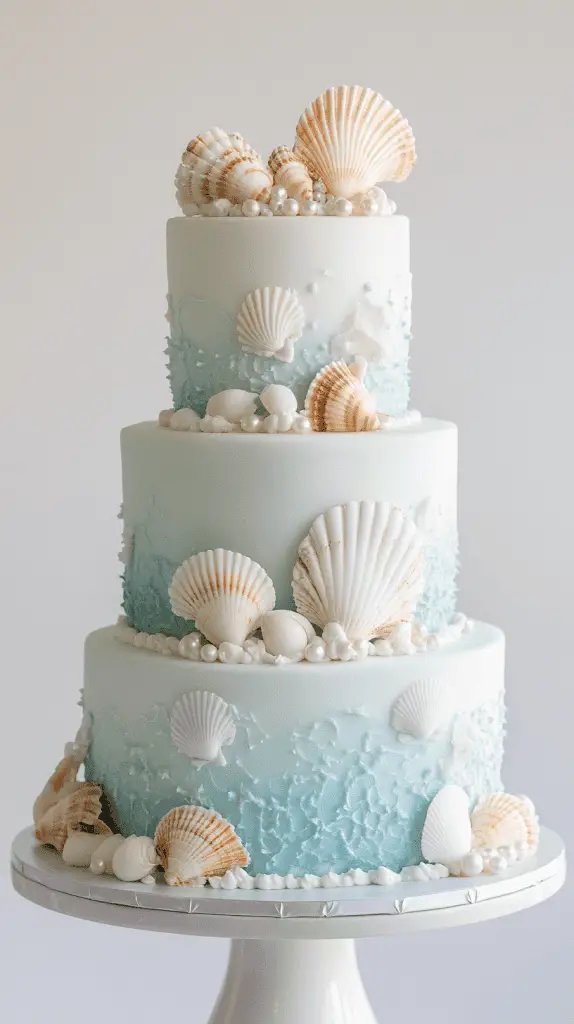
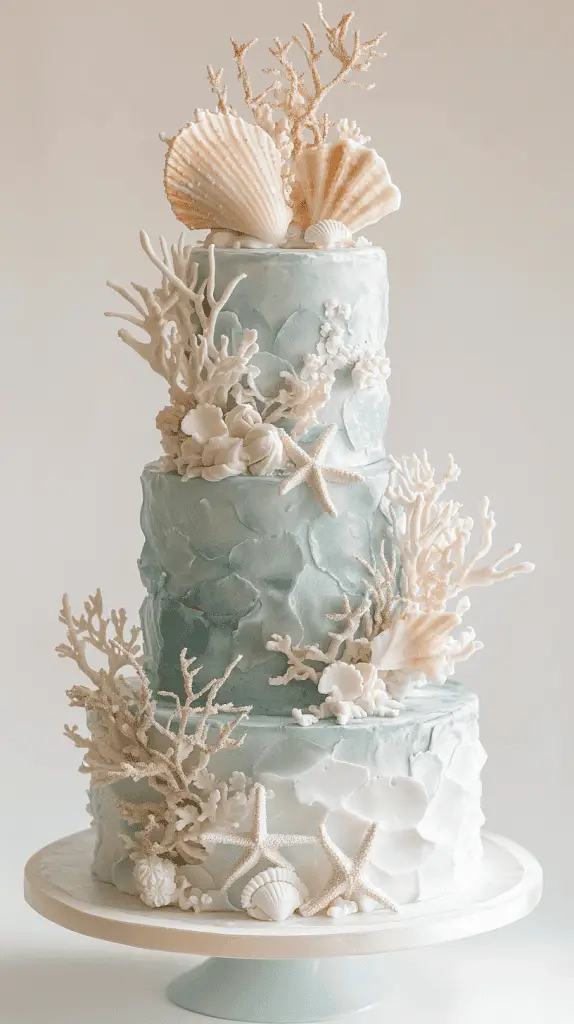
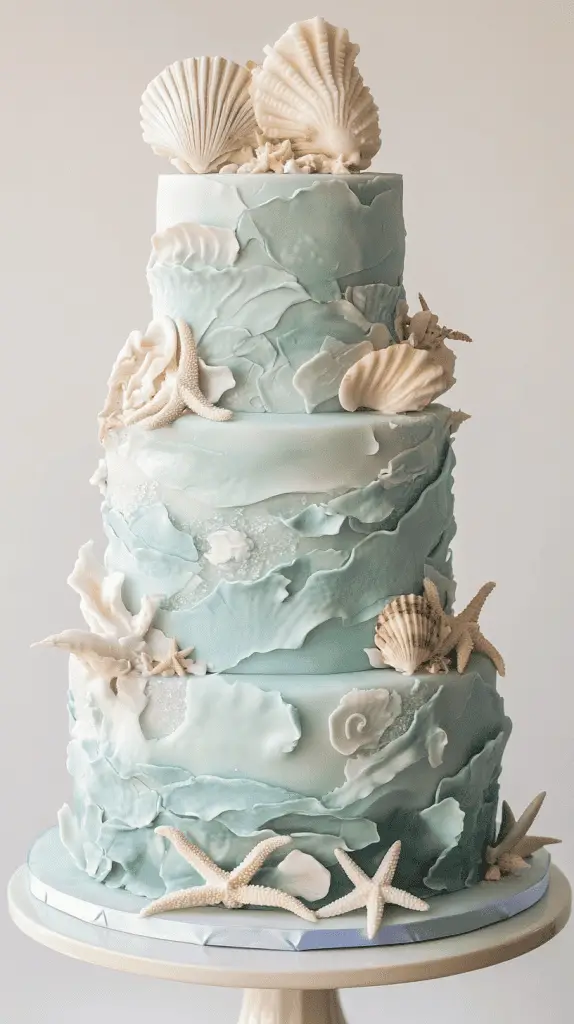
Sea glass opalite wedding cakes combine coastal elements with the luminous qualities of opalite gemstones for beach ceremonies and ocean-inspired celebrations. These designs feature frosted sea glass effects in soft blues and greens alongside natural shell embellishments.
Bakers achieve the sea glass appearance through airbrushed buttercream or fondant layers tinted with translucent pearl dust. The technique creates a weathered, ocean-tumbled look that complements opalite’s milky translucence. Multiple thin colour layers build depth similar to genuine beach glass.
Popular shell decorations include:
- Sugar-crafted conch shells with pearl lustre
- Fondant starfish in cream and champagne tones
- Edible scallop shells positioned along tier bases
- Hand-moulded sand dollars with textured details
The colour palette typically ranges from soft aquamarine to pale turquoise, blending seamlessly with opalite’s natural blue-white shimmer. Designers often incorporate sandy beige accents to ground the oceanic theme.
Pinterest boards showcase numerous interpretations of this style, with nine cakes or more featured in coastal wedding collections. Each design balances the ethereal opalite aesthetic with tangible seaside elements.
Shell placement requires strategic planning to avoid overwhelming the opalite’s subtle beauty. Designers position larger shells as focal points whilst scattering smaller pieces naturally across tiers. The shells should appear as though they’ve washed ashore rather than artificially arranged.
Complementary additions such as sugar coral branches and edible pearls enhance the underwater atmosphere. These elements work particularly well for couples marrying at seaside venues or those seeking maritime-inspired themes for inland celebrations.
6. Mermaid Tail Opalite Wedding Cake
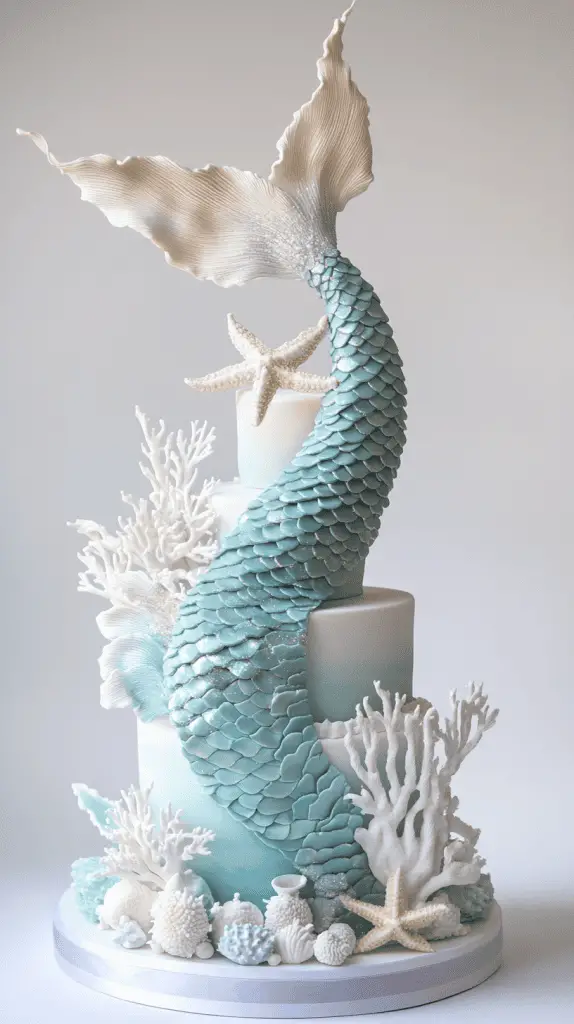
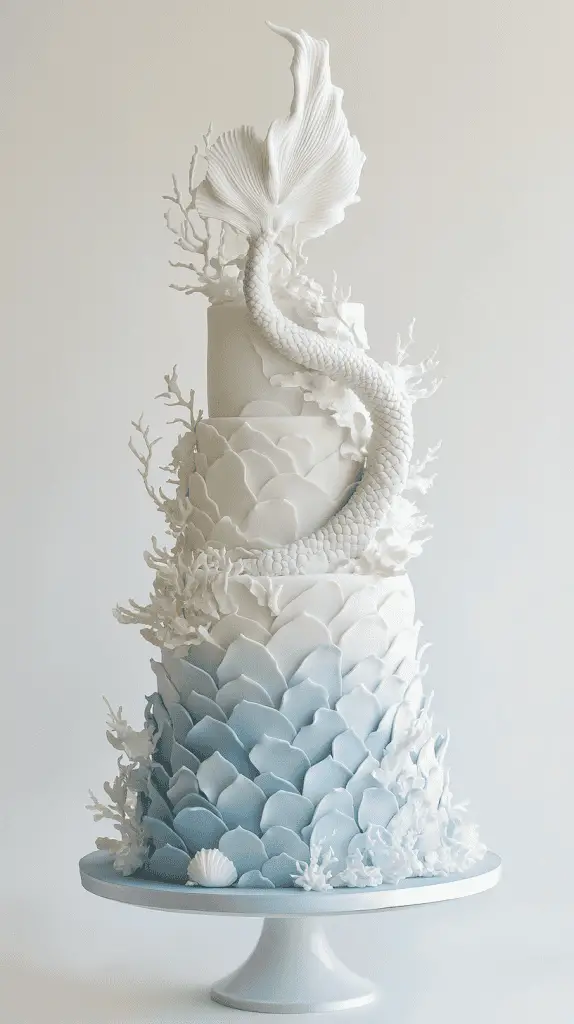
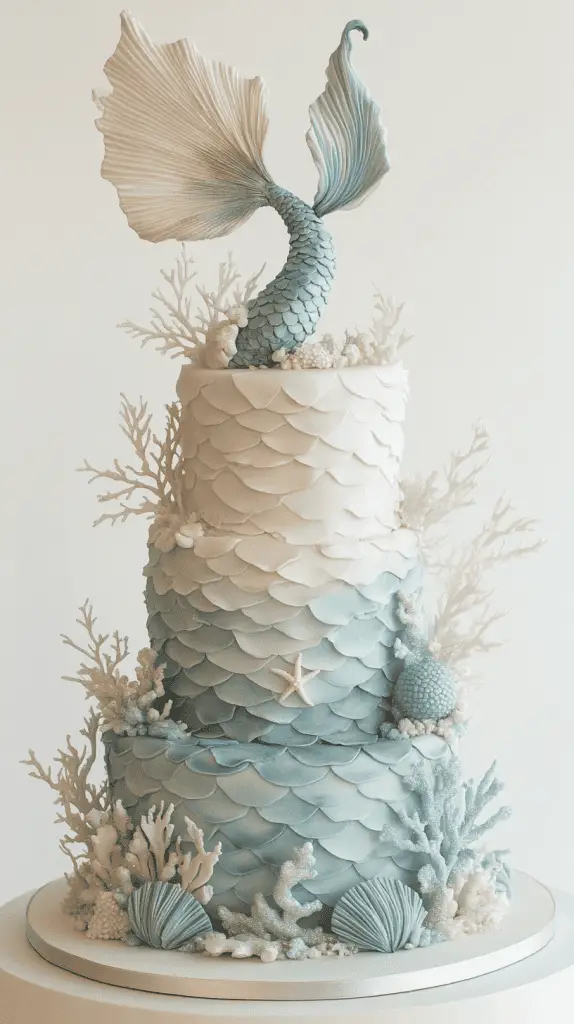
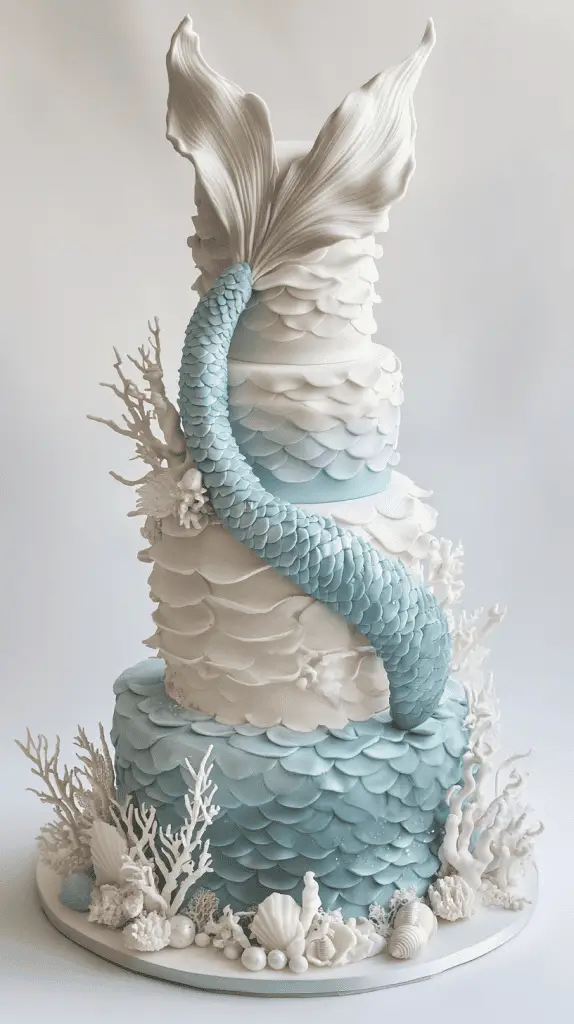
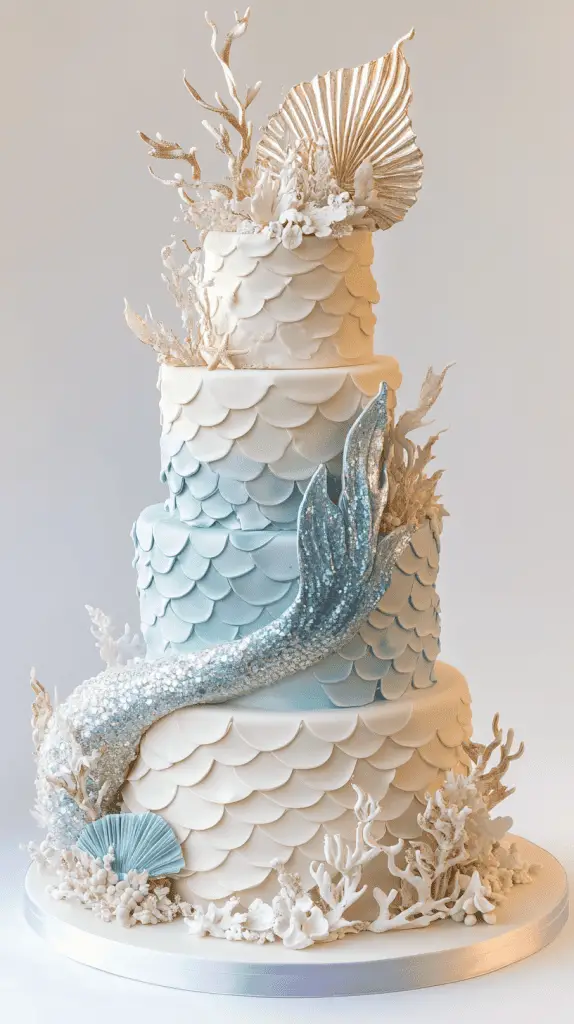
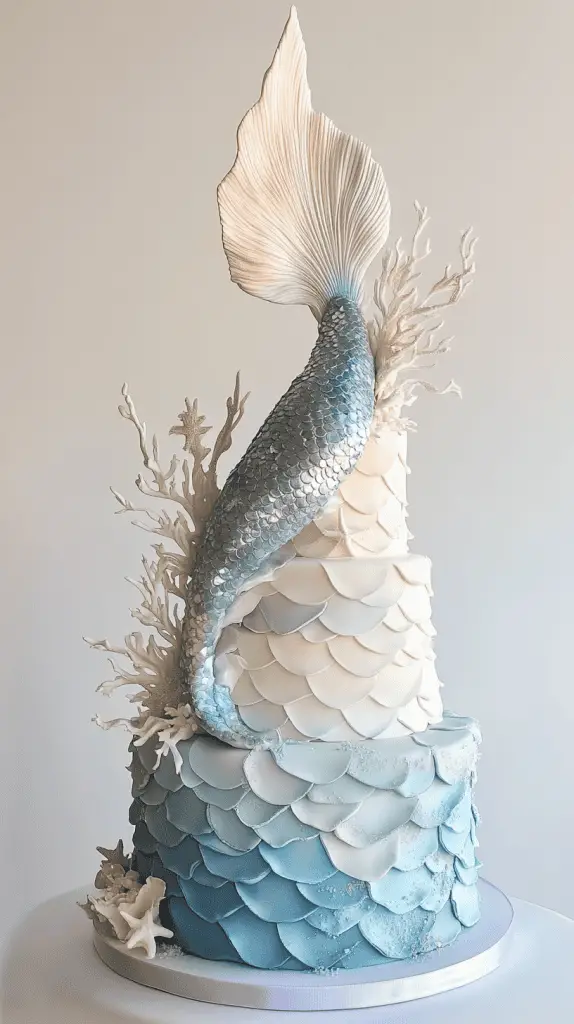
Mermaid tail opalite wedding cakes blend oceanic fantasy with the translucent shimmer of opalite gemstones. These designs feature sculpted fondant scales that incorporate opalite’s characteristic milky blues and pearl whites.
Design Elements
The tail typically cascades down one or more tiers, created with individual fondant scales arranged in overlapping patterns. Bakers apply pearl lustre dust and edible glitter to replicate opalite’s natural iridescence. The scales can be tinted in gradients from pale blue to cream, mimicking how opalite shifts colour in different lighting.
Essential features include:
- Hand-cut fondant scales with dimensional texture
- Pearl dust in blue and white tones
- Edible glitter for subtle sparkle
- Sugar pearls and seashell accents
Structural Techniques
Professional decorators build the mermaid tail using layered fondant or sugar paste positioned to create movement and flow. The tail fin receives particular attention, with delicate ruffles or pleated details that enhance the underwater aesthetic.
Opalite-inspired colours work beautifully with complementary ocean elements. Sugar coral, fondant starfish, and wafer-paper sea fans create cohesive underwater scenes without overwhelming the design. The translucent quality of opalite effects makes these cakes particularly striking under venue lighting.
These designs suit beach weddings, couples with oceanic connections, or those seeking unique alternatives to traditional floral cakes. The combination of fantasy elements with elegant opalite finishes creates sophisticated results rather than overly themed decorations.
7. Underwater Reef Opalite Geode Wedding Cake
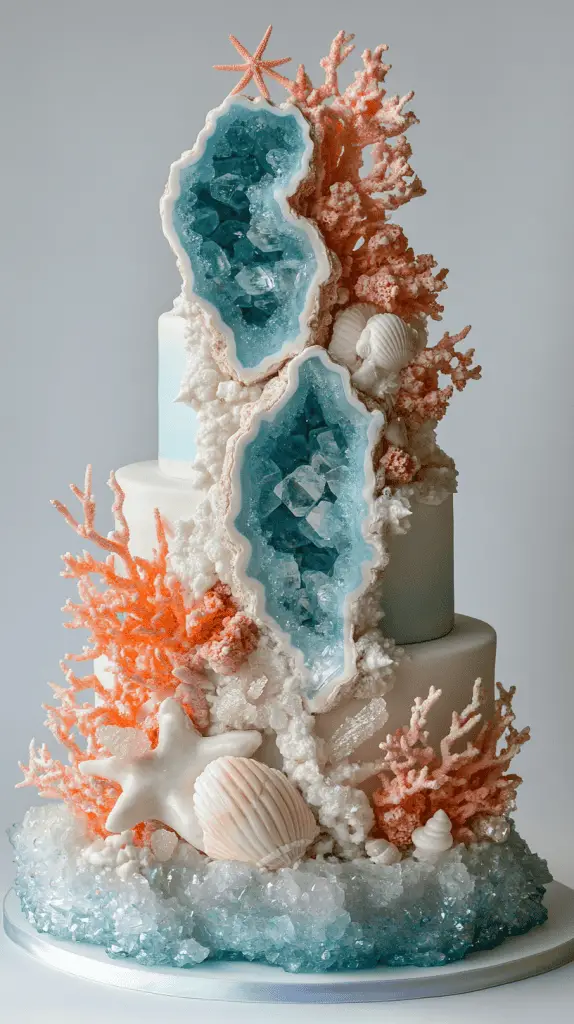
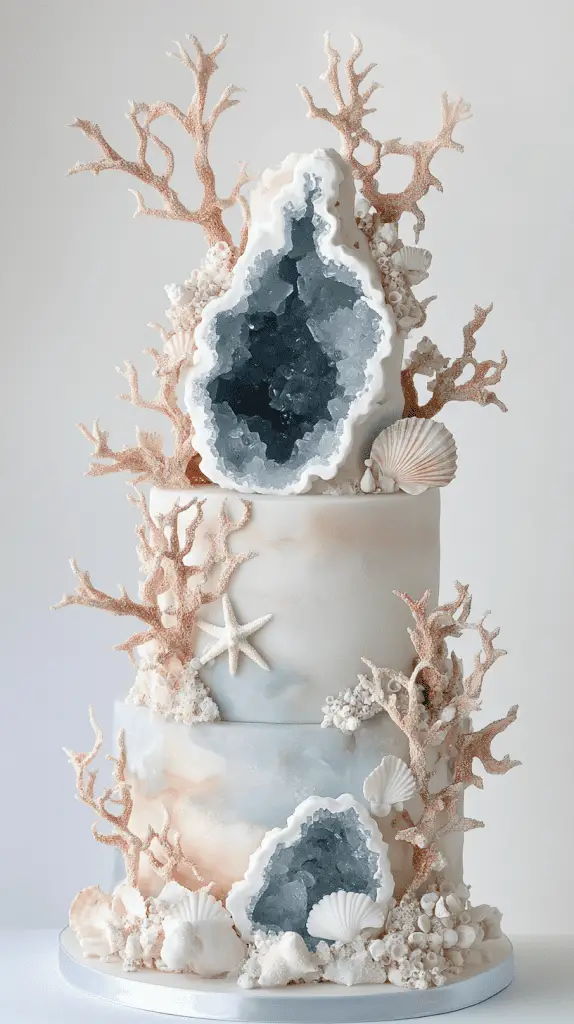
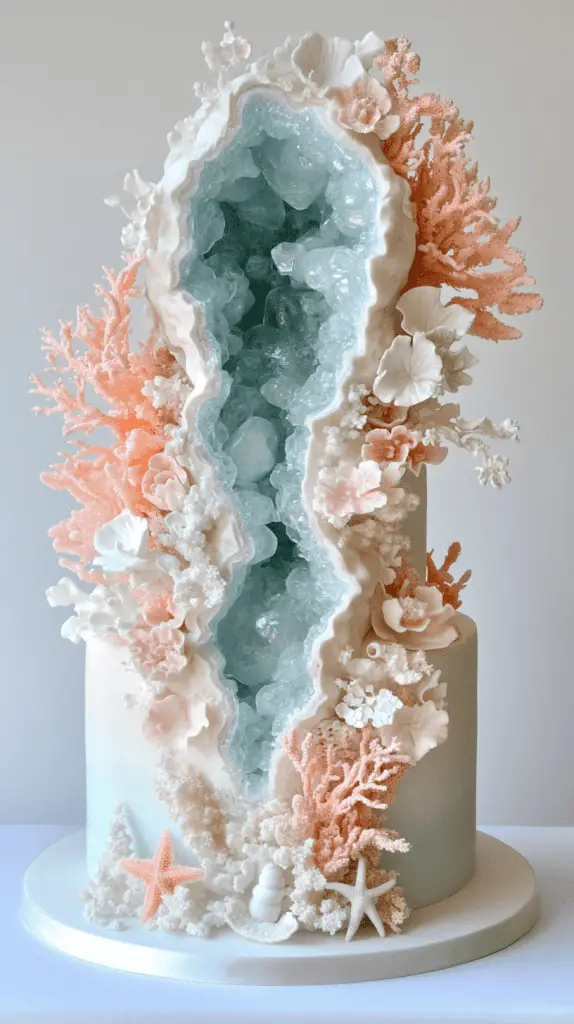
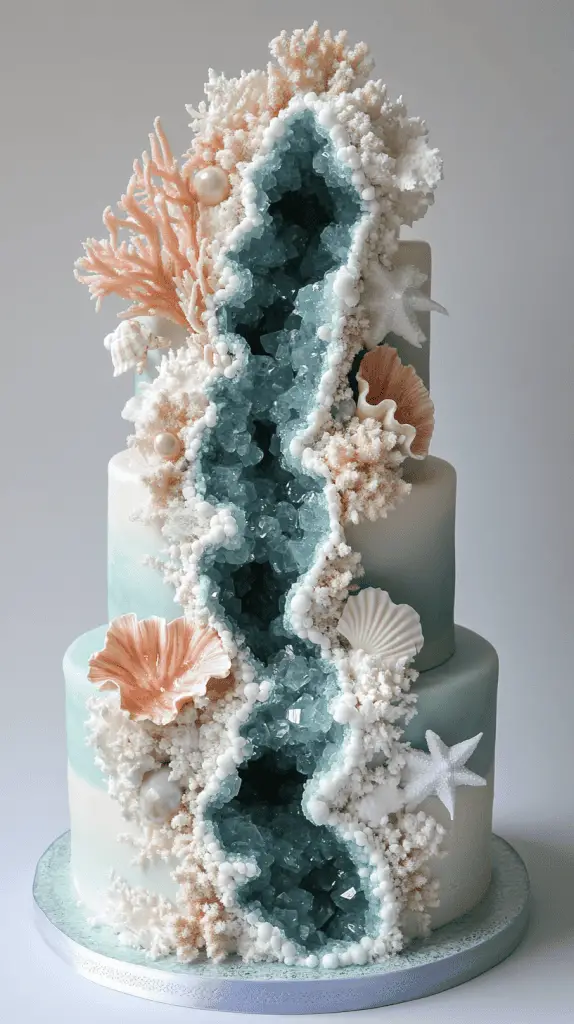
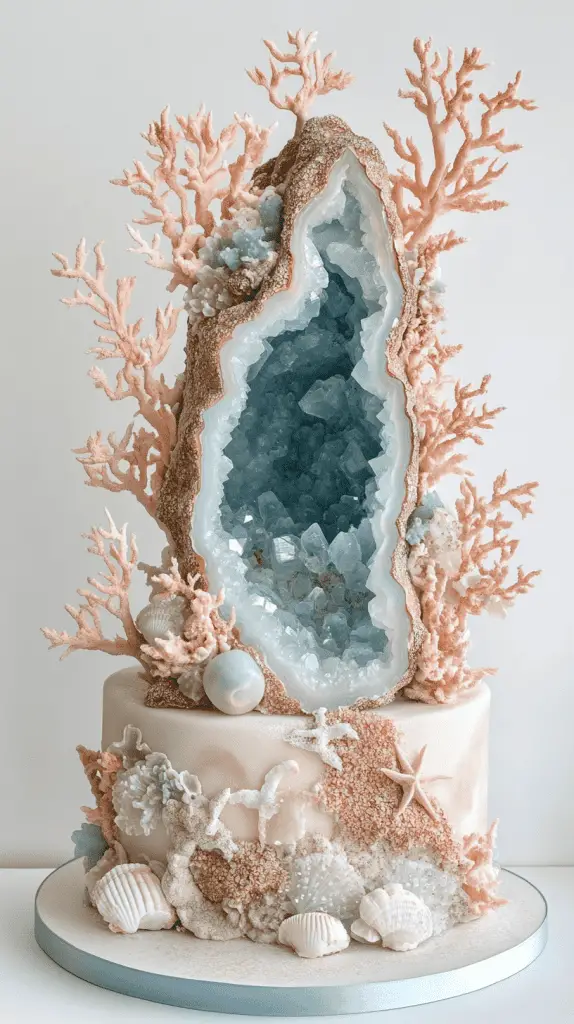
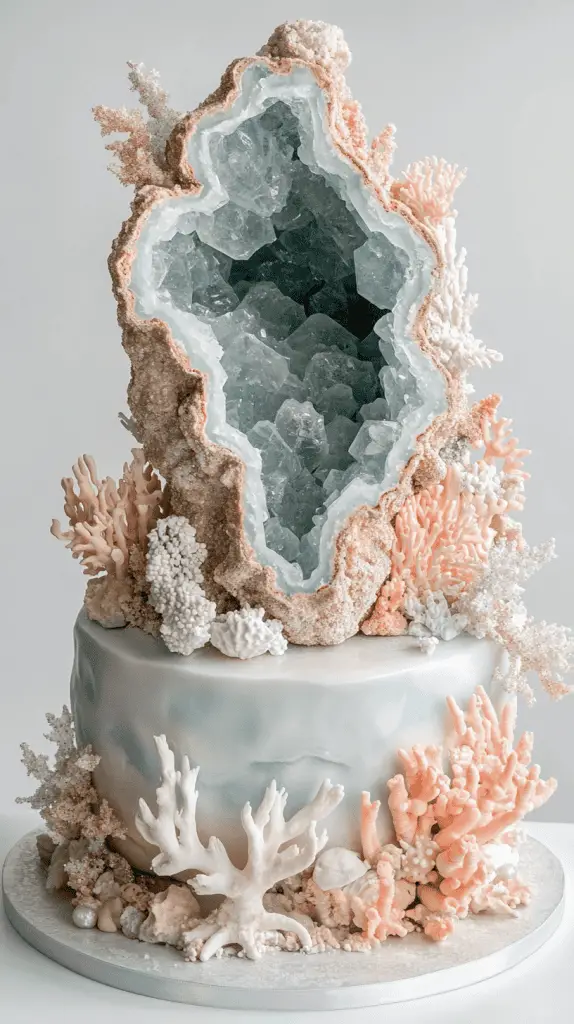
Underwater reef opalite geode cakes combine oceanic elements with crystalline structures to create stunning centrepieces for beach wedding celebrations. These designs feature carved geode sections filled with translucent opalite pieces alongside edible coral formations and marine-inspired details.
Core Design Elements
The geode cavity typically occupies one or two tiers, revealing clusters of opalite crystals in soft blues and milky whites. Bakers surround these crystal formations with hand-moulded fondant coral branches in pink, champagne, and pearl tones that complement the opalite’s natural shimmer.
Sugar starfish and seashells accent the base tiers, creating an authentic underwater atmosphere. These elements work alongside the geode structure rather than competing with it visually.
Colour Palette Selection
| Element | Colour Options |
| Opalite crystals | Pale blue, white, translucent |
| Coral details | Soft pink, champagne, mother-of-pearl |
| Base tiers | Ocean blue, sand beige, seafoam |
The translucent quality of opalite mirrors underwater light effects naturally. This makes the material particularly suitable for beach wedding cake designs seeking authentic oceanic aesthetics.
Construction Techniques
Professional decorators create stable cavities that support both opalite pieces and coral elements without compromising structural integrity. Rock candy or tinted sugar glass offers edible alternatives to genuine opalite whilst maintaining the desired visual impact.
The finished design appears as though a section of ocean reef has been crystallised within the cake. Fresh flowers and additional marine elements can enhance the underwater theme without overwhelming the geode’s focal presence.
8. Minimalist Coastal Opalite Wedding Cake
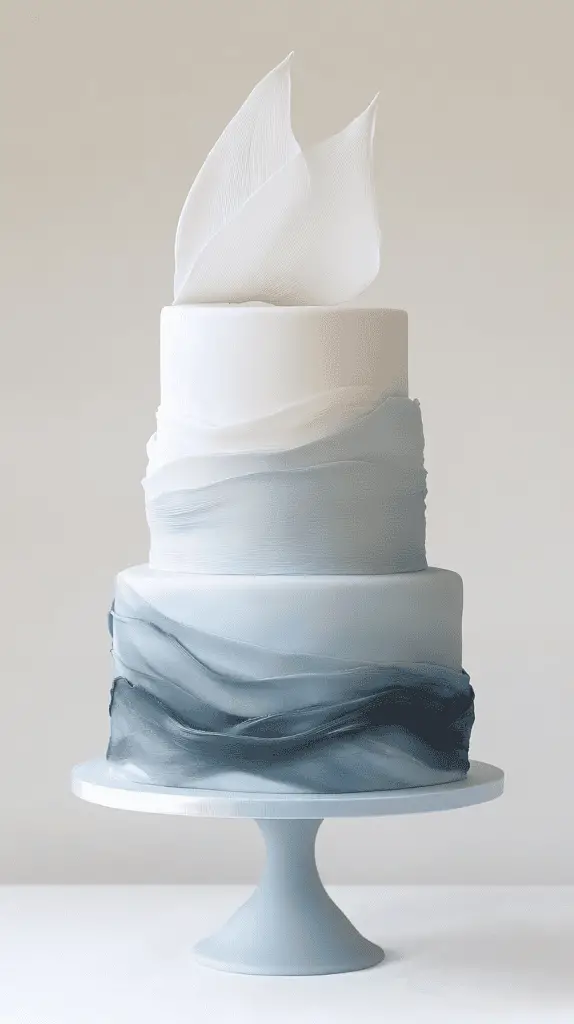
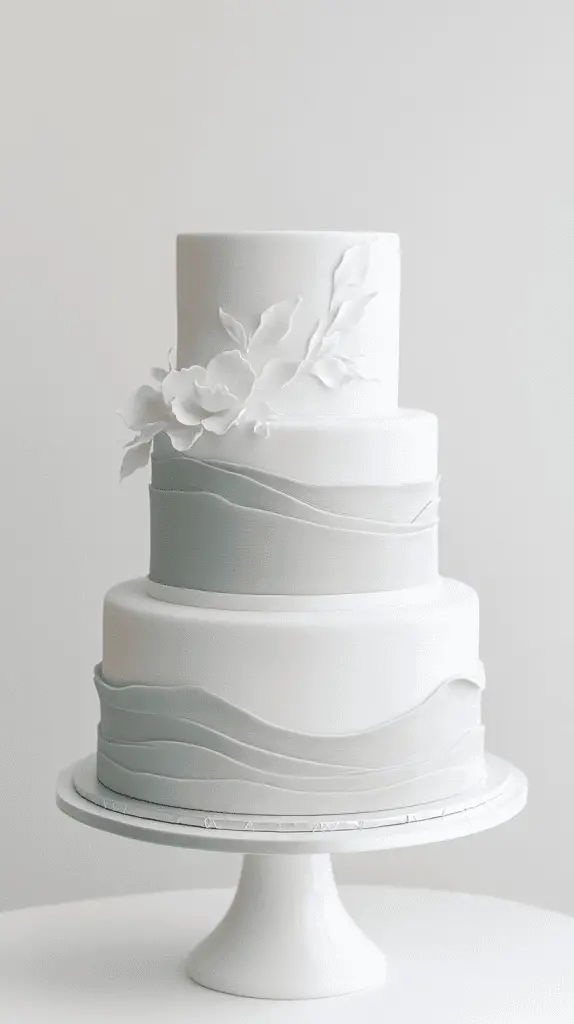
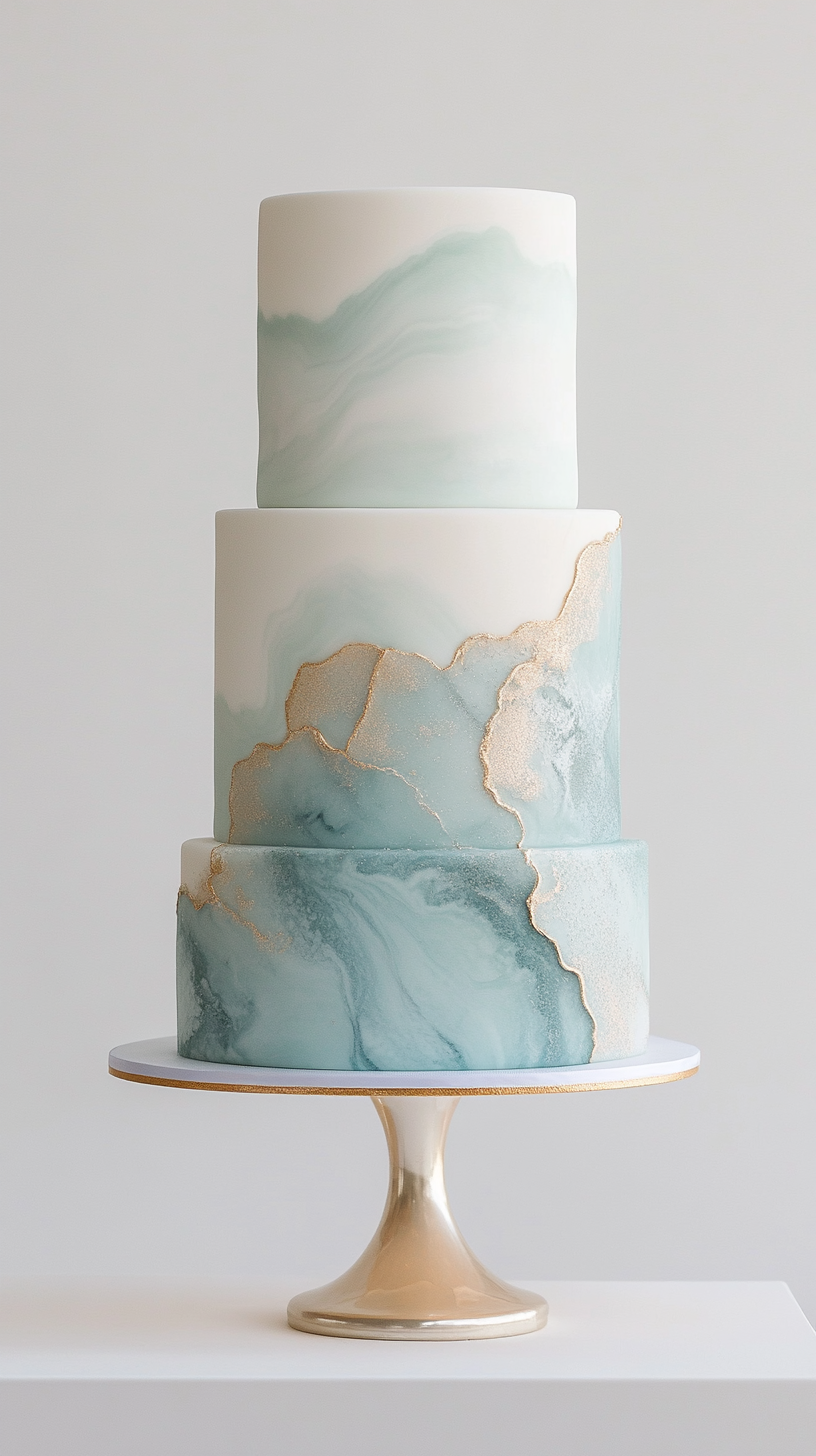
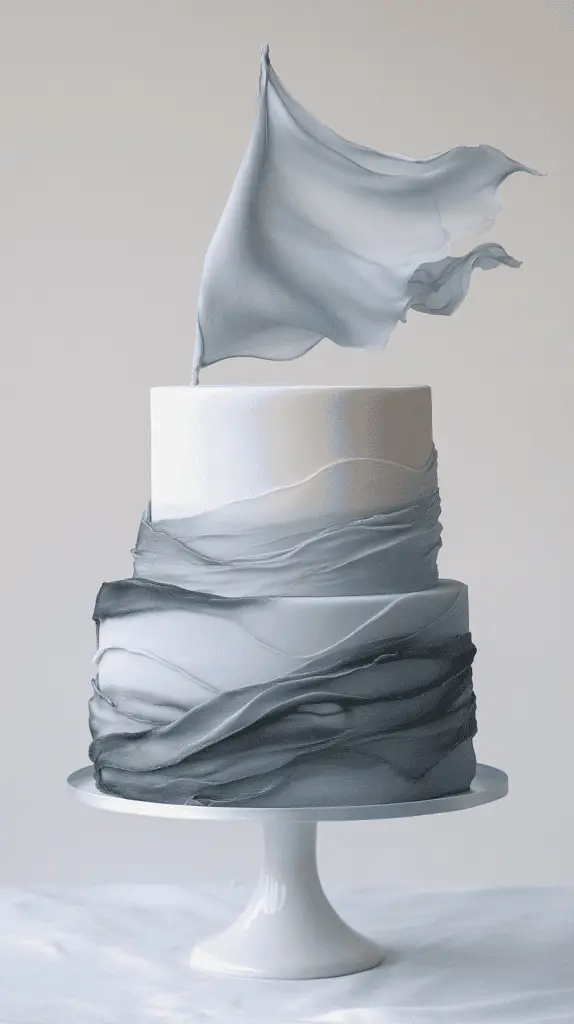
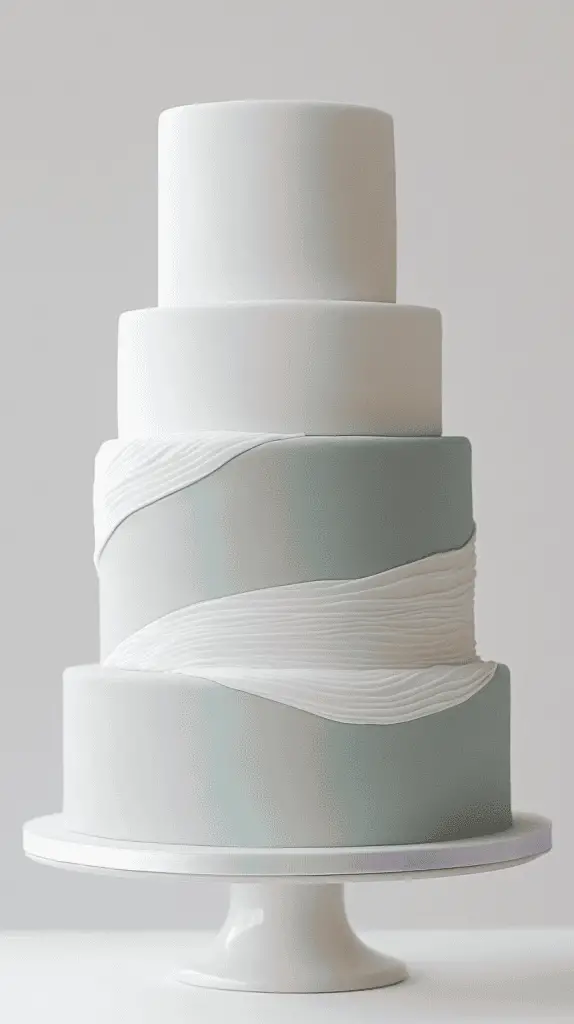
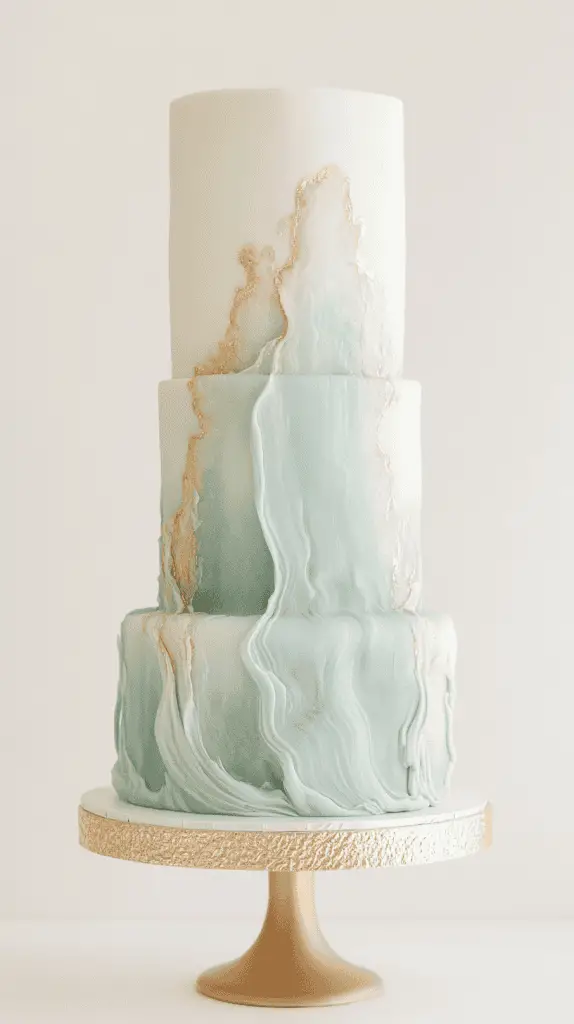
Minimalist coastal opalite wedding cakes combine clean design principles with the ocean’s natural colour palette. These cakes feature smooth fondant surfaces in soft blues and whites that mirror opalite’s translucent appearance. The restrained approach allows the stone’s ethereal qualities to shine without competing decorative elements.
Key design characteristics include:
- Single or double tier structures
- Clean geometric lines
- Subtle pearl lustre finishes
- Strategic negative space
- Muted oceanic tones
The colour scheme typically incorporates pale aqua, cream, and soft grey-blue tones. Bakers achieve the opalite effect through airbrushing techniques with pearl dust rather than heavy decoration. This creates depth whilst maintaining the minimalist aesthetic.
Texture remains deliberately subtle in these designs. A single panel of marbled opalite effect provides visual interest without overwhelming the cake’s sleek silhouette. Some designers incorporate one delicate sugar sail or small cluster of isomalt crystals as a focal point.
Popular placement options:
| Element | Position | Effect |
| Opalite panel | Single tier side | Accent feature |
| Pearl lustre | Entire surface | Subtle shimmer |
| Isomalt crystal | Top tier edge | Minimal sparkle |
The finishing touches typically include one or two sprigs of eucalyptus or a single white bloom. Metallic accents in gold or silver remain sparse, appearing only on cake boards or simple wire details. This restrained approach suits modern beachside ceremonies where couples prefer sophisticated elegance over elaborate decoration.
9. Driftwood and Opalite Beach Boho Wedding Cake
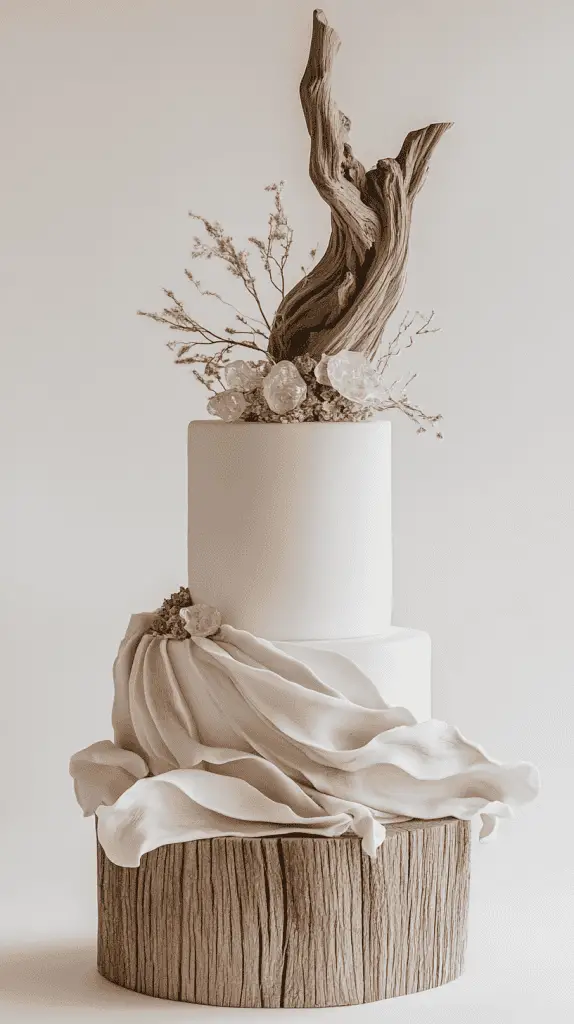
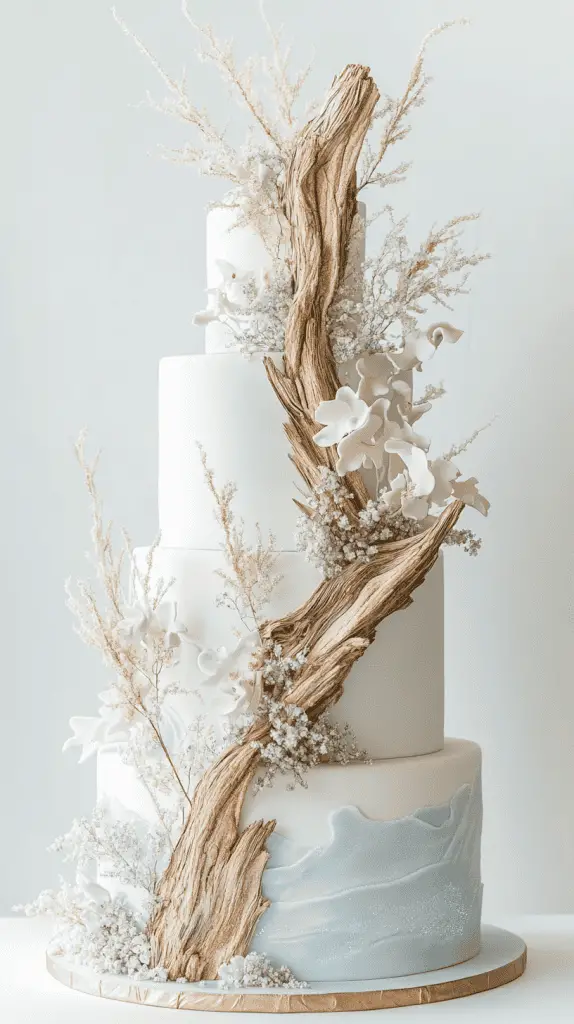
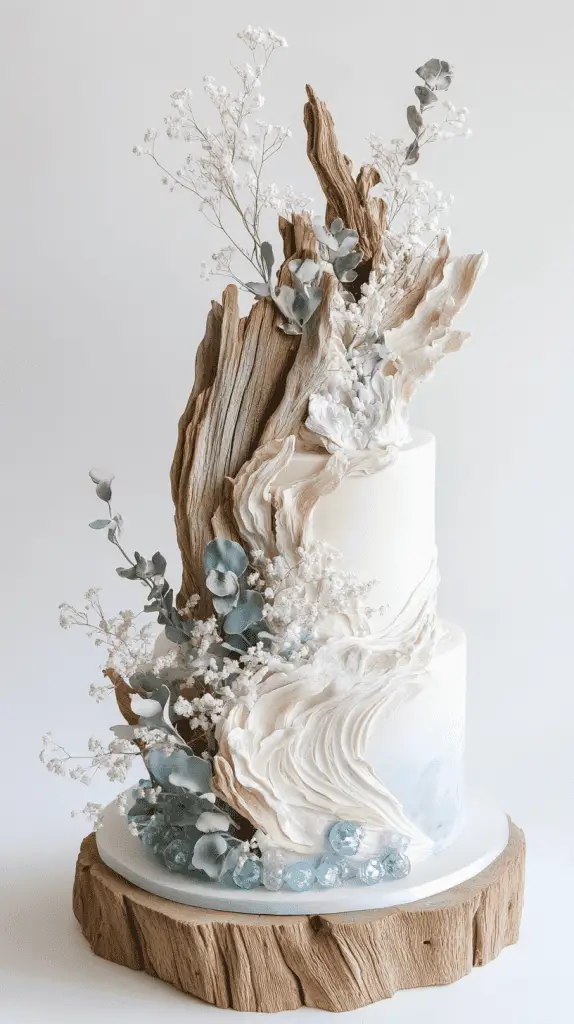
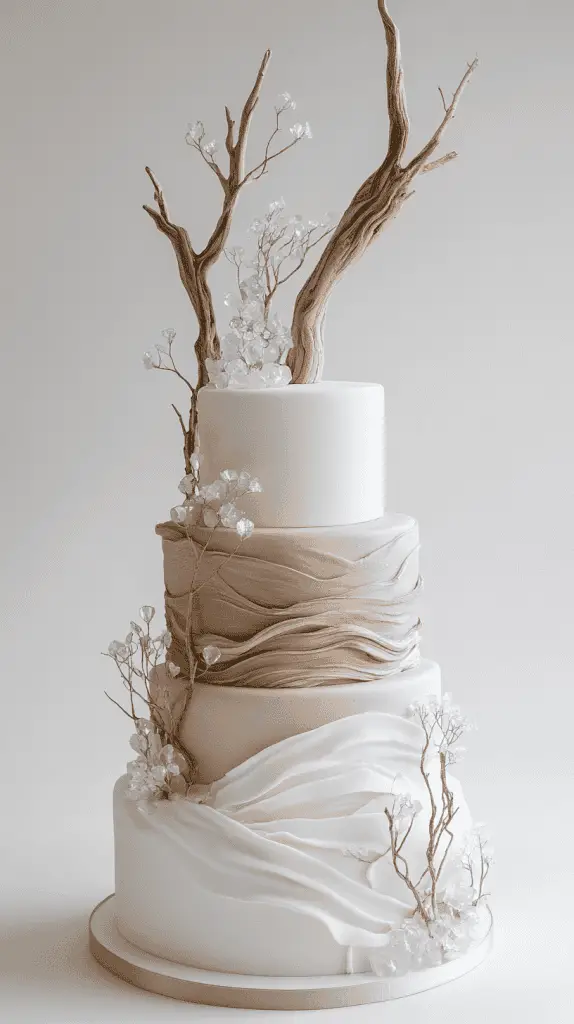
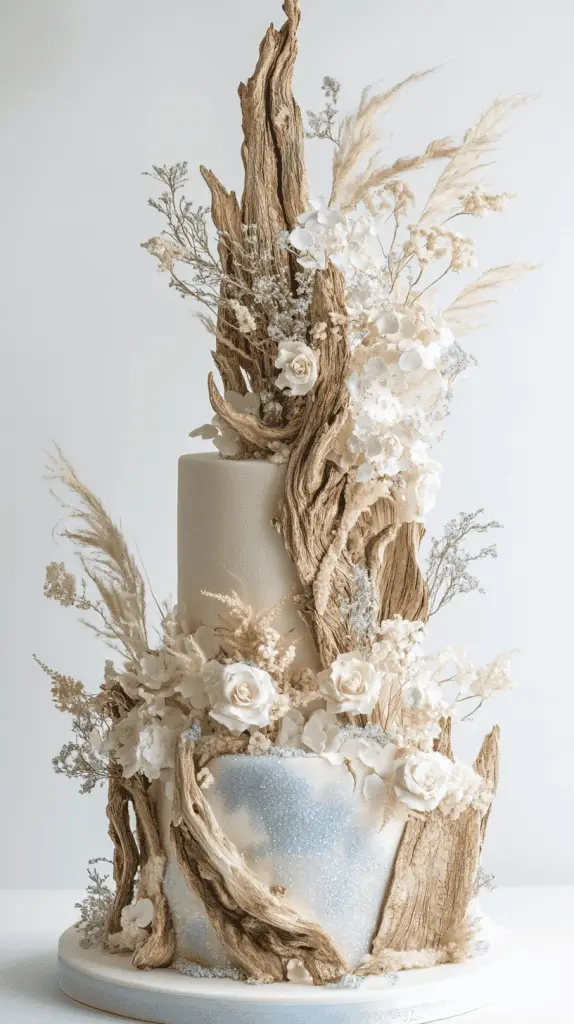
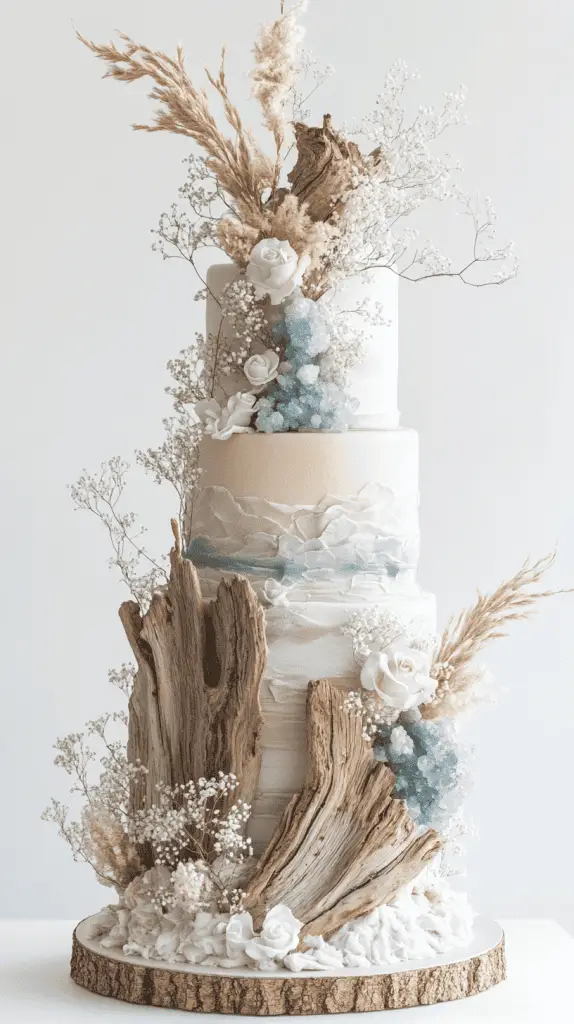
Driftwood elements paired with opalite create an authentic coastal bohemian aesthetic that brings natural shoreline beauty to wedding cakes. This combination works particularly well for couples seeking an earthy yet ethereal look that celebrates both organic textures and mystical shimmer.
Natural driftwood pieces serve as dramatic cake separators or toppers alongside opalite accents. The weathered wood’s grey tones complement opalite’s milky blue and white hues perfectly. Bakers often use food-safe treated driftwood to create structural elements that appear to float between cake tiers.
The bohemian element emerges through loose, organic placement rather than structured symmetry. Fresh or dried flowers tucked around driftwood pieces enhance the free-spirited aesthetic. Pampas grass, eucalyptus, and baby’s breath work exceptionally well with this design approach.
Key design elements include:
- Weathered grey driftwood as natural cake stands
- Opalite sugar crystals clustered along wood grain
- Flowing buttercream textures in sandy neutrals
- Hand-painted opalite effects on fondant tiers
- Macramé-inspired piping details
The colour palette centres on soft neutrals with oceanic accents. Cream, taupe, and sandy beige provide the base, whilst opalite’s characteristic pale blue adds subtle shimmer without overwhelming the natural elements.
Professional cake artists create edible driftwood replicas using modelling chocolate or fondant painted to match authentic weathered wood. These pieces offer more placement flexibility whilst maintaining the desired rustic appearance. The opalite elements catch light beautifully against the matte finish of faux or real driftwood.
This design style suits beach ceremonies, garden receptions, or any venue where couples want to blend coastal and bohemian aesthetics into one cohesive vision.
10. Tide Pool Opalite Wedding Cake with Bubbles and Coral
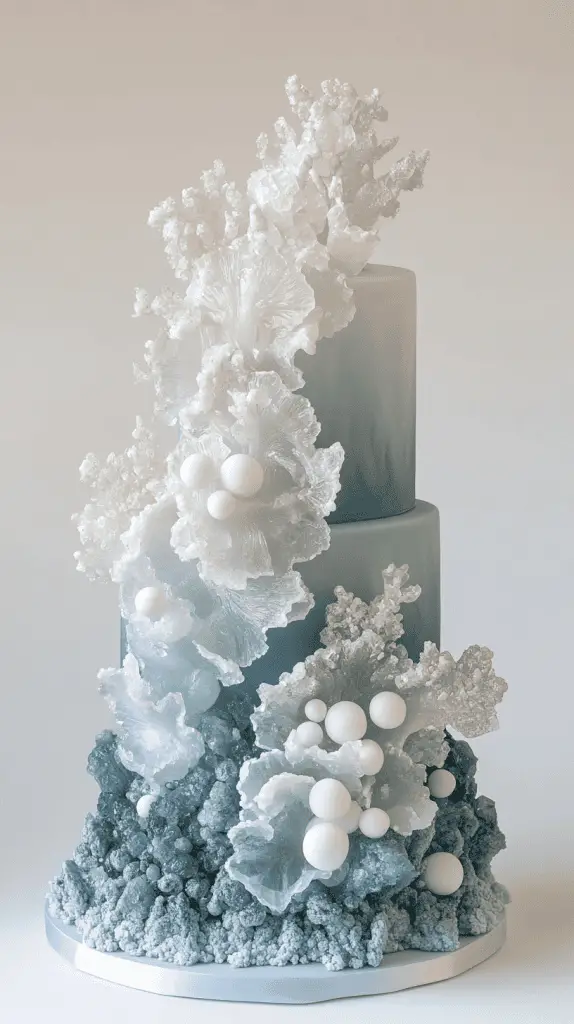
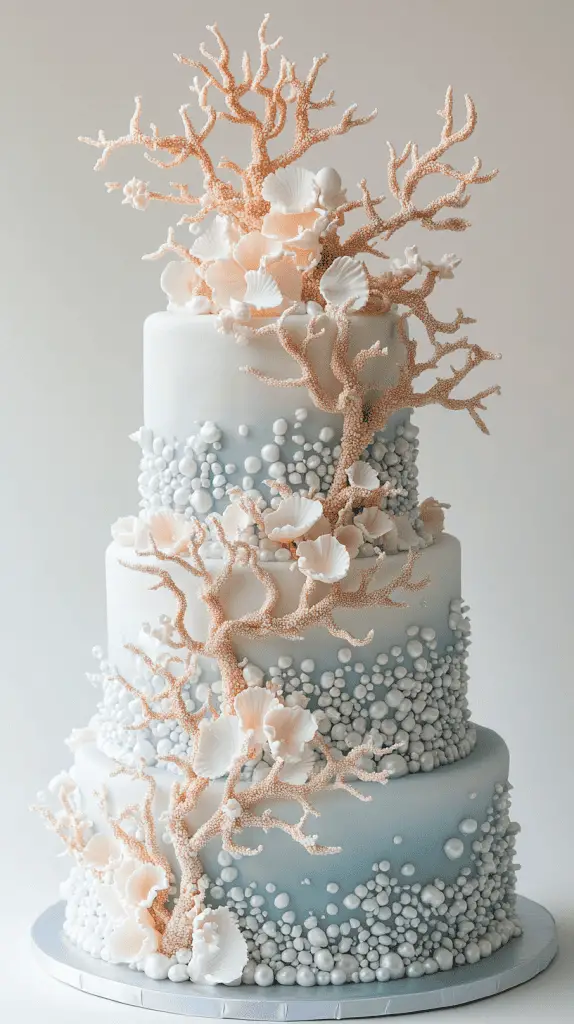
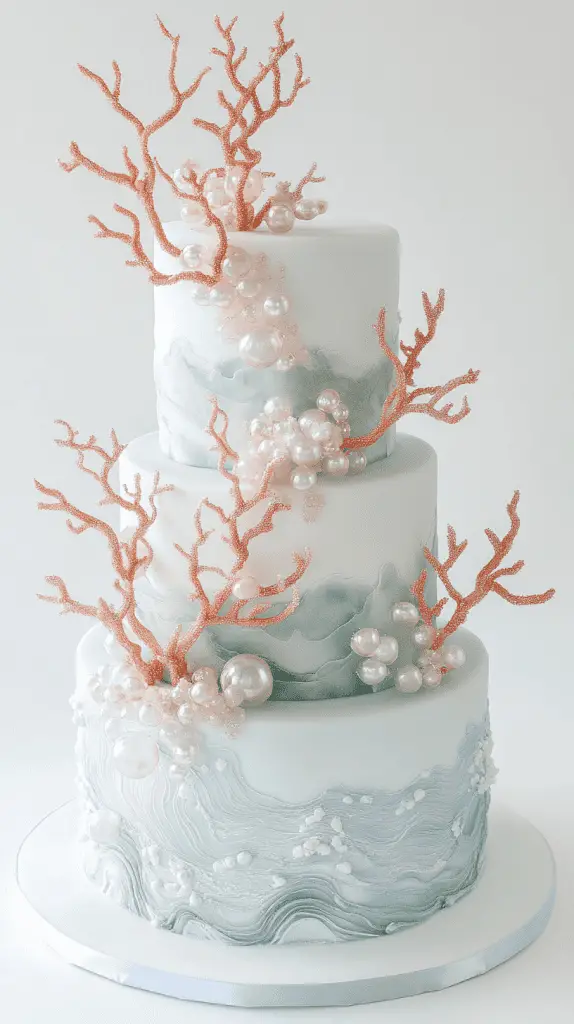
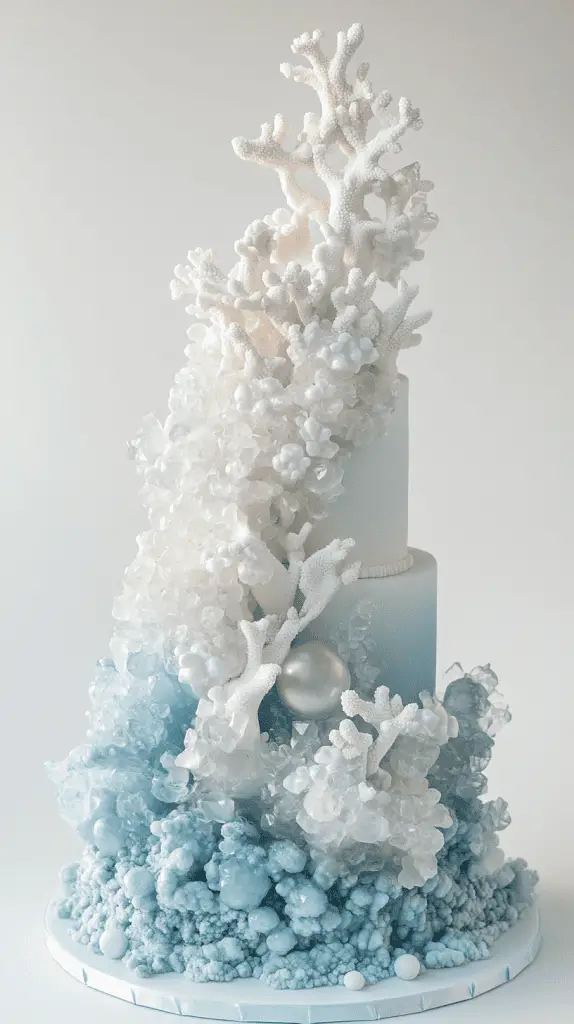
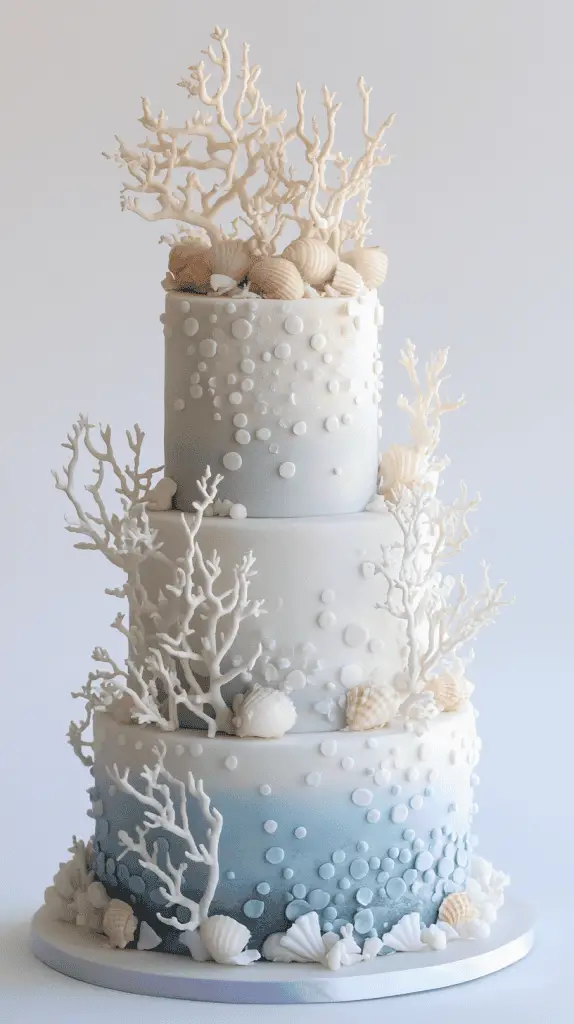
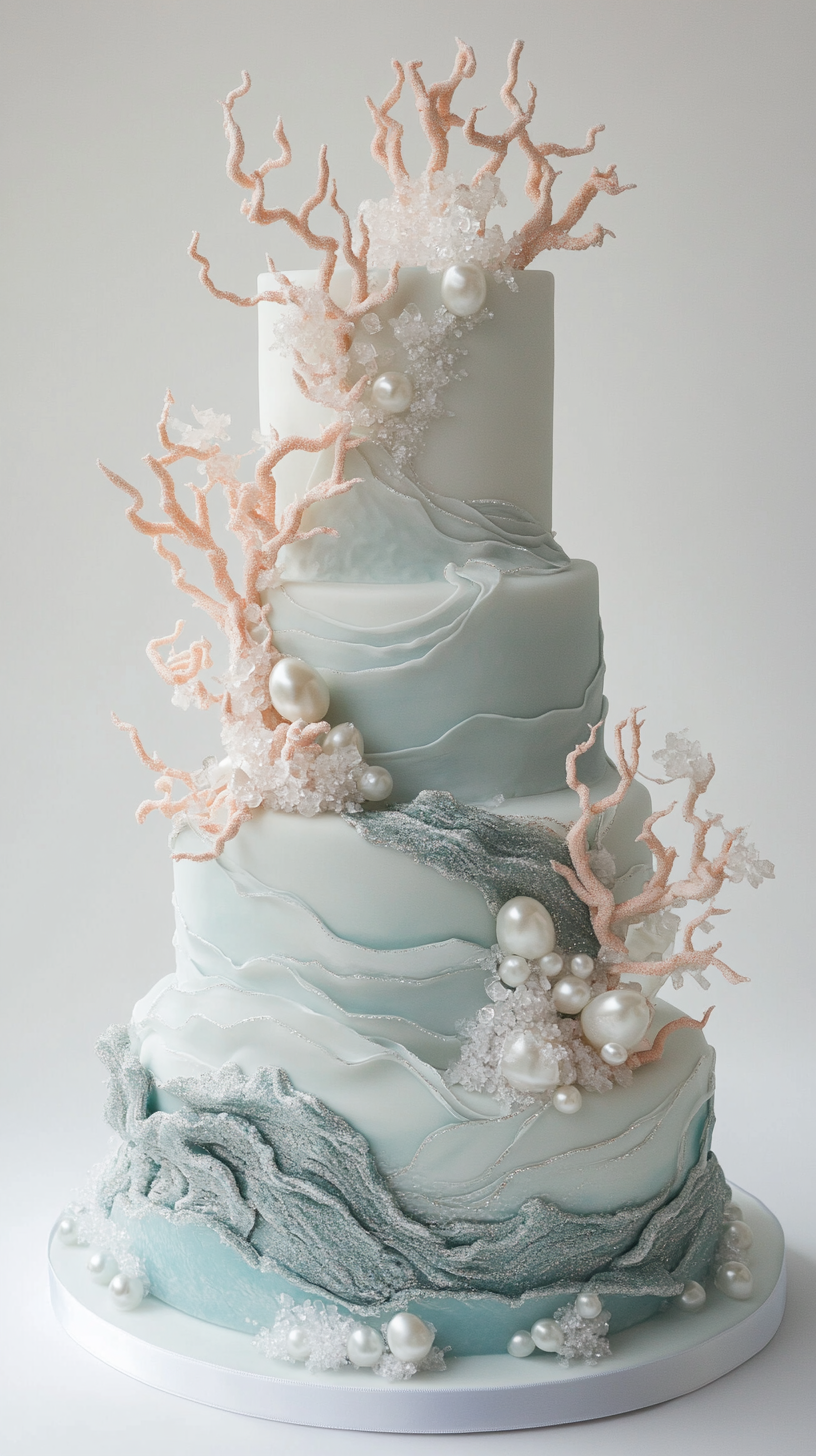
Tide pool opalite cakes recreate the magic of coastal rock formations through strategic layering of translucent blue and white tones. These designs combine opalite’s characteristic milky shimmer with oceanic elements that evoke the natural beauty of shoreline tide pools.
Sugar coral branches form the structural foundation of these designs. Decorators create them using royal icing or modelling chocolate, then dust with pearl lustre to match opalite’s iridescent quality. The coral pieces can be positioned at the base of each tier or clustered asymmetrically for organic visual flow.
Edible bubbles add dimension and movement to the design. Bakers achieve this effect through several methods:
- Clear isomalt spheres in varying sizes
- Piped royal icing dots with pearl finish
- Fondant balls brushed with translucent glaze
- Airbrushed bubble patterns directly onto fondant
The colour palette typically features pale blues transitioning to seafoam green, with touches of champagne and mother-of-pearl tones. These soft hues complement the opalite effect whilst maintaining the tide pool aesthetic.
Textural contrasts prove essential for authentic tide pool representation. Smooth fondant sections represent water surfaces, whilst rough-textured coral and crystalline opalite elements mimic natural rock pool formations. Hand-painted veining in dusty blue and grey adds depth.
Professional decorators often incorporate edible seashells moulded from white chocolate or fondant. These elements should be painted in soft pinks or champagne to coordinate with the opalite’s subtle colour shifts without overwhelming the design’s delicate nature.
11. Ocean Twilight Opalite Wedding Cake with Night Waves
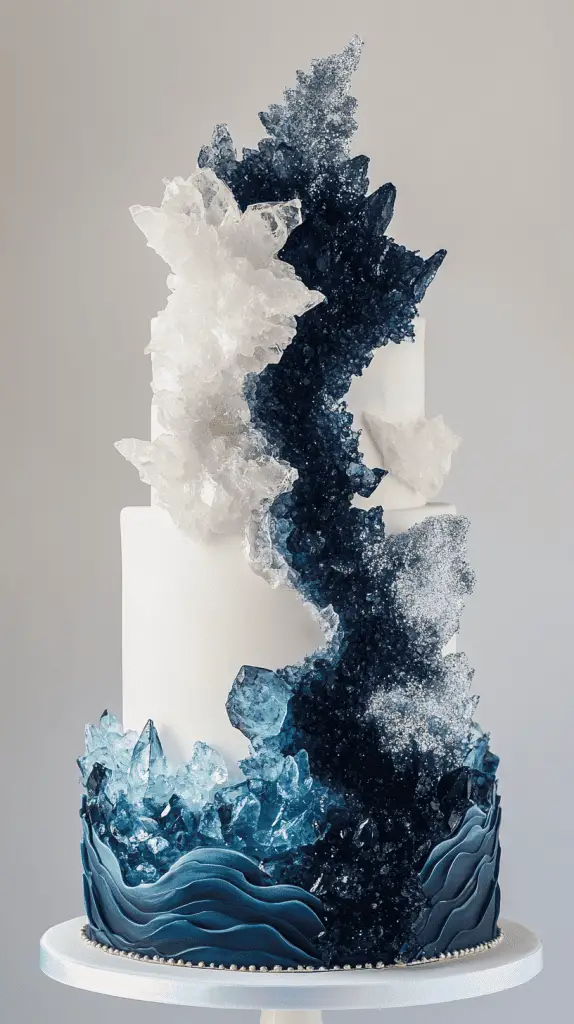
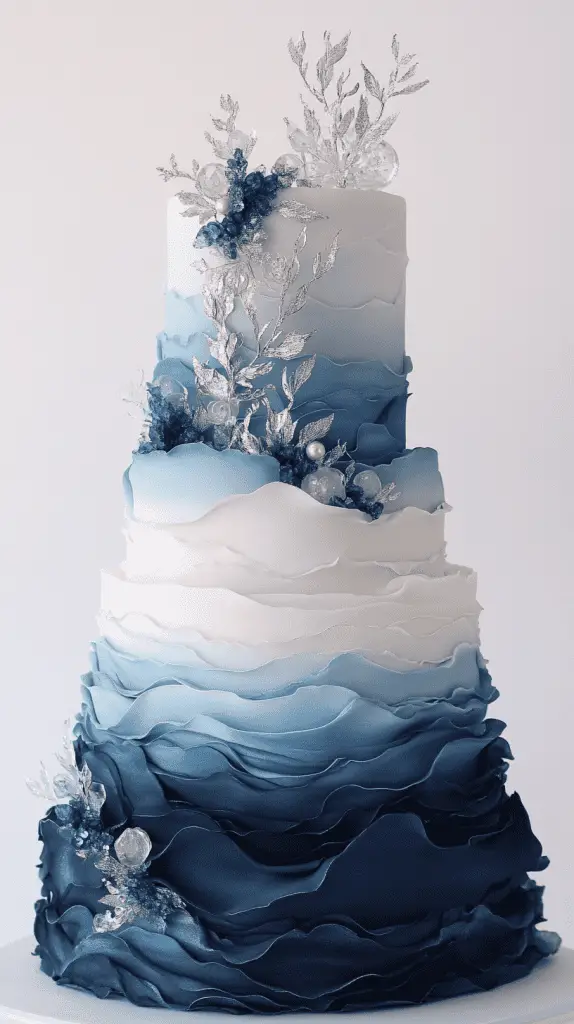
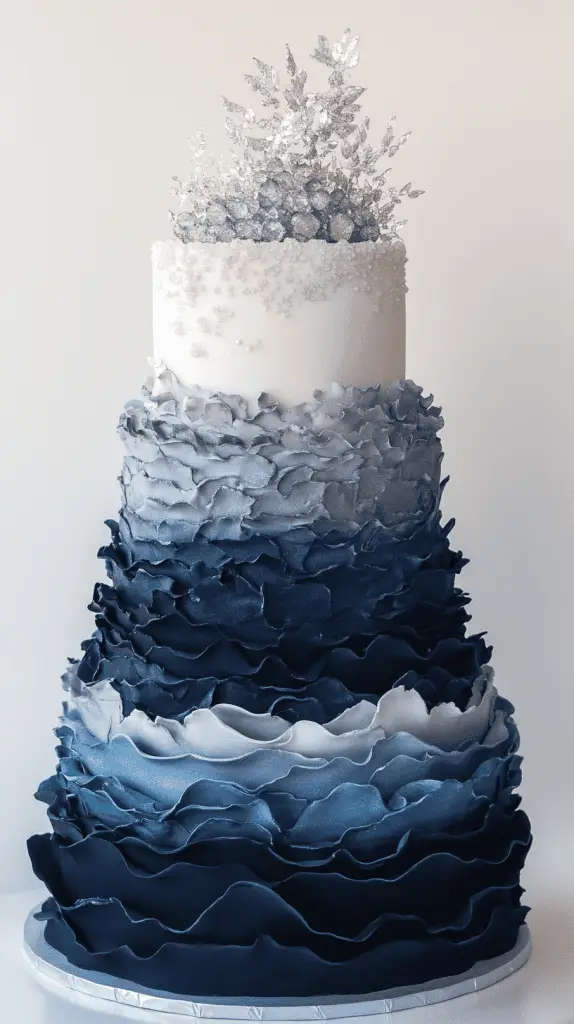
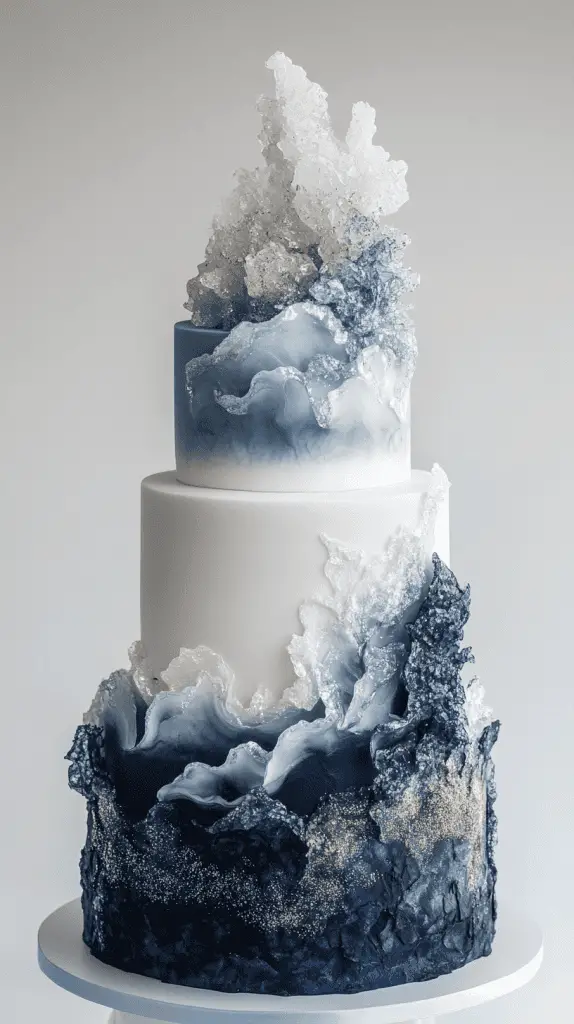
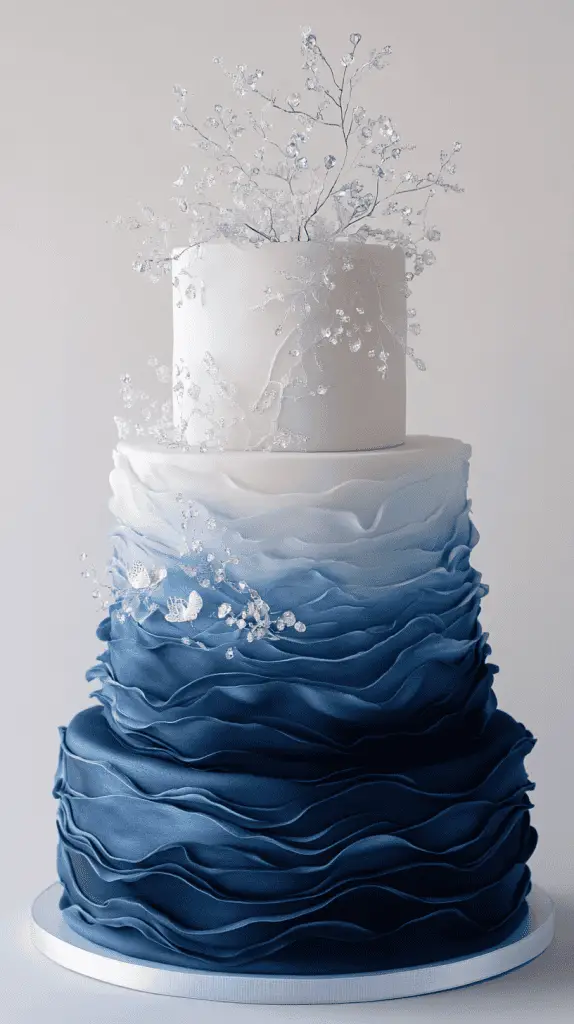
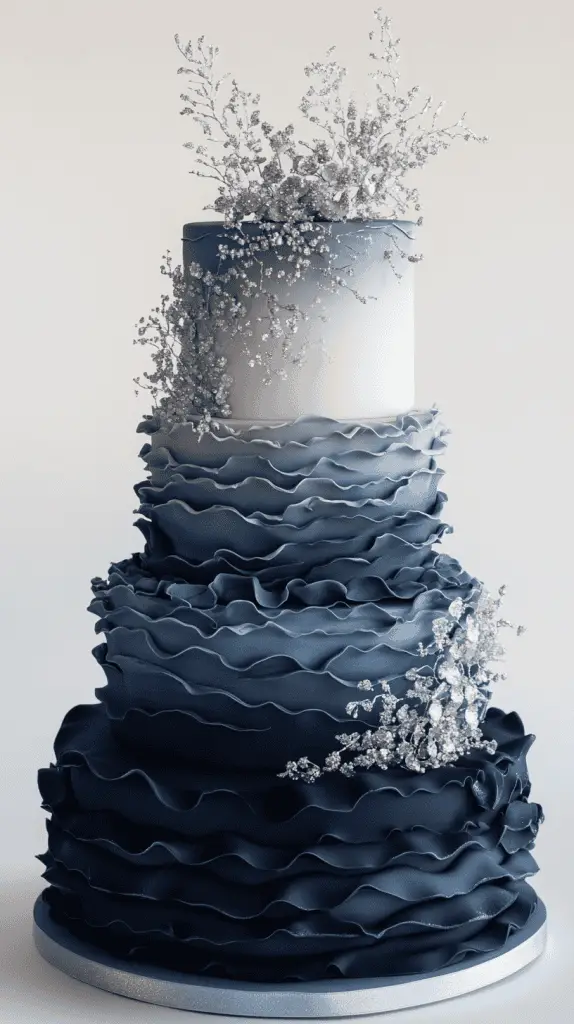
Ocean twilight opalite wedding cakes capture the mysterious beauty of the sea at dusk through deep blue gradients and luminous opalite accents. These designs blend rich navy and midnight blue tones with opalite’s characteristic milky shimmer to create dramatic focal points.
The colour palette mimics the ocean during twilight hours. Bakers layer deep indigo foundations with lighter blue mid-tones, finishing with opalite’s soft iridescent whites at the peaks. This creates natural depth reminiscent of evening waves catching moonlight.
Essential design elements include:
- Hand-painted navy-to-pearl gradient layers
- Opalite sugar crystals positioned as moonlight reflections
- Textured fondant waves in darker blue shades
- Pearl lustre dust for ethereal shimmer effects
The wave patterns require specific techniques to achieve realistic movement. Decorators create flowing ruffles using fondant or wafer paper, then airbrush with graduated blues from nearly black to soft grey-blue. Strategic placement of opalite pieces enhances the moonlit effect.
Metallic accents in silver or white gold complement the twilight theme beautifully. These work particularly well for evening receptions where artificial lighting enhances the opalite’s natural luminescence.
The technique works exceptionally well for coastal celebrations with evening ceremonies. The darker palette provides sophisticated elegance whilst maintaining the beach theme through wave textures and ocean-inspired colour transitions.
Edible glitter applied sparingly mimics starlight reflecting on night-time waters. This finishing touch enhances the cake’s mystical quality without overwhelming the opalite’s subtle beauty.
Frequently Asked Questions
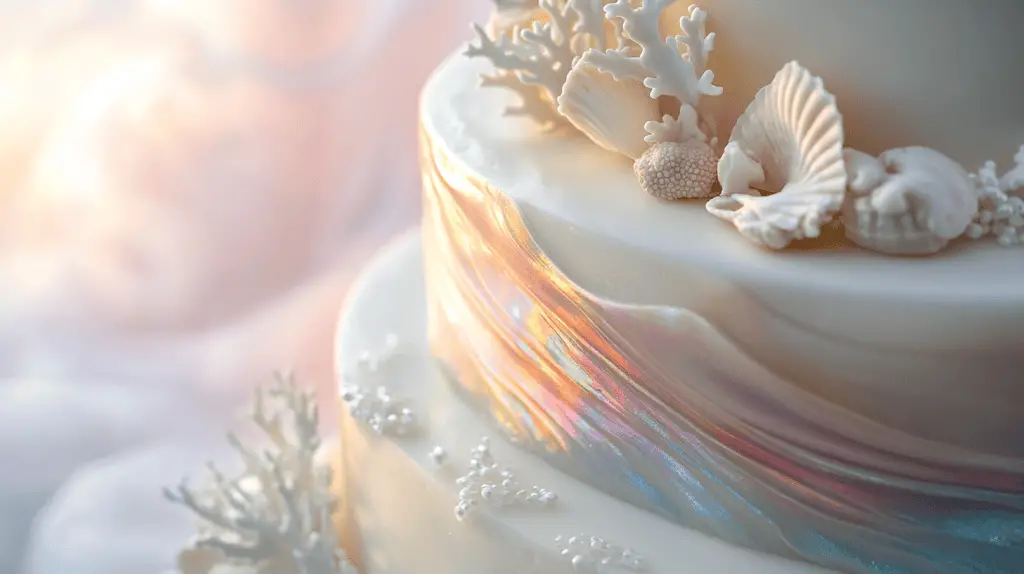
Ocean opalite wedding cakes combine the ethereal qualities of opalite gemstone aesthetics with coastal design elements, creating unique centrepieces that require specific techniques and materials. These designs incorporate translucent effects, marine-inspired colours, and practical considerations for achieving stunning seaside celebrations.
1. What are the latest trends in ocean-themed wedding cakes?
Current ocean-themed wedding cakes embrace minimalist designs with sophisticated colour palettes. Bakers favour soft blues, seafoam greens, and sandy neutrals over bright tropical hues.
Textured buttercream techniques create realistic wave patterns and ocean ripples. These organic finishes provide movement and depth without requiring elaborate fondant work.
Translucent sugar work has become increasingly popular for ocean designs. Isomalt panels tinted in pale blues mimic water surfaces and add dimensional interest to traditional tiered cakes.
Geode sections featuring blue crystals represent ocean caves and rock formations. These edible crystal displays combine coastal themes with contemporary geometric aesthetics.
Watercolour painting techniques achieve subtle oceanic gradients. Professional decorators apply food-safe colours with brushes to create soft, flowing patterns that resemble waterscapes.
2. How can opalite be incorporated into a wedding cake design?
Opalite elements work best as strategic accents rather than covering entire cake surfaces. Small opalite pieces can be positioned between tiers or arranged in clusters on single layers.
The stone’s translucent quality pairs beautifully with coastal themes through its natural blue and white tones. These colours mirror ocean depths and seafoam without requiring additional decoration.
Edible alternatives replicate opalite’s appearance for fully consumable designs. Sugar glass tinted with pearl dust and pale blue colouring creates similar translucent effects whilst remaining entirely edible.
Geode sections carved into cake tiers provide ideal placement for opalite inlays. The carved cavity supports the stone’s weight whilst creating natural-looking crystal formations.
Marbled fondant techniques mimic opalite’s flowing patterns without using actual stones. Bakers swirl white, pale blue, and pearl-toned fondant together to achieve the characteristic opalescent appearance.
3. What are the best flavours for a marine-inspired wedding cake?
Lemon elderflower offers bright, refreshing notes that complement seaside settings. The floral elements add sophistication whilst the citrus provides lightness appropriate for outdoor venues.
Coconut cake with passion fruit filling delivers tropical flavours without overwhelming sweetness. This combination works particularly well for destination beach weddings and summer celebrations.
Vanilla bean sponge with salted caramel filling balances sweet and savoury notes. The salt content subtly references ocean themes whilst maintaining broad appeal for diverse guest preferences.
Almond cake with raspberry compote provides elegant flavour profiles suitable for formal beach receptions. The combination offers complexity without competing with delicate ocean-inspired decorations.
Key lime remains a classic choice for coastal weddings. Its tart profile refreshes palates in warm weather whilst directly referencing popular beach destinations.
4. Could you suggest some decoration ideas for an oceanic wedding cake?
Edible seashells crafted from white chocolate or fondant provide realistic coastal accents. These elements can be dusted with pearl lustre for authentic shimmer and positioned naturally along cake tiers.
Sugar coral formations add texture and visual interest to ocean designs. Bakers create these decorations using royal icing piped into branching structures and tinted in coral, cream, or sandy tones.
Fresh flowers in coastal colours enhance oceanic themes without overwhelming cake designs. White roses, blue hydrangeas, and dusty miller greenery complement marine aesthetics whilst adding organic elements.
Buttercream waves piped with palette knives create dimensional ocean surfaces. This technique works particularly well on single-tier designs or as accent sections on multi-tiered cakes.
Edible pearls scattered across tiers reference underwater treasures. These sugar decorations catch light beautifully and can be clustered or arranged in flowing patterns down cake sides.
Gold leaf accents represent sun reflecting on water surfaces. Small touches of metallic decoration add luxury to beach themes without appearing overly formal.
5. What are the essential elements for a nautical wedding cake theme?
Navy blue and white colour schemes form the foundation of nautical designs. These classic maritime colours can be incorporated through fondant stripes, ribbon details, or tiered colour blocking.
Rope-textured piping creates authentic sailing references on cake surfaces. Bakers achieve this effect using specific piping tips or by hand-rolling fondant into rope patterns.
Anchor motifs serve as recognisable nautical symbols. These can be created as fondant appliqués, painted designs, or three-dimensional sugar decorations positioned on cake tops or sides.
Striped patterns reference classic maritime aesthetics. Horizontal stripes work particularly well on round tiers, whilst vertical applications suit square or hexagonal cake shapes.
Metallic accents in gold or silver represent ship hardware and nautical instruments. These touches add sophistication through buttons, chains, or compass rose designs.
6. How do you ensure a wedding cake reflects a couple’s love for the sea?
Personalised elements make ocean themes meaningful rather than generic. Incorporating specific beach locations, favourite marine animals, or significant coastal memories creates authentic connections.
Colour selection should reflect the couple’s preferred seascape. Some prefer stormy grey-blue palettes whilst others favour bright turquoise waters or subtle seafoam tones.
Scale and placement of oceanic elements require careful consideration. Dramatic designs suit couples who embrace bold aesthetics, whilst subtle touches work for those preferring understated elegance.
Consultation with experienced cake designers ensures technical feasibility. Professional bakers can translate personal preferences into structurally sound designs that maintain visual impact throughout events.
Combining ocean themes with other meaningful elements creates unique fusion designs. Couples might incorporate family heritage, shared hobbies, or cultural traditions alongside maritime aesthetics for truly personal celebrations.