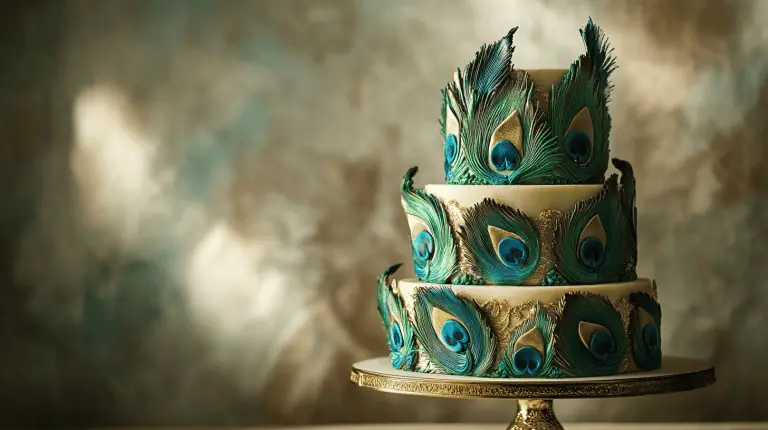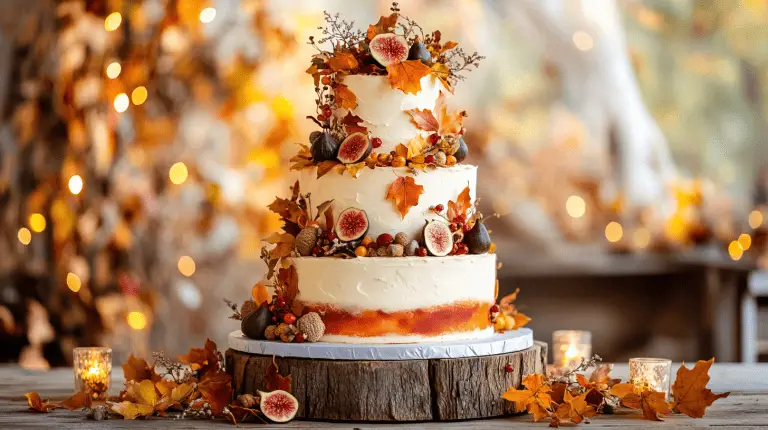
Wedding Cake Trends 2026: The Designs Every Couple Is Obsessing Over
Elara Hawthorne is a cake artist and baker whose work sits at the intersection of edible craft and fine design. With a love for pushing the boundaries of what a cake can be, she shares her recipes, techniques, and decorating ideas with a community of bakers and wedding enthusiasts who believe the cake deserves to be the most talked-about moment of the day. When she’s not covered in buttercream, she’s hunting for the next design obsession.
Wedding Cake Trends 2026: Innovative Designs & Artistic Styles
Wedding cakes in 2026? Forget the classic white tiers. Bold shapes, nostalgic piping, metallic finishes, and fresh botanical details are totally changing the vibe.
The cake isn’t just dessert anymore – it’s part of the design. Couples are treating it as a feature, and honestly, it’s about time.
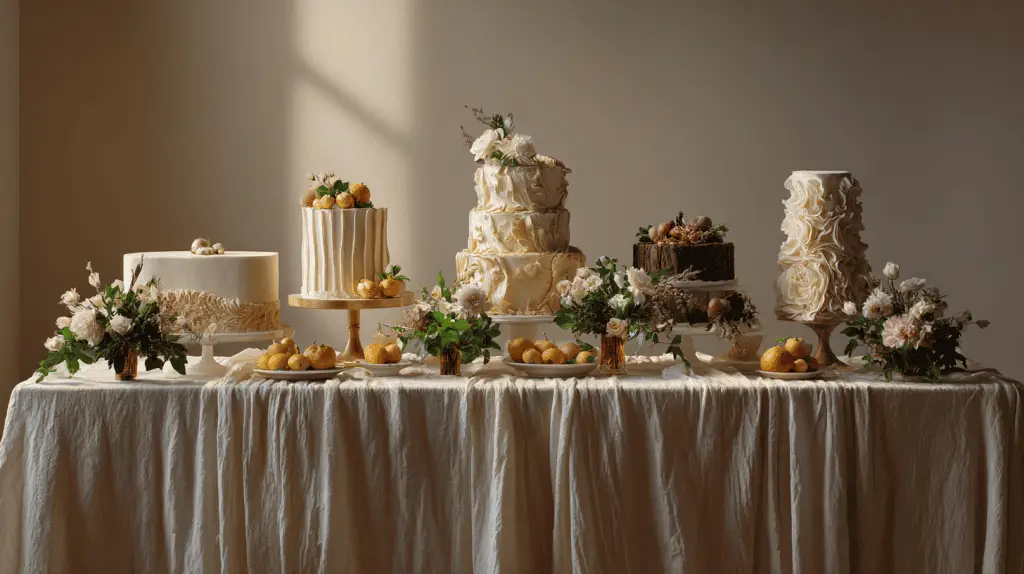
For 2026, wedding cakes are all about sculptural shapes, revived vintage piping (think Lambeth), metallic and pearlescent touches, botanical accents, and styled cake tables that make the cake a real centerpiece.
Bakers are making tall statement tiers, those dramatic table-length cakes, and even oval silhouettes. You’ll see pleats, textured buttercream, and sugar flowers that look almost too pretty to eat.
If you’re planning a wedding for 2026, expect more personality, more artistry, and a whole lot more intention in those little details.
Crystallised fruit, herb-infused flavors, and even Rococo-inspired piping are all in play. Your cake can match your entire aesthetic and honestly, it can really elevate the whole reception space.
Key Takeaways
- Sculptural shapes, textured finishes, and vintage piping are big for 2026 wedding cakes.
- Botanical details, crystallised fruit, and metallic accents add interest and depth.
- Cakes are styled as centerpieces – think long formats and coordinated tables, not just a cake in the corner.
Defining Styles and Design Innovations
Standard tiers and smooth icing? Not so much anymore. In 2026, wedding cakes are sculptural centerpieces, personal storytelling pieces, and sometimes, minimalist statements with a sharp edge.
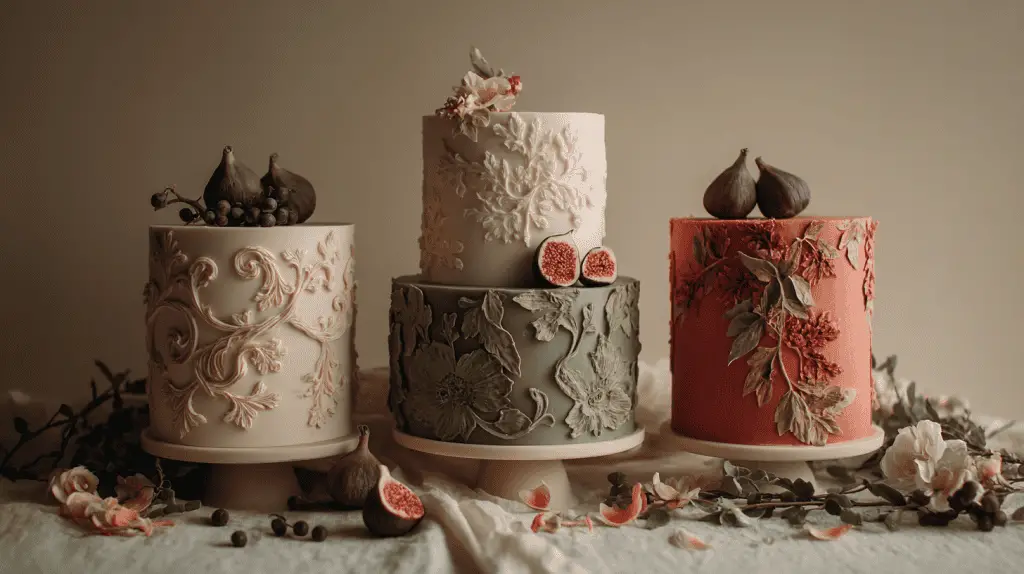
Sculptural and Art-Led Wedding Cake Design
Sculptural forms are everywhere. Designers are into cone shapes, dramatic tiers, egg-inspired forms, and those “infinity” cakes that run the length of a table instead of stacking up high.
Asymmetrical stacking is another thing. Imagine a round base, a square middle, and a sharply tapered top – none of the tiers match, but it somehow just works.
Texture is a huge part of the art-led approach. Edible lacework, crochet-style piping, bas-relief patterns, and hand-modeled details that look like textiles all add depth without getting too colorful.
For big venues, you’ll see cakes that stretch out or even multiple cakes arranged together. It’s more like a dessert installation than a single focal point.
Object-Inspired and Meaningful Creations
Personalization goes way past monograms in 2026. Bakers are recreating meaningful objects – like a jewelry box, a favorite accessory, or something from a shared memory – as edible centerpieces.
With skilled sugar work and structured supports, you get realistic shapes that still hold up. It’s a balancing act, but the results are pretty wild.
Getting the color, texture, and proportions right is key so the cake looks just as good in person as it does in photos.
Sometimes, the symbolism is subtle. An egg-shaped tier for new beginnings, or even sculpted veggies for couples who want something a little offbeat.
Modern Minimalism and Clean Lines
Minimalism’s still here, but it’s sharper now – almost architectural. Square tiers, crisp edges, and super smooth finishes are the hallmarks.
You might see a stacked square cake with just a single line of piping or a narrow ribbon. Maybe a few fresh blooms, but nothing too busy.
Colors are usually soft neutrals, muted pastels, or maybe one bold pop. It keeps things feeling intentional and matches up with those modern venues.
Proportion matters more than ever – balanced heights, even spacing, and uncluttered surfaces make the cake look modern, not plain.
1. The Lambeth Revival
Lambeth piping is everywhere for 2026. This ornate buttercream style is all about scrolls, swags, shells, and overpiped borders – lots of depth and shadow on every tier.
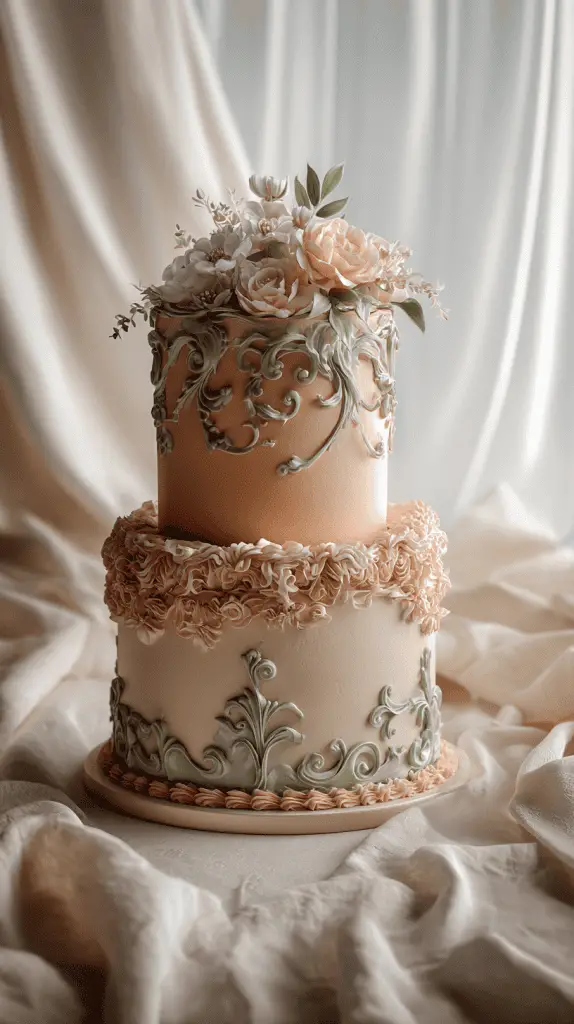
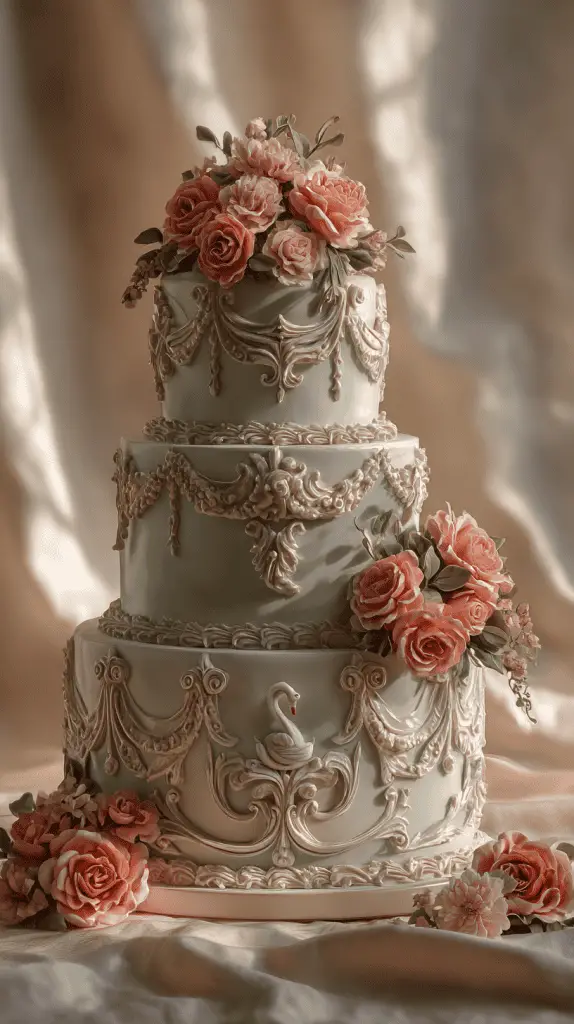
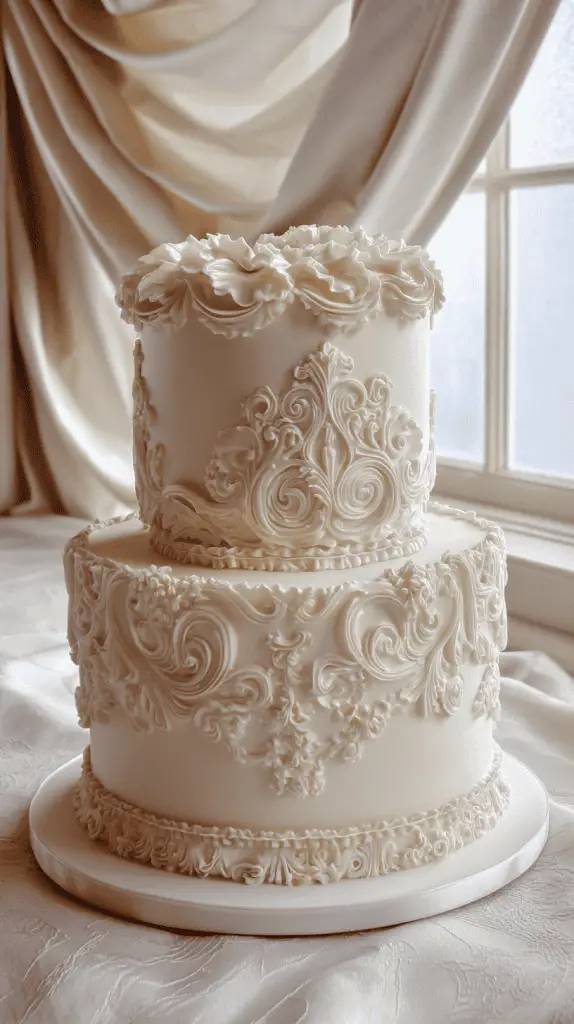
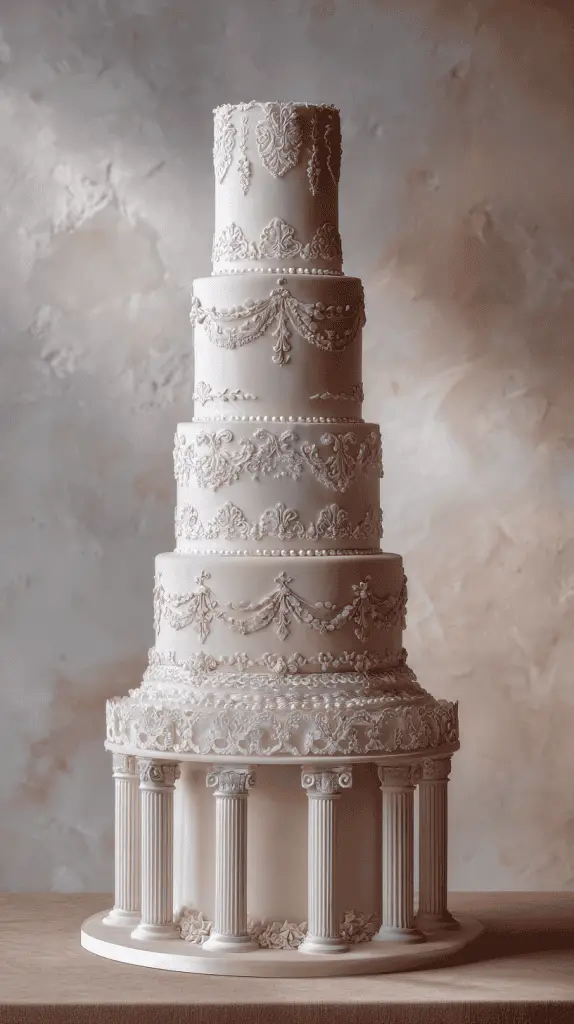
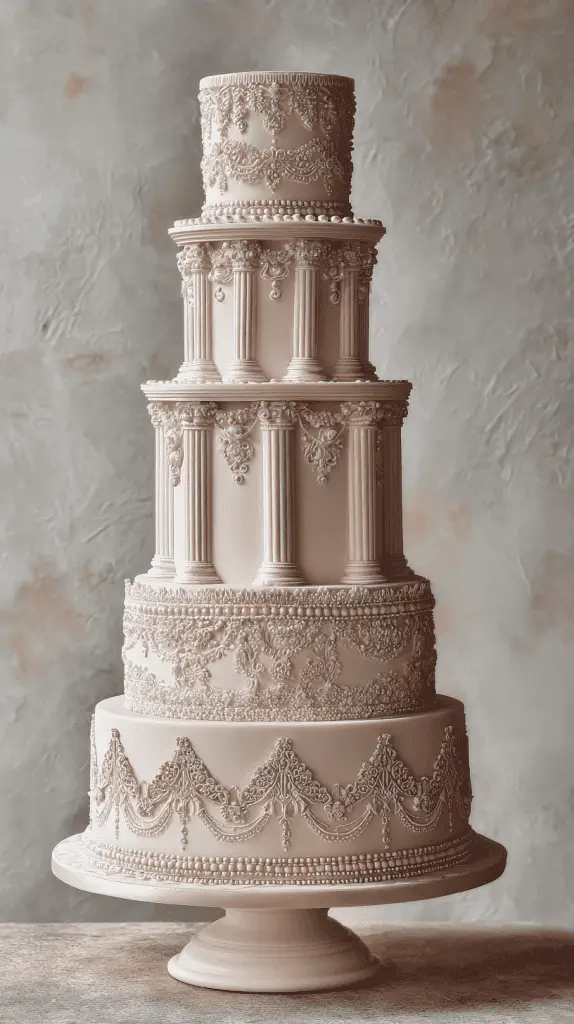
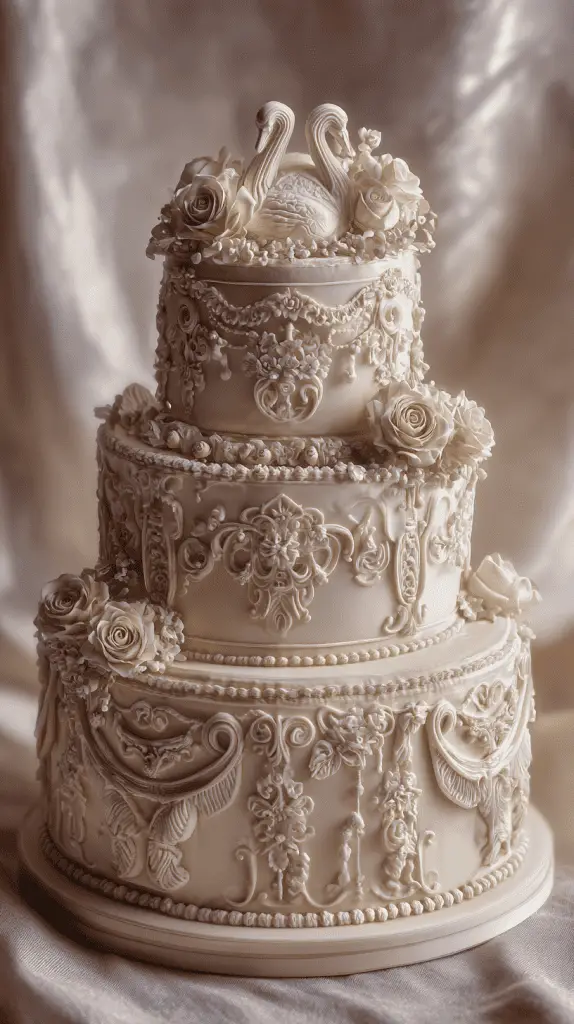
It’s not just ivory anymore. Pastels like baby blue, blush, and cream are in, often finished with piped pearls or little ruffles.
Key design details include:
- Overpiped garlands and drop swags
- Scrollwork and shell borders
- Piped bows, rosettes, and lace effects
- Vintage-style toppers or columns
You can go all-in on nostalgia with elaborate piping on every tier, or just add a touch of Lambeth to a single-tier cake for a modern twist.
It pairs surprisingly well with minimalist styling. Place a detailed cake on a simple plinth, or contrast ornate piping with understated florals. Somehow, it works.
If you want structure and decoration—something that feels formal and anchors the room—Lambeth is a solid choice. It’s especially great for traditional venues and ceremonies.
2. Sculptural & Avant-Garde Silhouettes
Sculptural forms are taking over. Cakes are design pieces now, not just something sweet at the end of the night. The shape is the star.
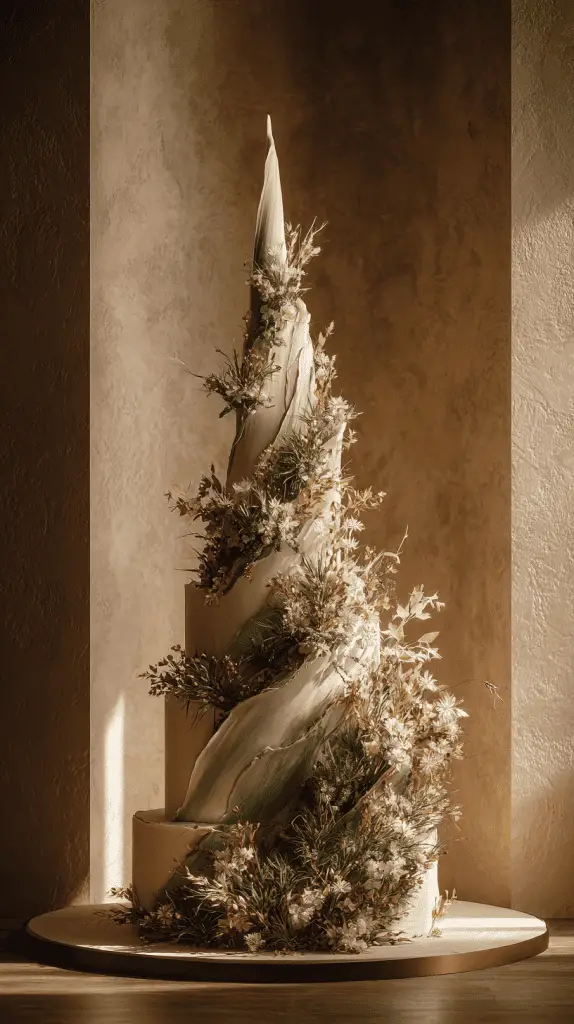
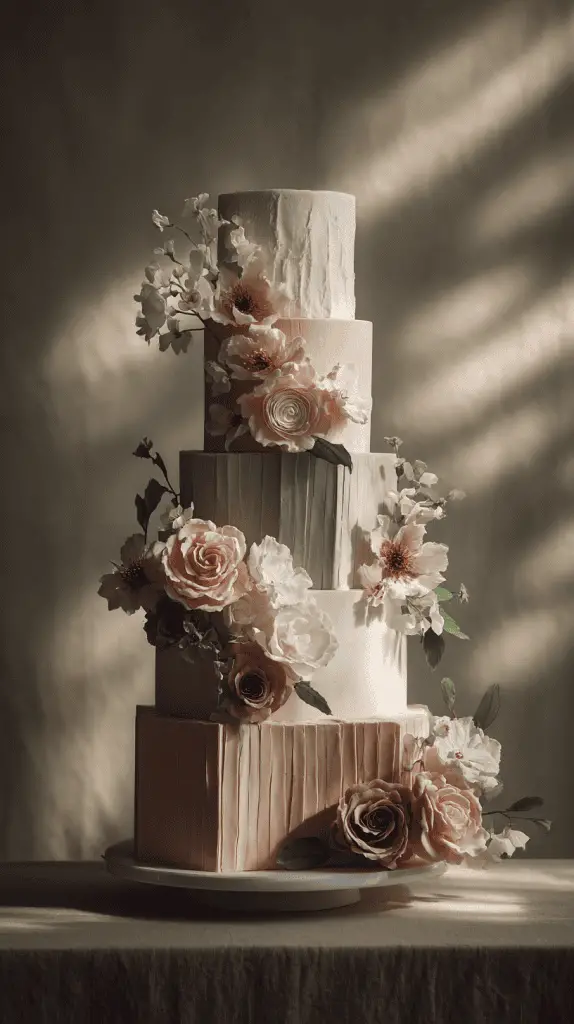
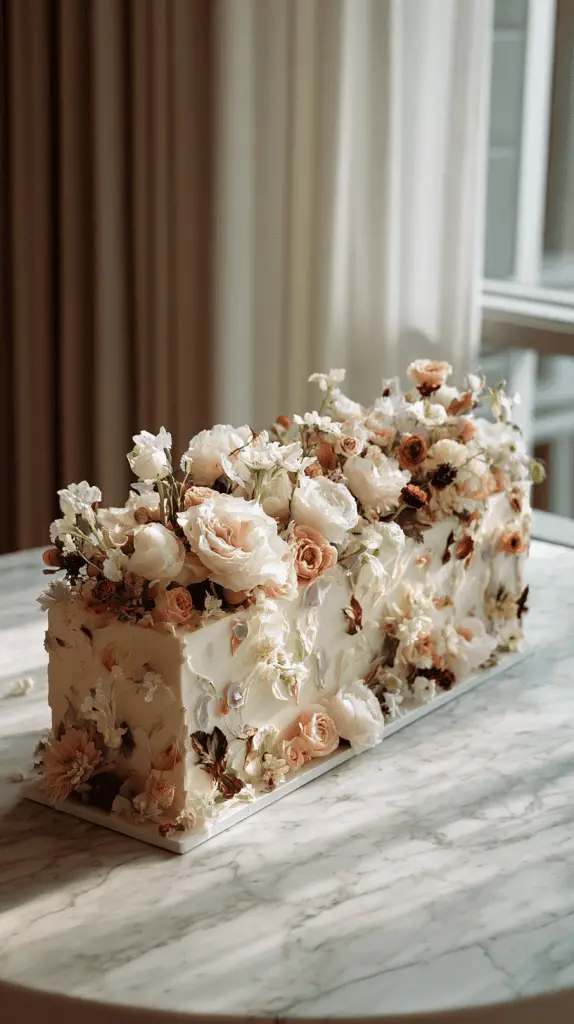
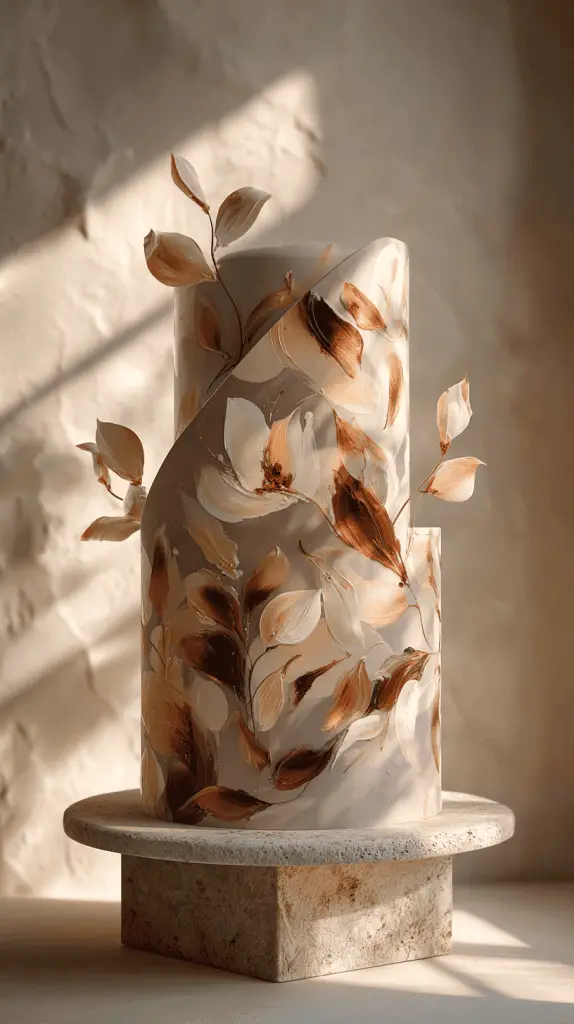
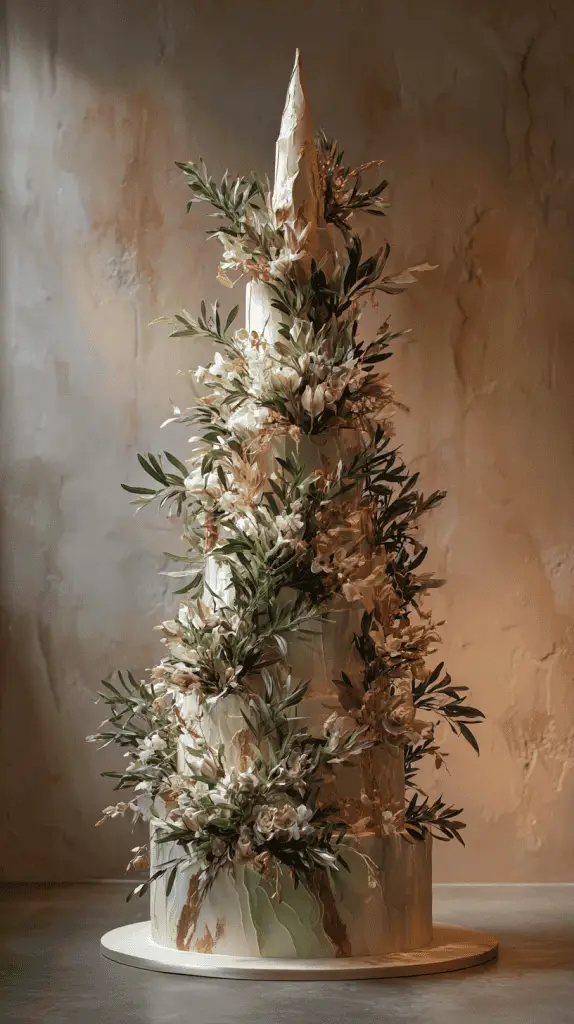
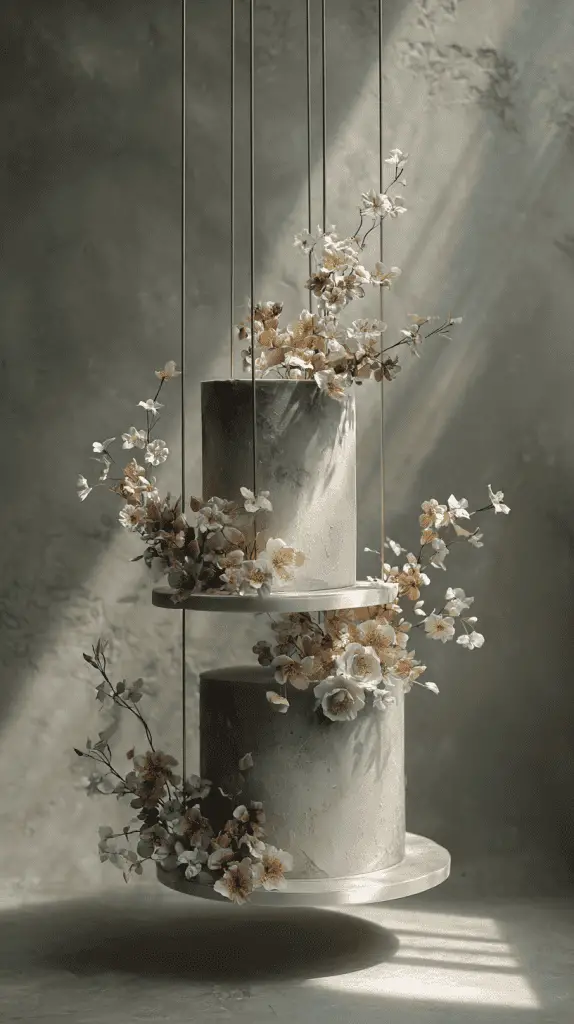
Cone-shaped tiers, infinity cakes, and asymmetrical stacks are leading the way. Maybe you want a tall, narrow structure with uneven layers, or a cake that runs the length of a table. The old rules about symmetry? Not so relevant anymore.
Popular sculptural directions include:
- Cone or tapering tower designs
- Mixed-height, mismatched tiers
- Long, runway-style cakes
- Egg-inspired or organic rounded forms
Texture is key here. Folded fondant, pleated buttercream, and sharp or soft edges—these details shape the vibe, whether you want something edgy or gentle.
You can even blend avant-garde structure with vintage piping. Ornate scrollwork on a square or conical tier? It’s a cool clash that somehow feels fresh.
Colors are usually neutral or intentionally bold – never accidental. Let the shape shine, or pick one saturated hue to really make it pop.
If you want your cake to anchor the room, think about proportion, negative space, and placement. In 2026, the cake’s part of the overall style, not just an afterthought.
3. Baroque & Rococo Opulence
Baroque and Rococo are having a moment. Ornate piping, scrolling motifs, and architectural details inspired by 18th-century interiors are everywhere. Minimalism? Not here.
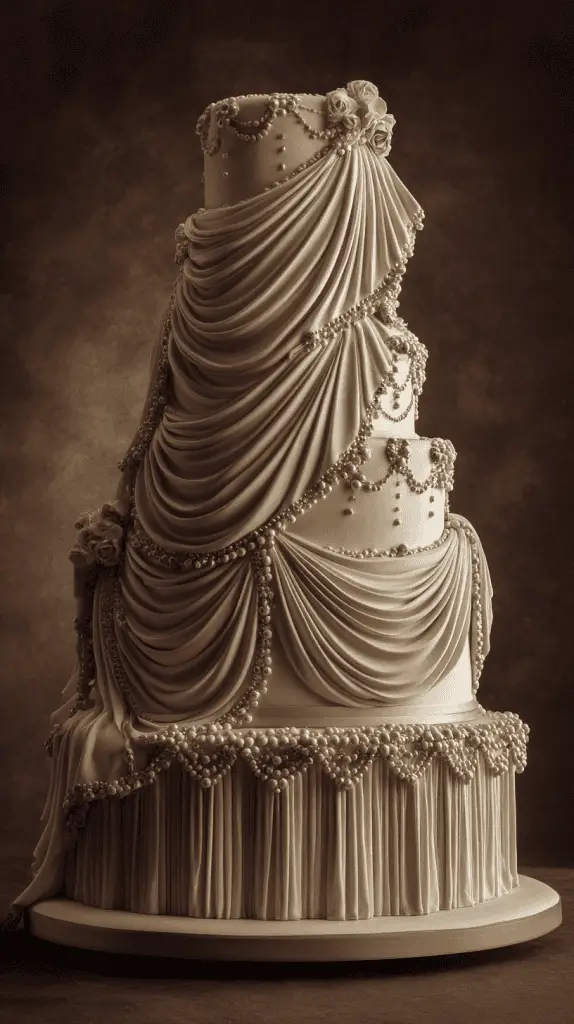
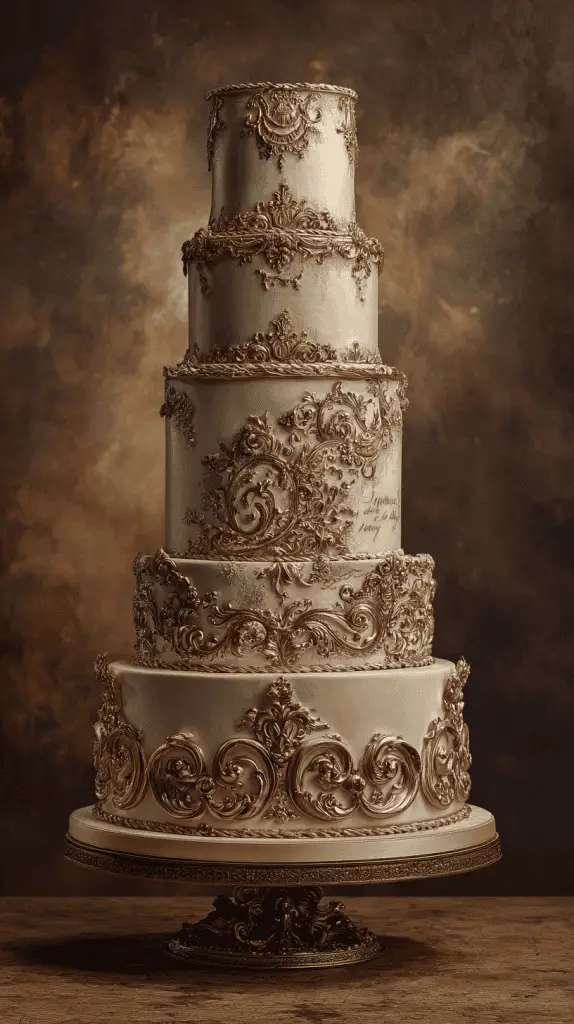
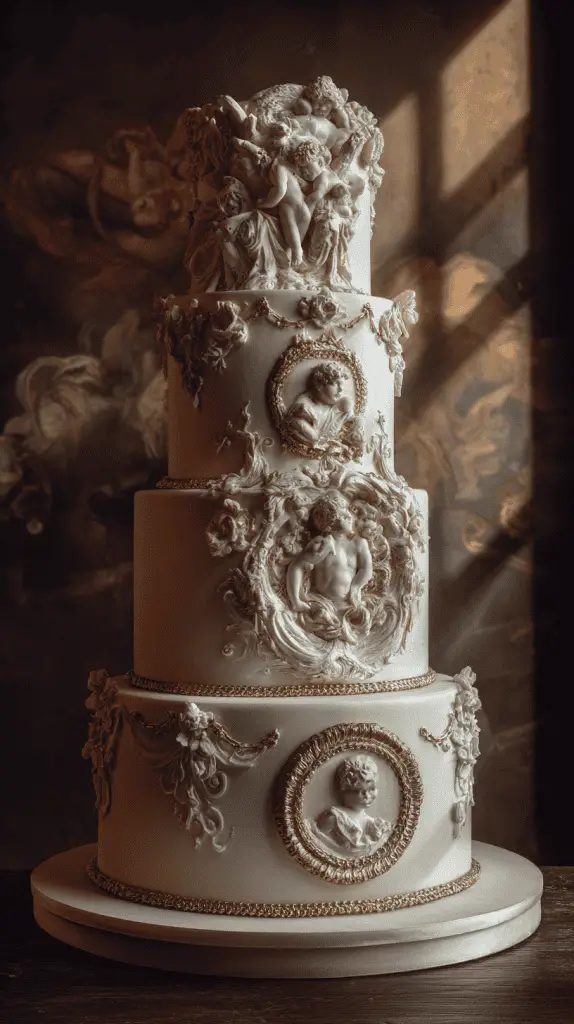
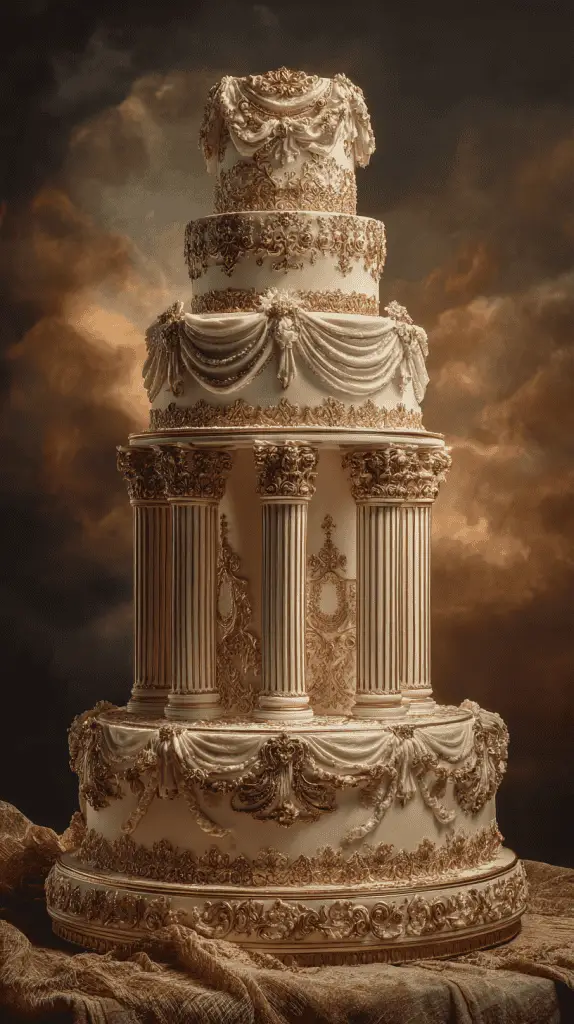
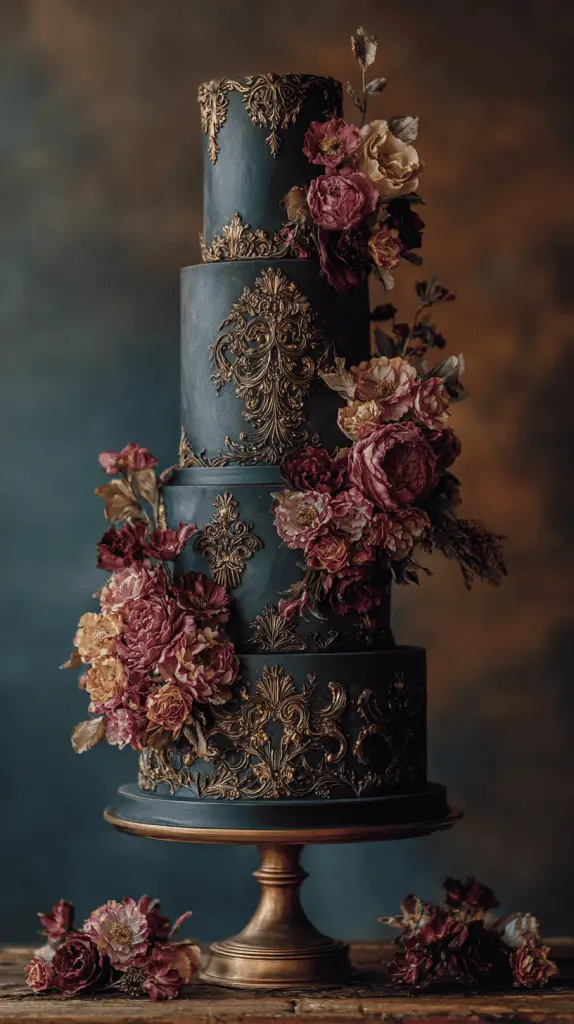
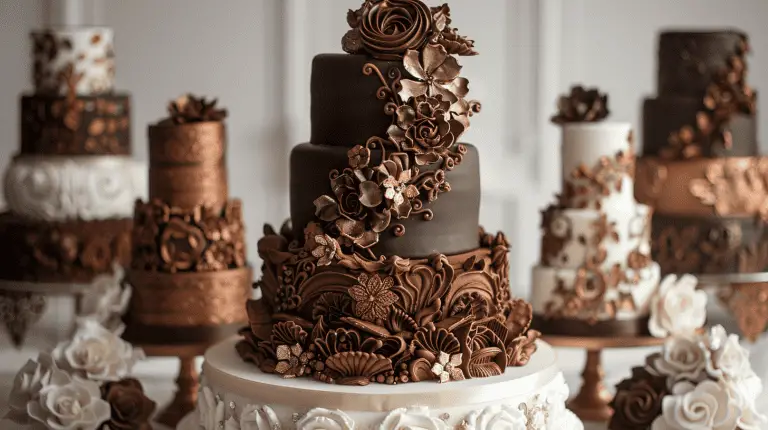
Multi-tiered cakes with royal icing, edible gold leaf, and sculpted sugar flowers are the look. Cherubs, shells, garlands, and dramatic scrollwork add depth and movement. Ivory, antique white, and blush are popular, often with metallic touches.
Scale matters. Tall tiers, oversized cake boards, and decorative columns echo classical ballrooms. Place the cake in a styled setting – maybe a “cake meadow” with florals and fruit—and suddenly it’s a whole vignette.
Common design elements include:
- Hand-piped Lambeth-style overpiping
- Gilded detailing in gold or bronze
- Sugar-crafted roses, lilies of the valley, and trailing florals
- Ornamental stands or pedestal bases
Flavors often balance out all that visual richness. Think pistachio and rose, Earl Grey with bergamot, or classic vanilla with fruit compote.
If you’re after a cake that really holds the room, this is the direction. It’s all about artistry, heritage, and making a statement with intentional style.
4. Garden-to-Table Botanical
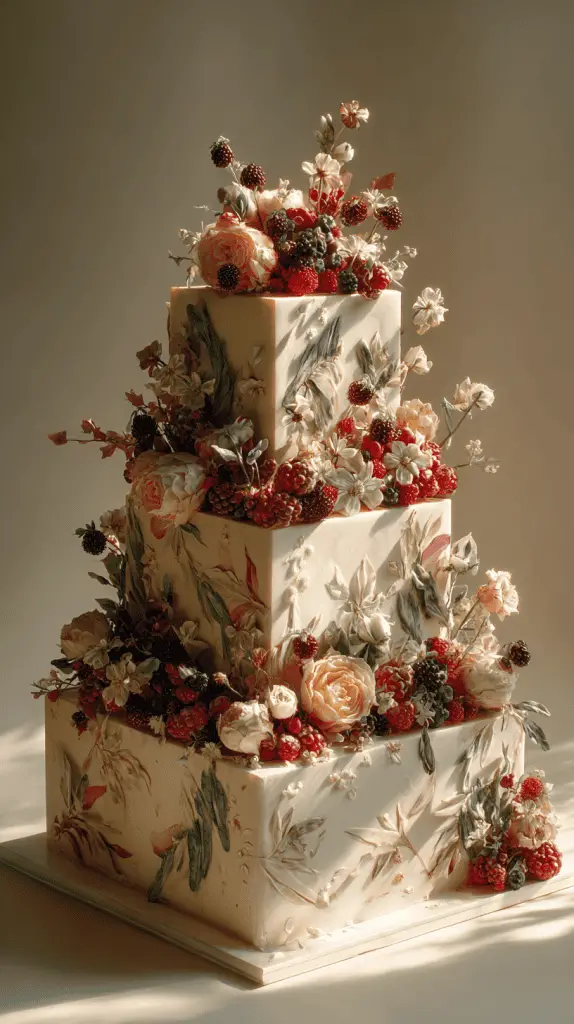
Nature is a big influence for 2026 cakes. Garden-to-table botanical designs use edible flowers, pressed petals, fresh herbs, and seasonal fruit – arranged in a way that feels organic, not forced.
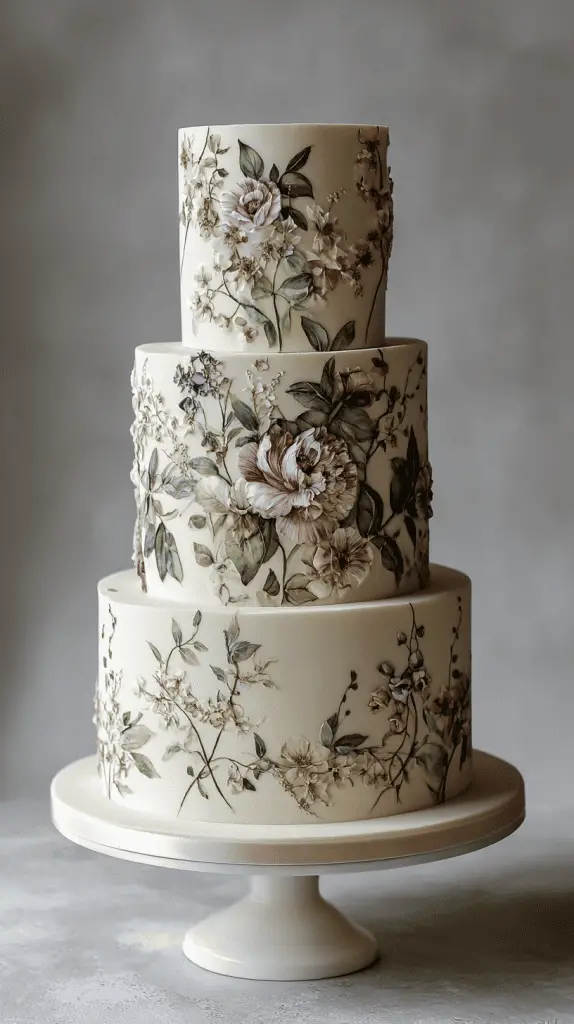
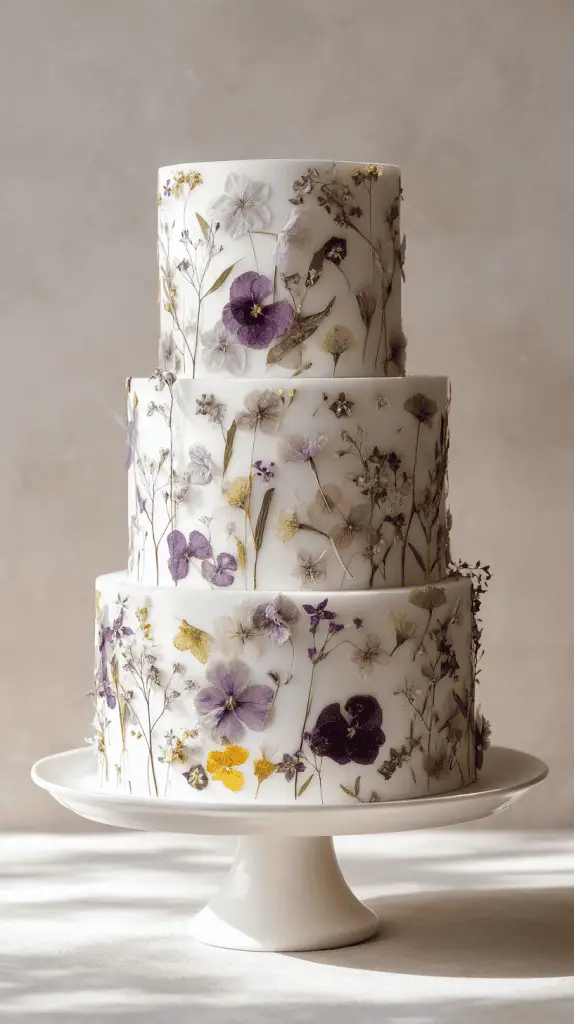
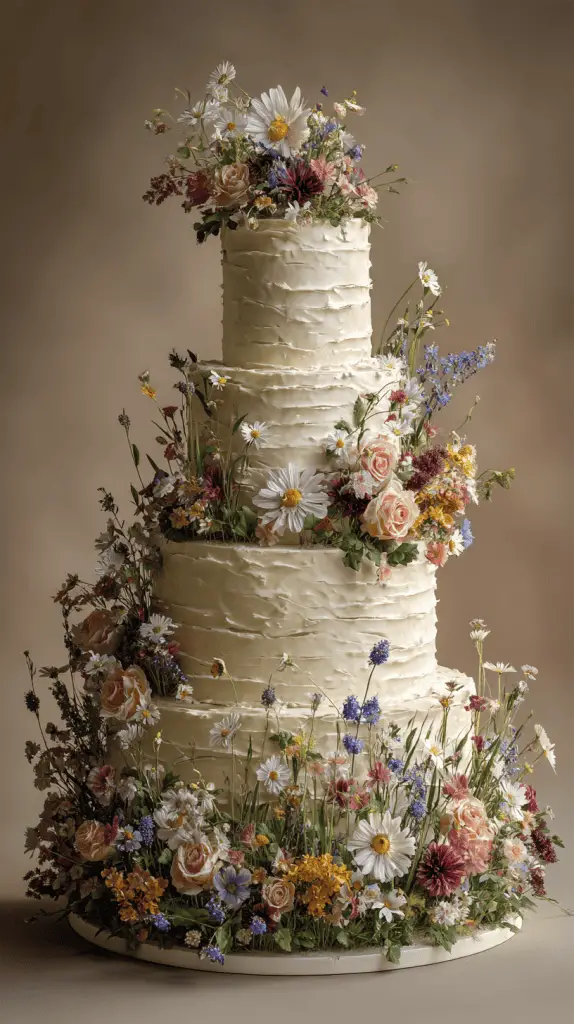
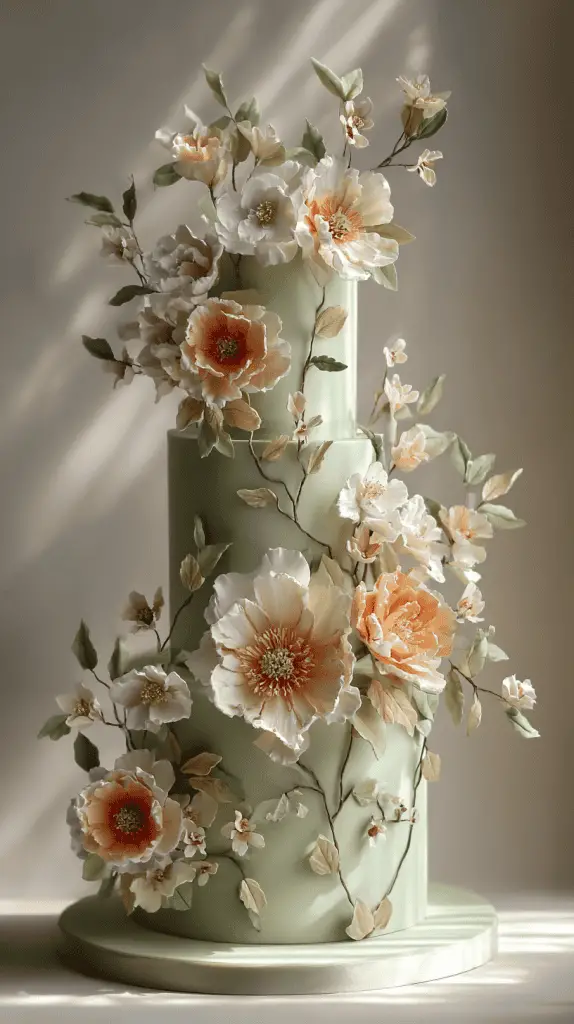
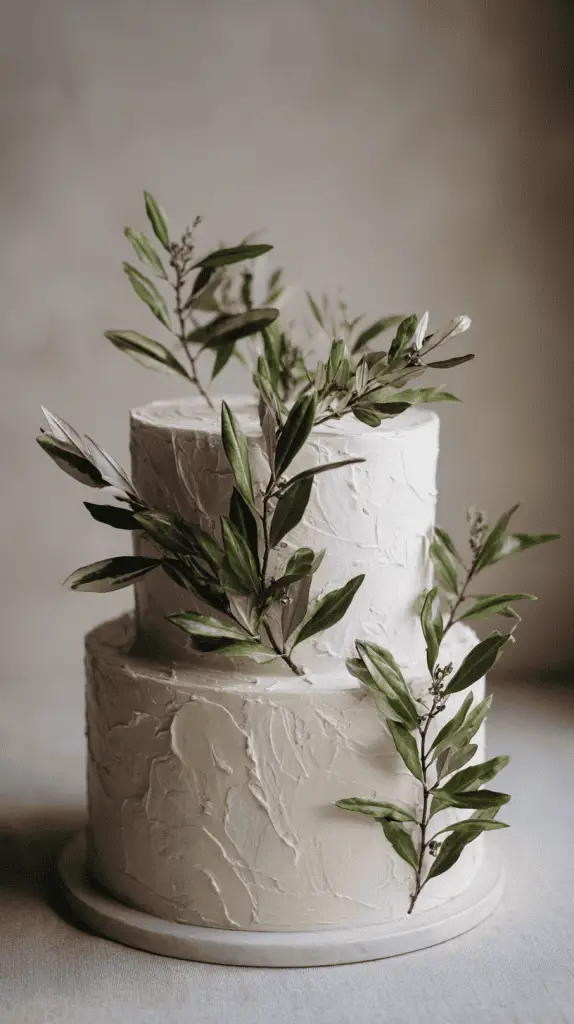
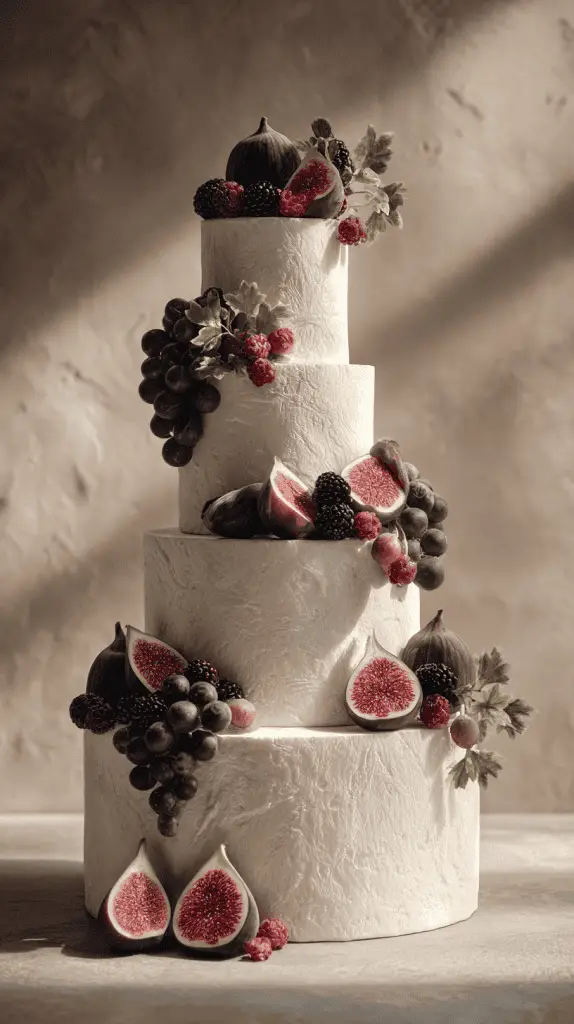
Bakers are refining this look with candied blooms, hand-painted florals, and delicate sugar flowers that echo real garden varieties. Pressed flowers and botanical illustrations add detail without overwhelming the cake.
You’ve got choices:
- Pressed edible flowers for a clean, modern finish
- Fresh floral meadows around the base
- Sugar-crafted botanicals for lasting detail
- Herbs and foliage (like thyme or olive leaves) for texture
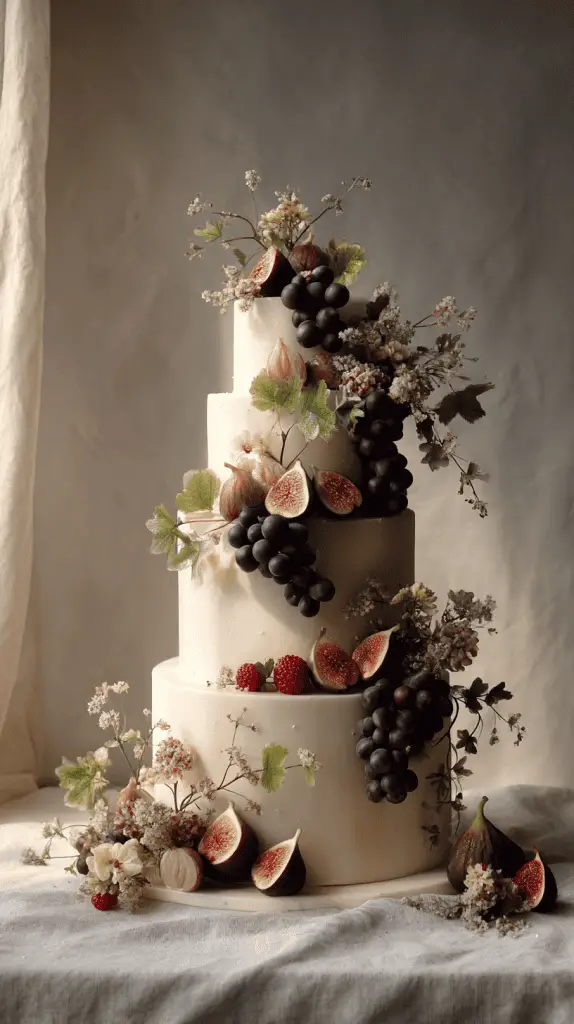
- Seasonal fruit – figs, berries, for color and flavor
Many couples pair these garden vibes with modern shapes. Clean tiers, soft arches, or those dramatic table-length cakes keep things structured, while florals make it feel relaxed.
Sustainability’s a factor, too. Repurpose ceremony flowers around the cake or use local, seasonal blooms. It ties the whole venue together and honestly just feels right.
Even the flavors follow the theme – lemon with elderflower, raspberry with champagne, or vanilla with fresh berries. It’s a direct nod to the garden-to-table idea and makes everything feel connected.
5. Bold Colour & Colour-Blocked Florals
Bold color is in. Rich palettes, high contrast, and confident combos are replacing those soft, blended tones.
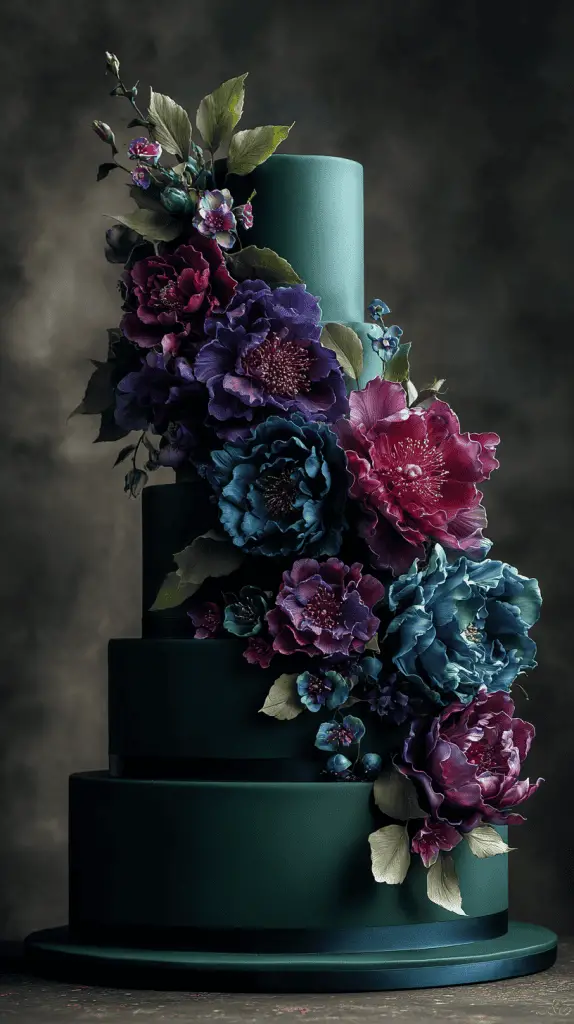
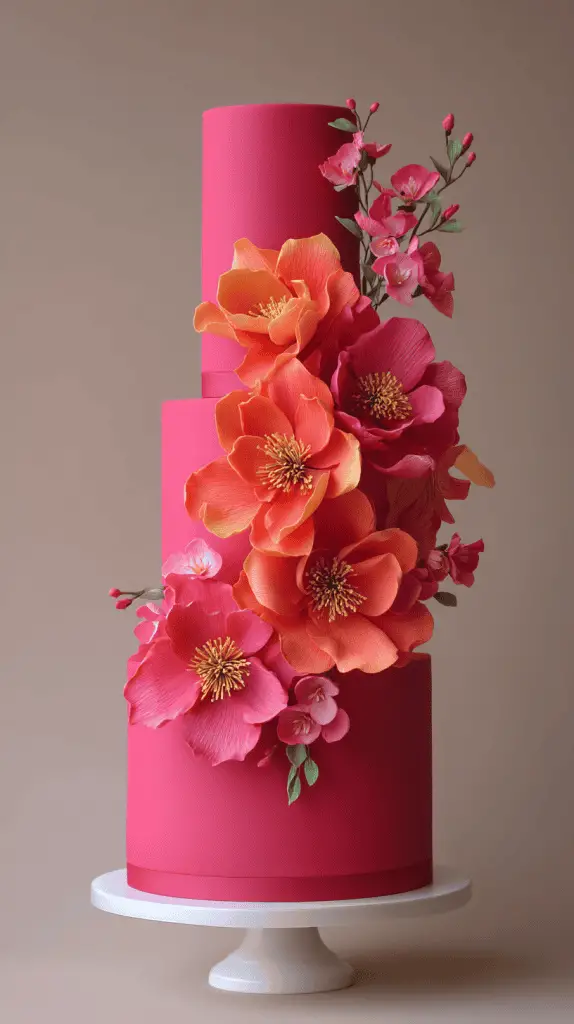
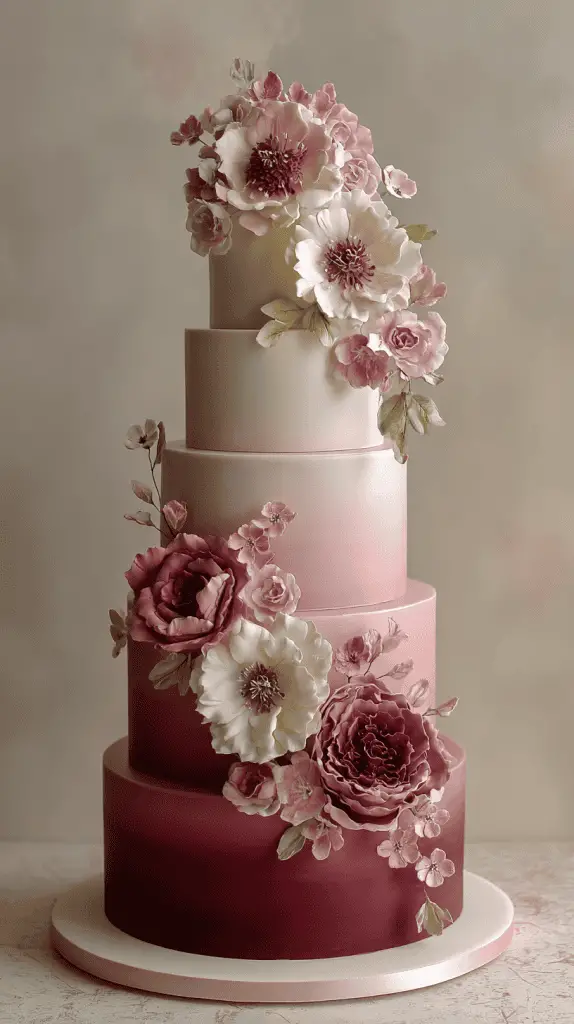
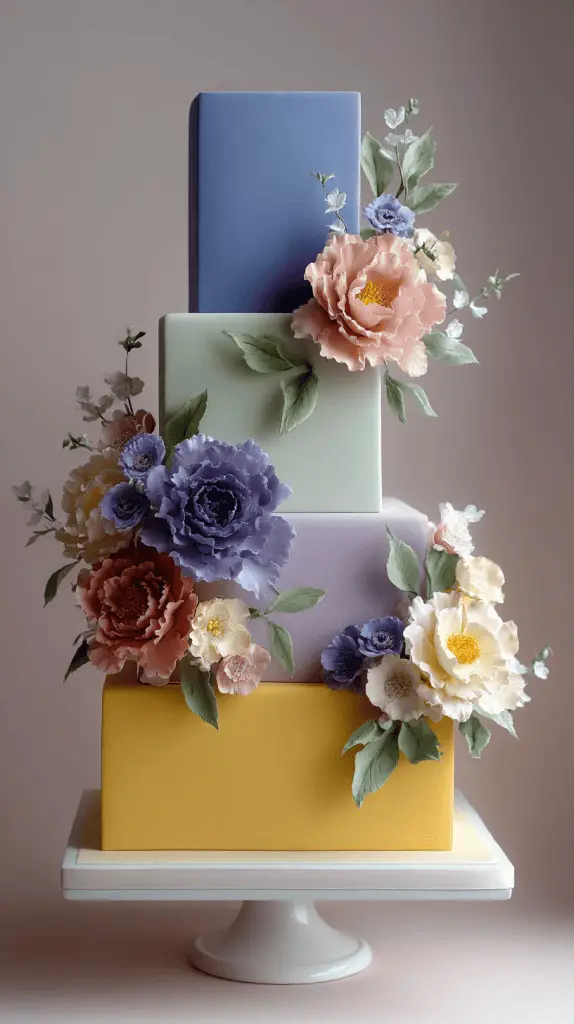
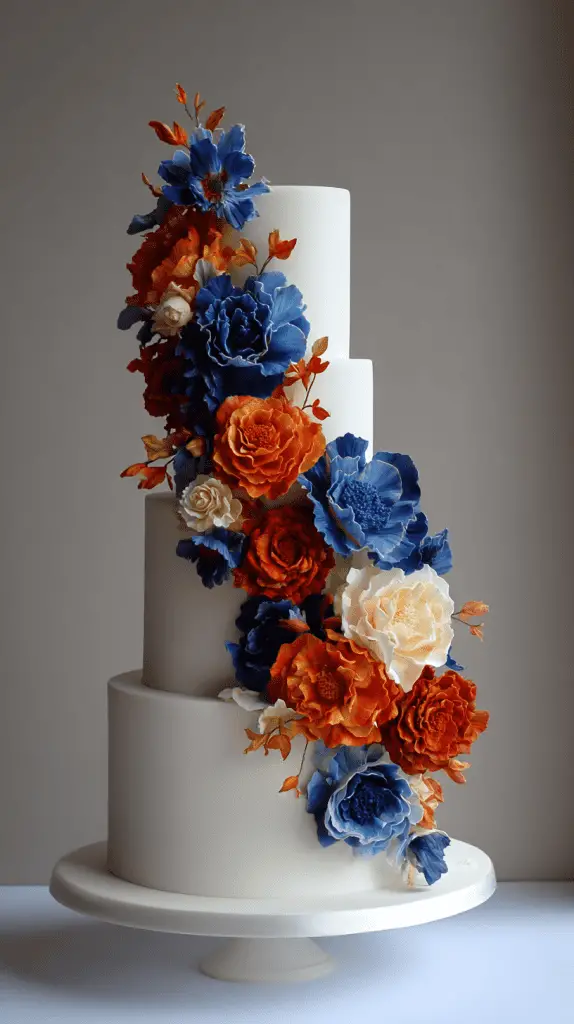
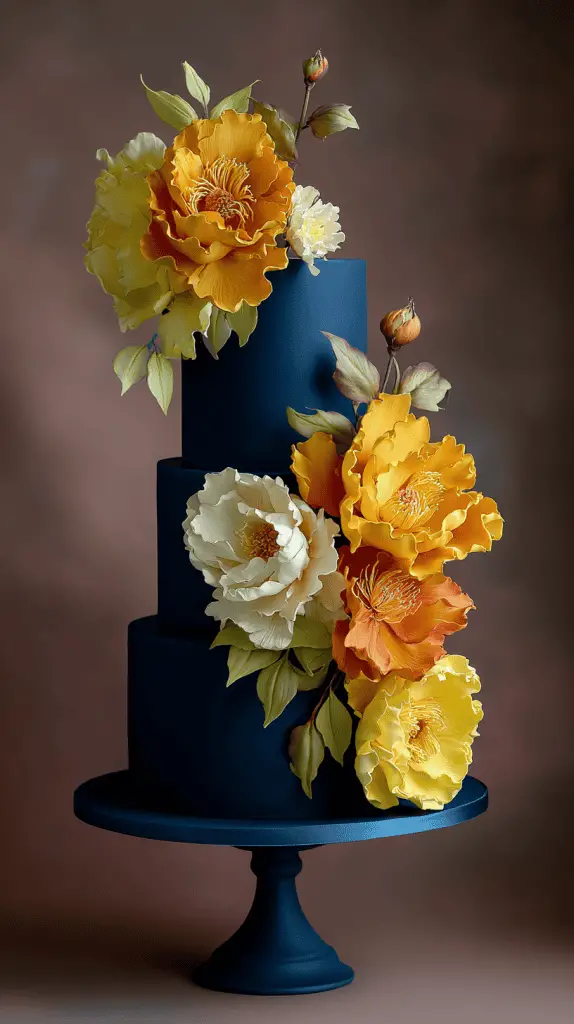
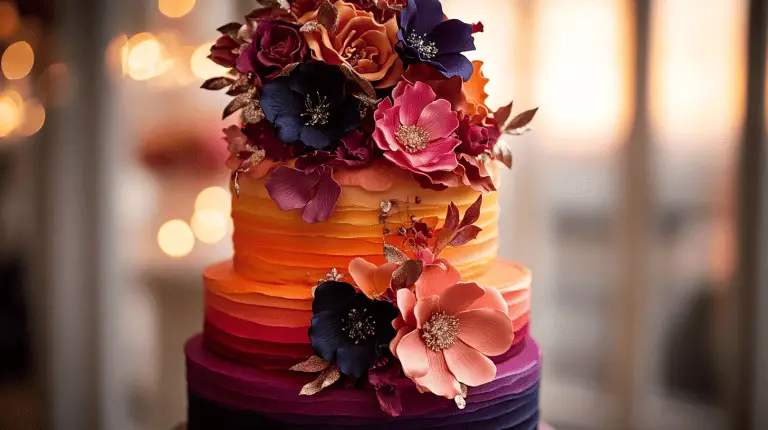
Colour-blocked florals are especially hot. Instead of scattering colors, you get big, distinct blocks – flowers grouped by color for maximum impact.
This works well on tall cakes, where colors are separated by level or clustered on one side. Pair saturated pink with burnt orange, or cobalt with white – don’t be shy.
Popular color directions include:
- Jewel tones—emerald, sapphire, amethyst
- High-contrast brights like fuchsia and tangerine
- Monochrome blocks in different shades
- Bold pastels in solid, defined sections
Sugar flowers are often the go-to for perfect color matching. You can coordinate them with stationery, bridesmaids’ dresses, or floral installations—whatever suits your style.
If your décor already features color-blocked bouquets or bold floral arrangements, echo that on your cake. Keep the base clean—smooth buttercream or fondant lets the color shine.
When you go bold with intention, your cake becomes a design feature, not just a background detail. It’s a statement, and honestly, why not?
6. Long Table & Cakescape Designs
More couples are swapping out tall, stacked cakes for long, horizontal designs that stretch across the length of a table. These “infinity” cakes go wide, not high, and create a striking, modern line right through your reception.
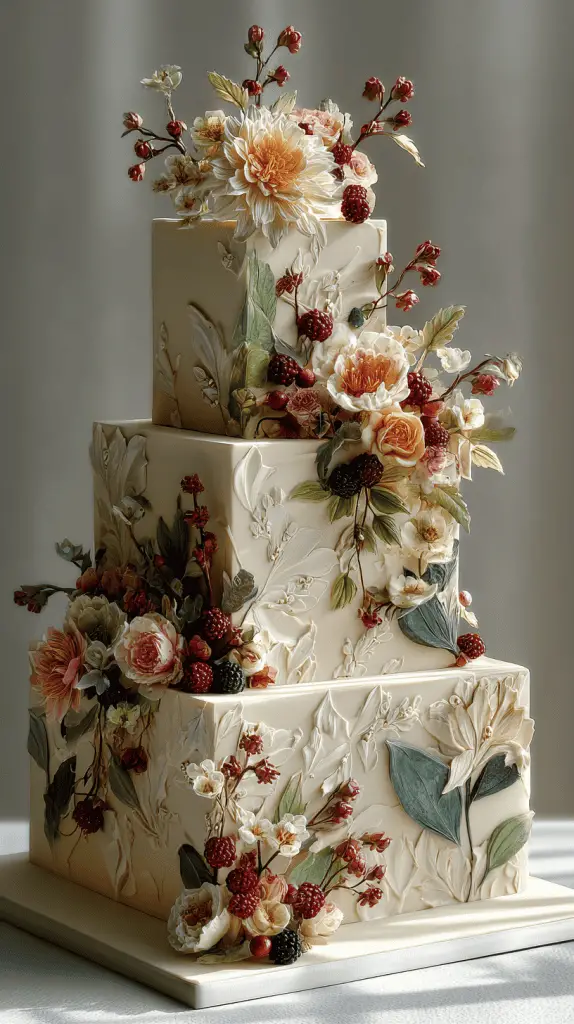
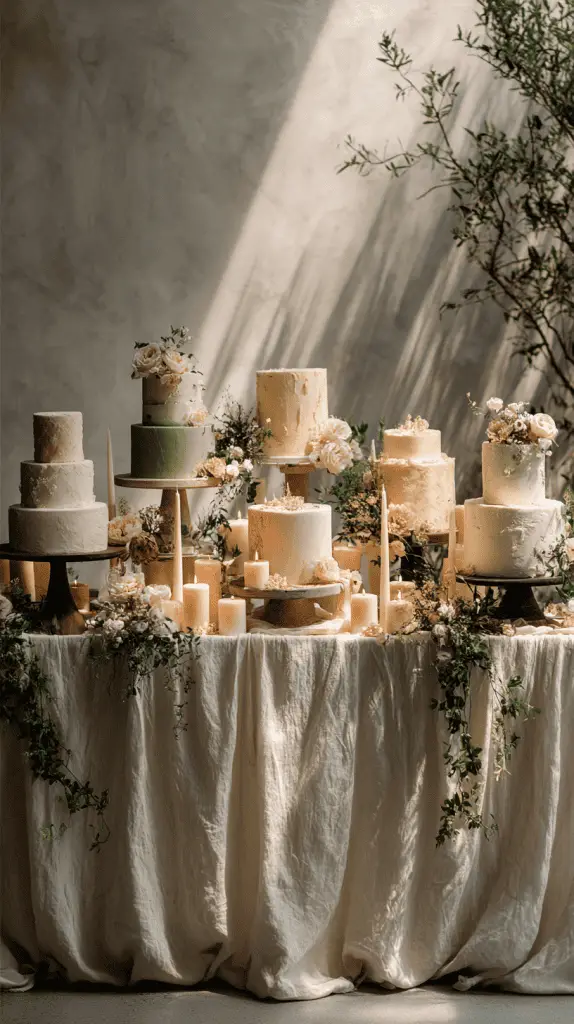
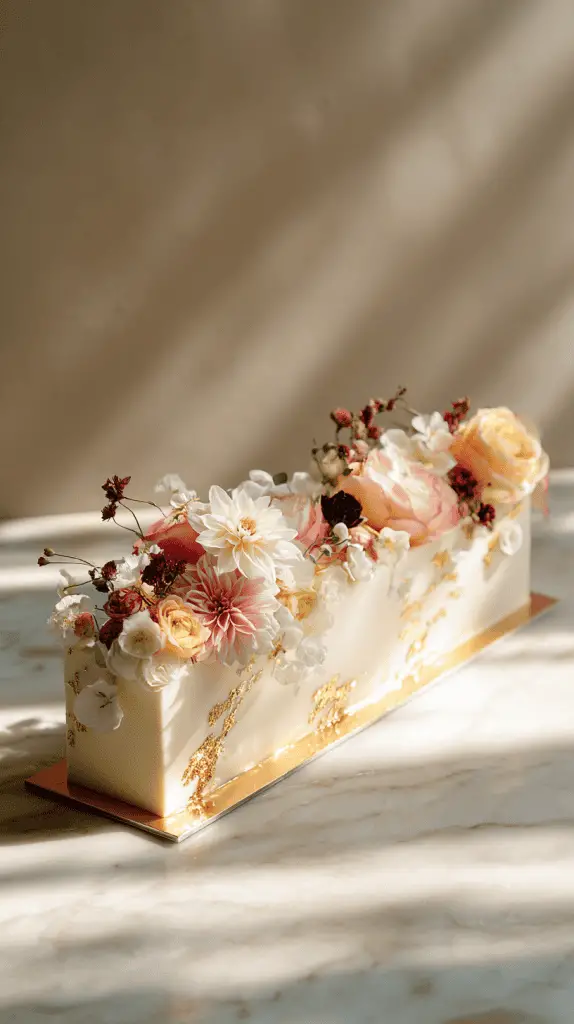
A single, extended cake is practical for big guest lists. You get neat, even slices and a display that feels unified instead of chaotic.
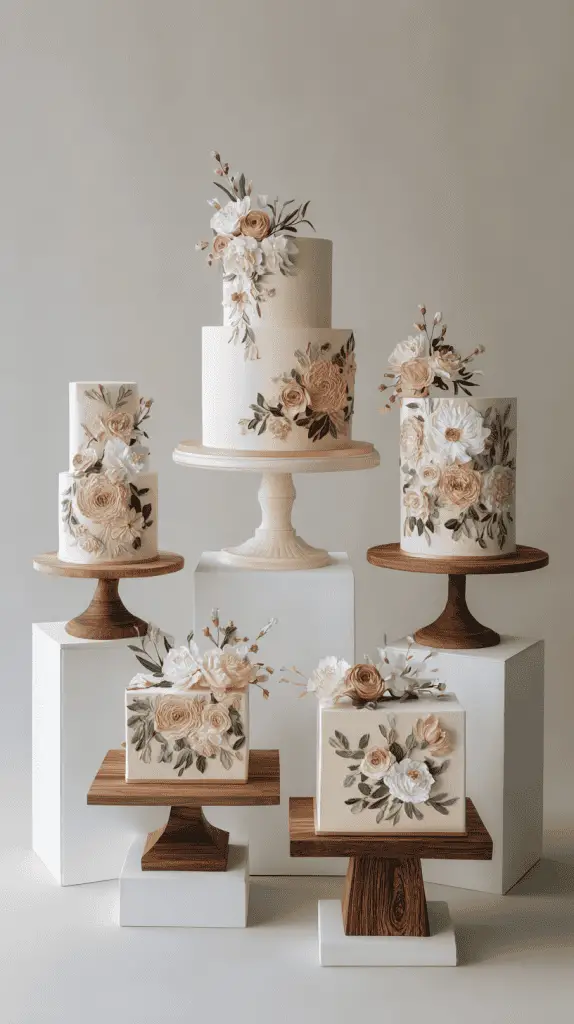
But you don’t have to stick to one cake. A full cakescape – basically a landscape of cakes—brings in varied heights, shapes, and finishes, adding depth all along a long table.
- Rectangular or sheet-style tiers
- Low sculptural cakes
- Mini cutting cakes paired with larger serving cakes
- Fresh fruit, florals, or even vegetable accents for texture
Spacing matters. Cakes on plinths, stands, or layered linens keep the table feeling curated, not crammed.
This format also opens up more flavour options. You might line up cakes with different sponges or fillings, each one clearly labelled for guests to pick and choose.
| Design Feature | Practical Benefit |
|---|---|
| Horizontal layout | Easier guest access and smoother service |
| Multiple cakes | Greater flavour choice |
| Mixed heights | Stronger visual balance |
| Extended display | Doubles as a focal reception feature |
Pick finishes that vibe with your overall style. Minimal buttercream feels right for modern spaces, while textured piping or edible lace gives detail without making things too busy.
7. Couture Textile & Metallic Finish
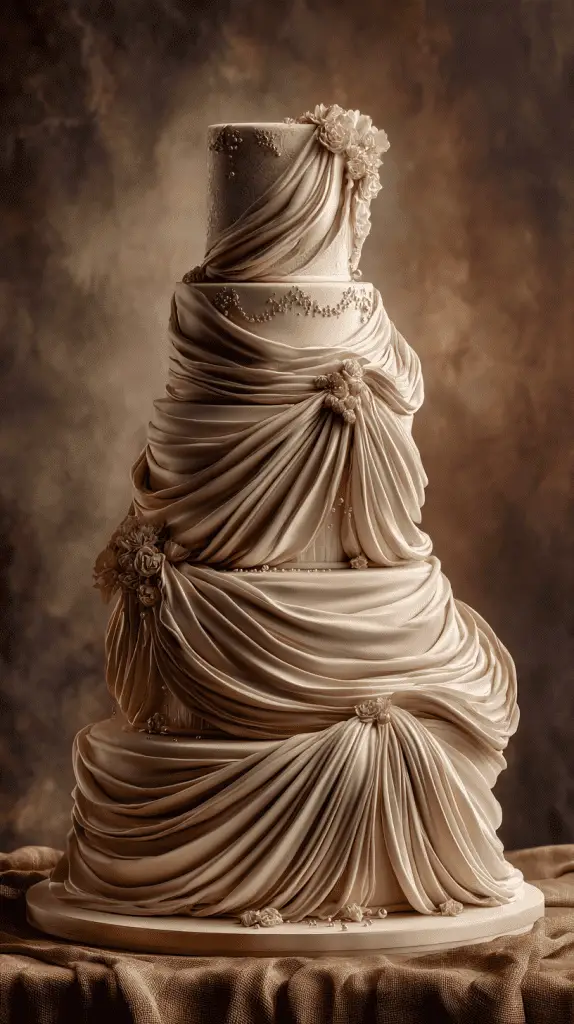
In 2026, wedding cakes are borrowing straight from couture fashion. Tiers are finished to look like silk draping, pleated chiffon, embossed lace, and even tailored seams instead of just smooth fondant.
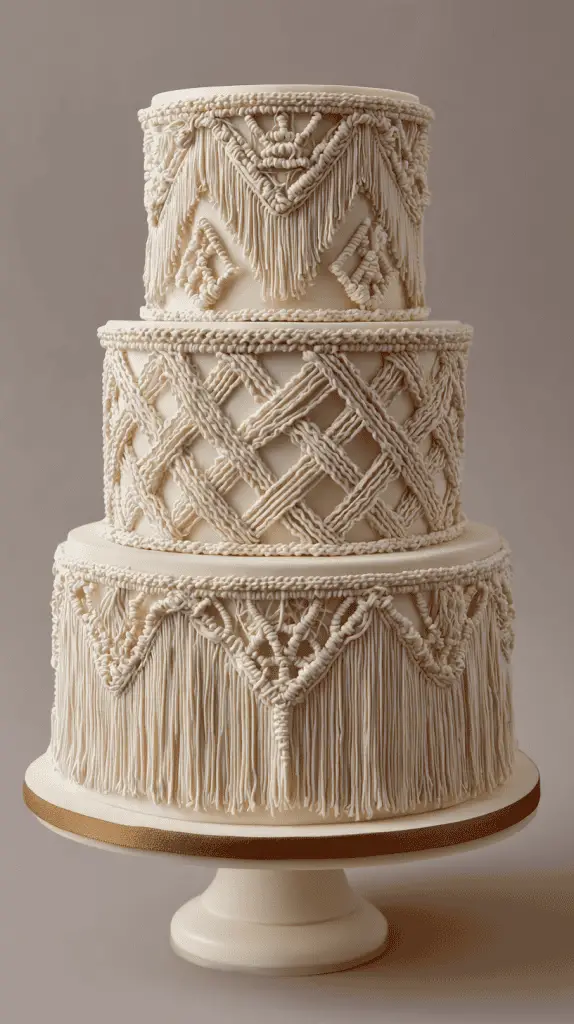
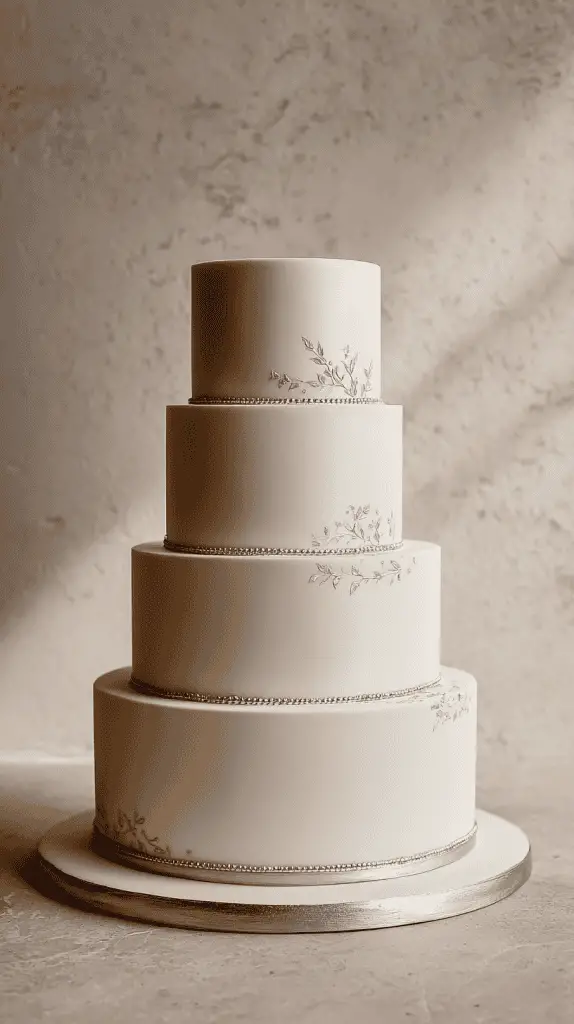
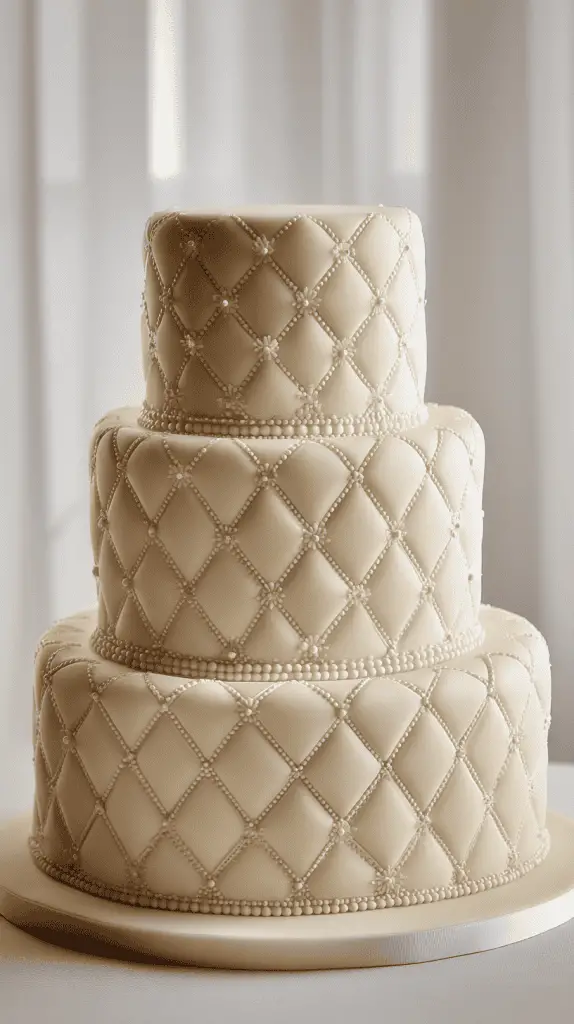
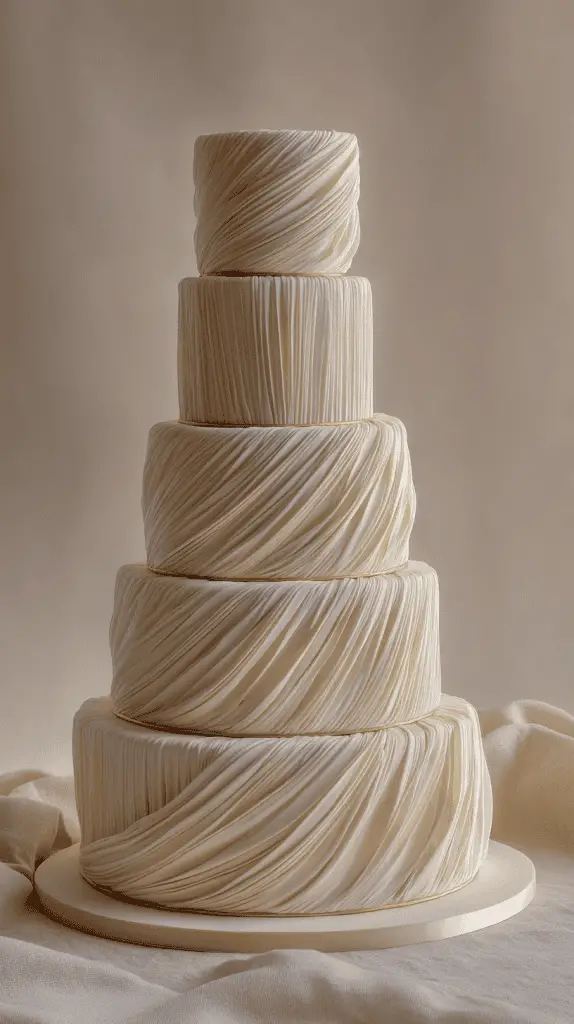
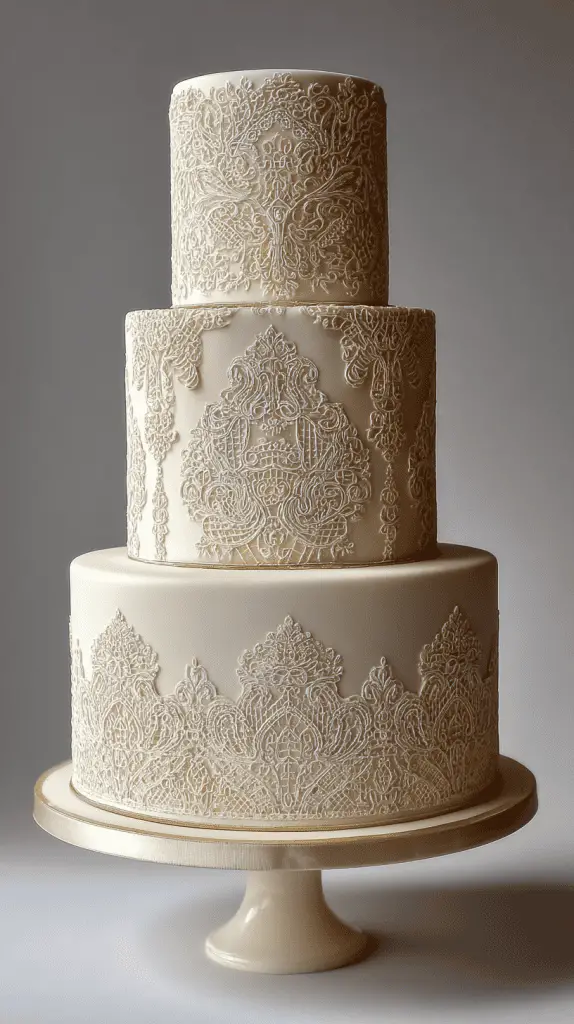
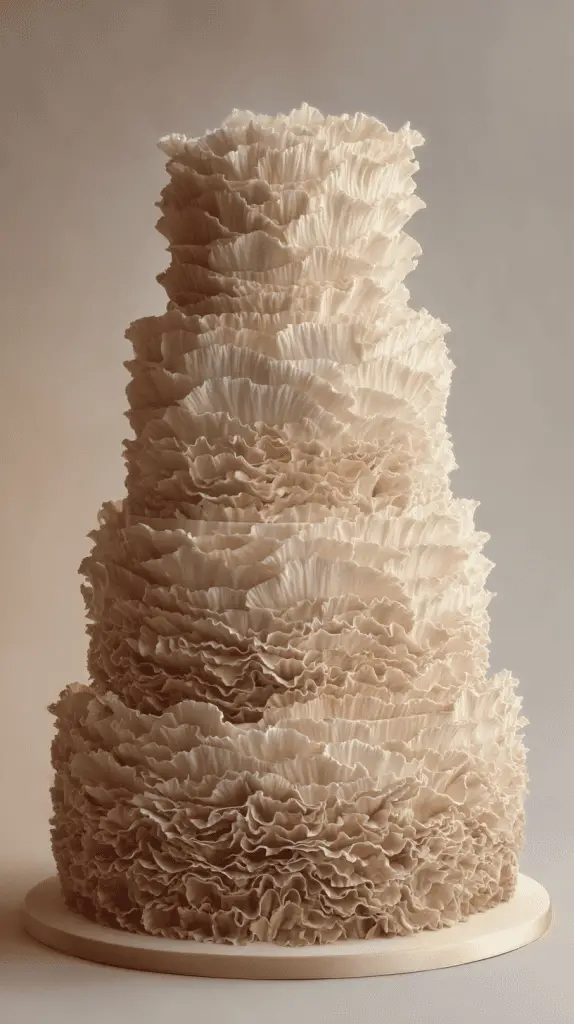
Textured buttercream and sugar paste now mimic fabric—sometimes with almost uncanny accuracy. Bakers are pulling off:
- Ruffled finishes that look like organza or tulle
- Bas-relief lace inspired by bridal gowns
- Pleated and folded effects for that soft, draped vibe
- Quilted details with subtle piping for a tailored edge
These textures add interest without screaming for attention. It’s all about visual depth, not just color.
Metallics are still in, but it’s less about gold overload and more about restraint. You see thoughtful accents—edges, seams, details—rather than entire tiers dipped in gold.
| Metallic Detail | How You’ll See It Used in 2026 |
|---|---|
| Gold leaf | Applied sparingly along edges or seams |
| Copper tones | Brushed into textured buttercream |
| Silver foil | Highlighting sculpted elements |
| Pearl lustre | Soft sheen across monochrome tiers |
It keeps things modern and a little bit refined. Pair a monochrome base with just enough metallic to make it pop, but never too much.
Coordinate the cake with your dress fabric or reception decor, and suddenly the whole thing feels intentional. Texture and metallics, when used with a little discipline, let your cake fit right in with the rest of your wedding instead of fighting for attention.
8. Crystallised Fruit & Jewelled Produce
Add some edge to your cake with crystallized fruit and jewelled produce. Bakers are coating pears, grapes, and citrus slices in fine sugar—giving them a glassy, light-catching finish that’s elegant without being flashy.
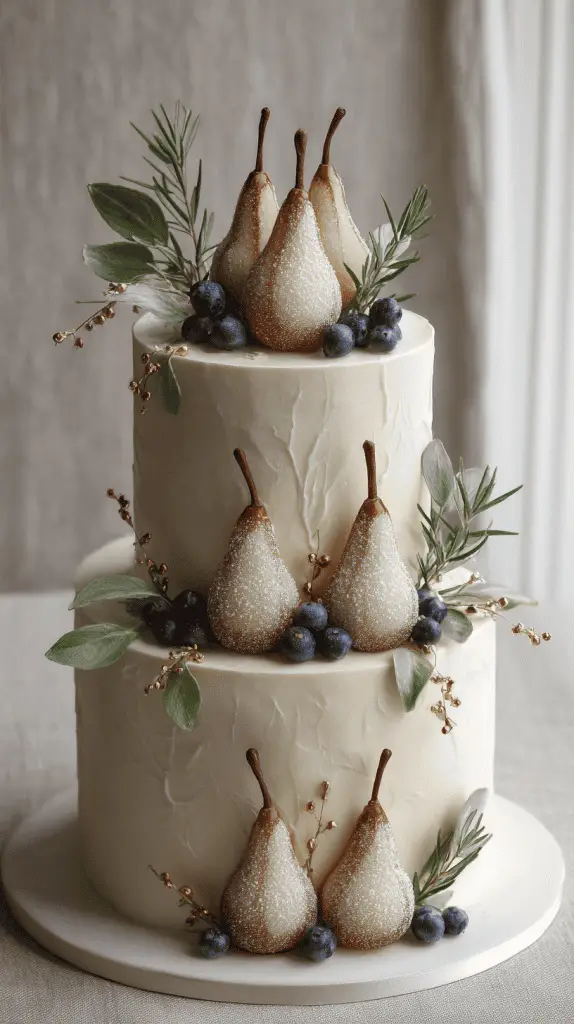
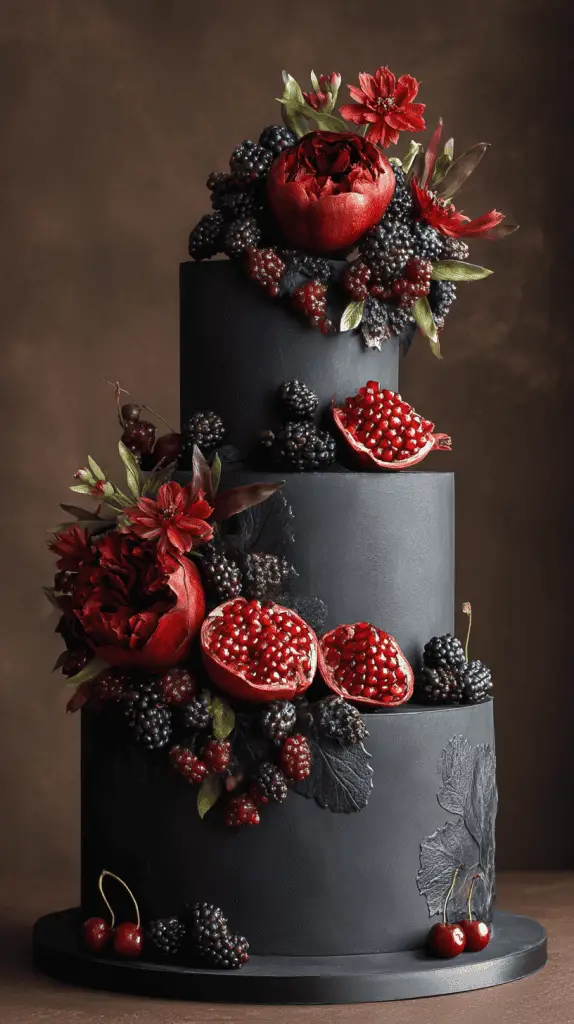
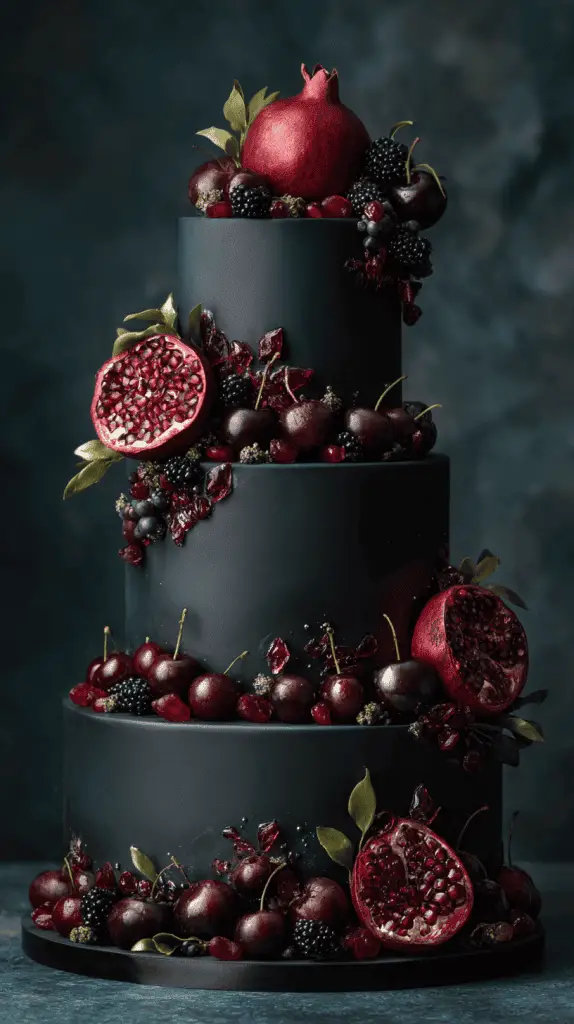
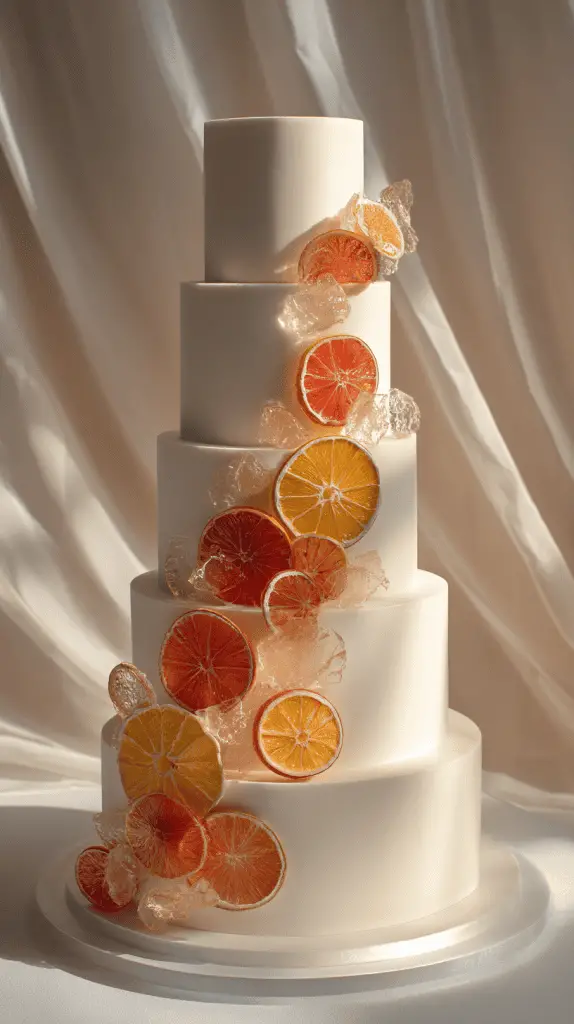
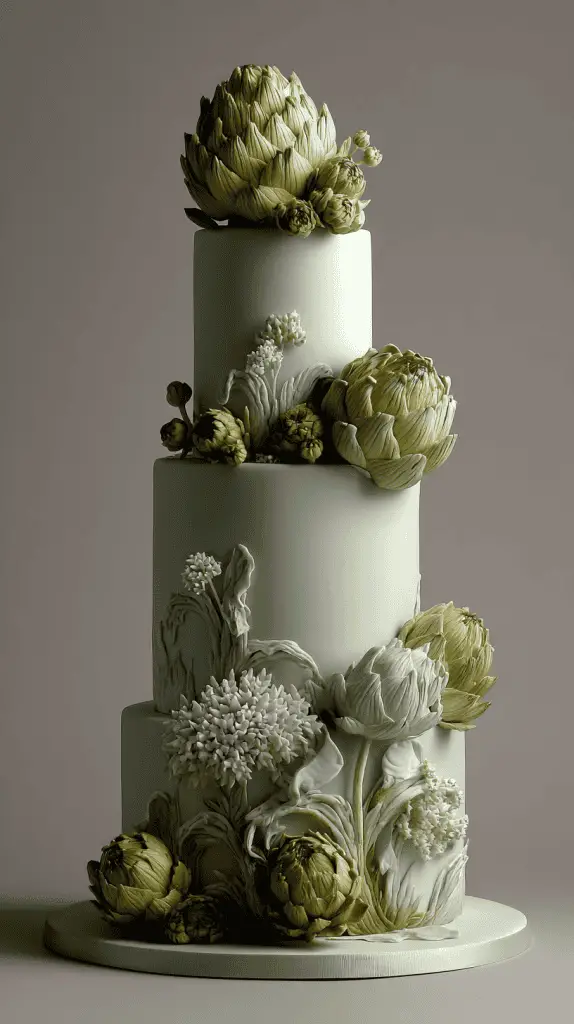
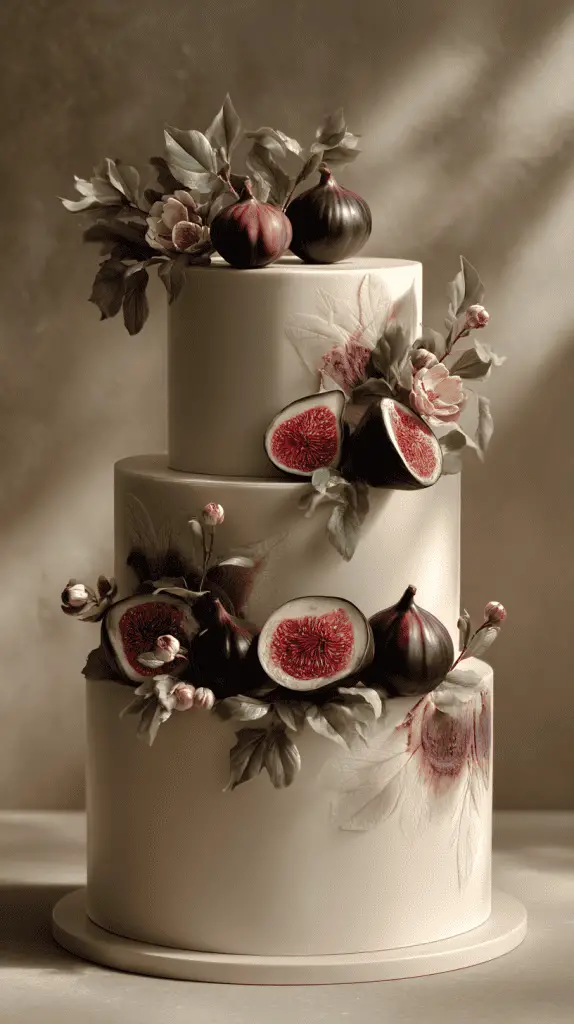
This trend takes fruit-forward decoration to another level. Instead of tossing berries randomly, fruit is now arranged with purpose—clustered, fanned, or even set into icing like little gemstones.
A dusting of icing sugar over berries brings texture and contrast, while candied grapes or sugared figs add height and structure to smooth tiers.
If you’re feeling adventurous, why not try unexpected produce? Artichokes, tiny cabbages, or garlic scapes can frame a tier or sit at the base for a sculptural twist.
Popular choices include:
- Sugared grapes and currants
- Crystallised citrus wheels
- Frosted figs and plums
- Pear halves with a fine sugar crust
Jewelled fruit works best with clean finishes – think smooth fondant or soft matte buttercream. That way, things look modern, not country rustic.
If you want shimmer without going full metallic or heavy piping, this method layers in detail, texture, and natural color—no overkill needed.
Frequently Asked Questions
Wedding cakes in 2026 are all about tall silhouettes, textured finishes, bold flavours, and thoughtful sourcing. There’s more flexibility too – tier counts, creative displays, and pricing shaped by both design and ingredients.
1. What cake designs are expected to be most popular for weddings this year?
Tall, statement cakes with multiple tiers are having a moment. Five or more slim tiers give you that wow-factor height without taking up a ton of space, which just fits with modern venues and big guest lists.
Sculptural details are everywhere. Couples want textured buttercream, pleats, edible lace, and shapes that look more like edible art than old-school cakes.
Pressed flowers, hand-painted touches, and bold stacked tiers in contrasting colors are all in. Clean geometric lines are sticking around too, especially for city weddings.
2. Which flavours are leading choices for modern wedding cakes?
The classics – vanilla with raspberry, lemon with elderflower, chocolate with salted caramel – aren’t going anywhere. They’re familiar but just different enough to feel fresh.
But there’s definitely a push for bolder flavours. Pistachio, hazelnut praline, passion fruit, espresso, and spiced pear are getting attention for their depth and contrast.
Lots of bakers actually recommend mixing it up by tier. That way, guests can try different combos and you’re not stuck with just one flavour profile.
3. Are couples choosing single-tier, multi-tier, or alternative cake displays more often?
Multi-tier cakes are still the go-to for medium to large weddings. But they’re taller and slimmer now, not the old wide-and-heavy style.
Single-tier cakes are perfect for smaller ceremonies or registry weddings. Some couples do a decorated cutting cake and serve sheet cakes from the kitchen to keep things efficient.
Alternative displays are on the rise too. You might see a cake table with several smaller cakes, mixed desserts, or a dessert station that really fits your theme.
4. What icing and finish styles are in demand, such as buttercream, ganache, or fondant?
Textured buttercream is leading the pack. People love soft ridges, palette knife finishes, and lightly swept surfaces over that ultra-smooth, almost plastic look.
Ganache is still in for sharp edges and a clean finish. It’s sturdy and tastes rich—especially with chocolate designs.
Fondant’s not gone, but it’s less dominant. Couples often ask for a thinner layer or combine it with buttercream for a vibe that’s a bit less formal.
5. How are couples incorporating sustainability and locally sourced ingredients into their wedding cake choices?
If you want to cut down on environmental impact, go for seasonal fruit and locally milled flour. More bakers are spotlighting regional dairy and free-range eggs in their cakes these days.
There’s also a real push to avoid food waste. Accurate portion planning, sheet cake backups, or smaller display cakes help keep things sensible.
Some designers are using biodegradable packaging for leftovers and steering clear of non-edible plastic decor. Edible flowers from local growers are popping up a lot too.
6. What is the typical cost range for a contemporary wedding cake, and what factors affect the price?
In the UK, a professionally designed multi-tier wedding cake for 80 to 120 guests usually lands somewhere between £400 and £800. Go for a grander design or something really intricate, and the price can easily tip over £1,000.
In the US, most couples spend between $700 and $1,100, with a national average sitting around $917 – though a standard wedding cake serving 50 to 100 guests can come in closer to $300 to $600 if you keep the design relatively simple. Location makes a big difference too: major cities like San Francisco average over $1,150, while other parts of the country come in closer to $475.
On both sides of the Atlantic, the same rules apply when it comes to what drives the price up. Size matters, obviously, but so do the number of tiers and how wild you get with flavours. If you’re after hand-painted details, sugar flowers, or elaborate textures, just know that’s significantly more hours for the baker – and it shows in the final bill. Fondant work and intricate sugar flowers cost more than a simple buttercream finish, and premium or specialty flavours add to the total too.
There’s also delivery distance to consider, plus whatever your venue requires for setup and support – delivery alone can add anywhere from $50 to $150 to your final bill in the US. Honestly, having a clear design brief and a good idea of your guest count makes a big difference when it comes to keeping the budget in check – wherever you’re getting married.