
31 Sage Green Wedding Cakes for Your Garden Ceremony
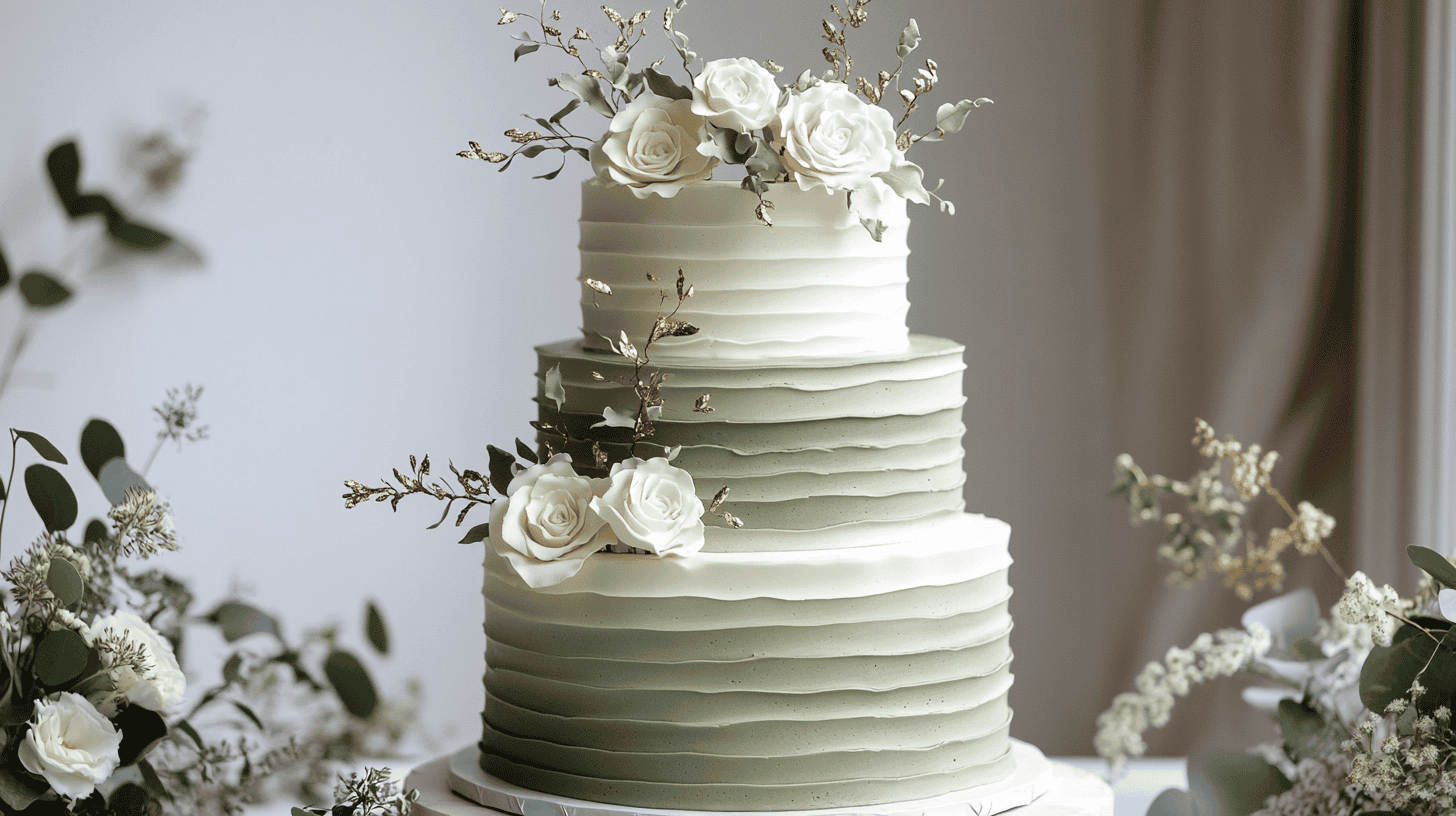
31 Sage Green Wedding Cakes
You want a cake that feels natural, elegant, and perfectly at home in a garden setting. A sage green wedding cake delivers that balance with a soft, earthy tone that complements florals, greenery, and open-air venues without overpowering your décor. A sage green wedding cake gives your garden ceremony a cohesive, nature-inspired centerpiece that blends seamlessly with flowers, foliage, and outdoor light.
You can style this green wedding cake in ways that match your exact vision, whether you prefer smooth buttercream with white accents, fresh eucalyptus and olive branches, or refined gold detailing. Sage green also pairs well with cream, ivory, and muted florals, which helps you create a calm, polished look for your sage green wedding.
Explore designs that range from classic buttercream tiers to ombré finishes, vintage piping, pressed flowers, and subtle gilded touches. With the right combination of texture, color, and detail, you can turn your wedding cake into a focal point that reflects your setting and personal style.
Why Choose Sage Green for Your Wedding Cake?
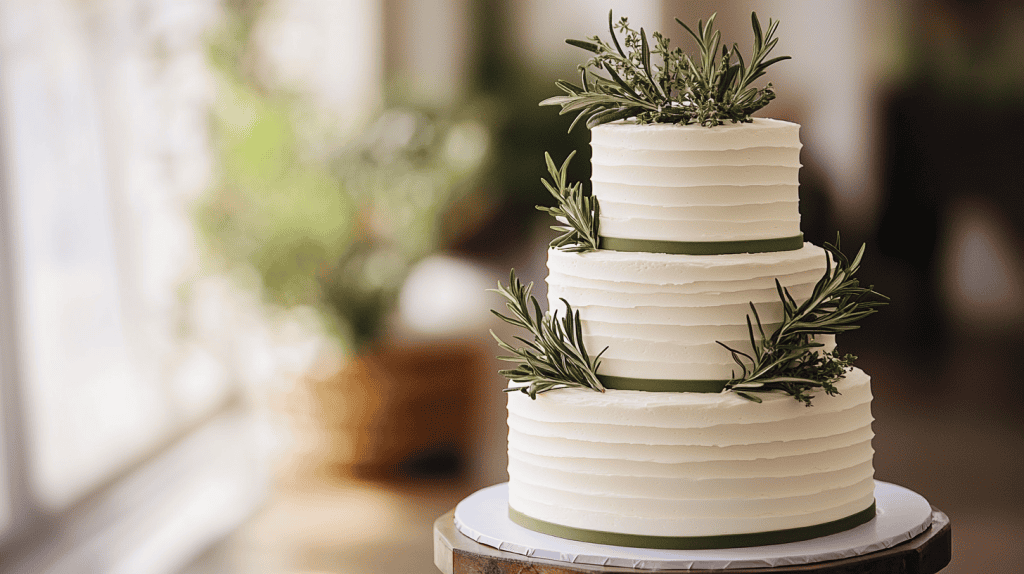
Sage green wedding cakes offer a calm, natural look that fits outdoor ceremonies and refined indoor receptions. You gain a color that carries meaning, aligns with current cake design trends, and pairs easily with garden-inspired palettes.
The Symbolism of Sage Green
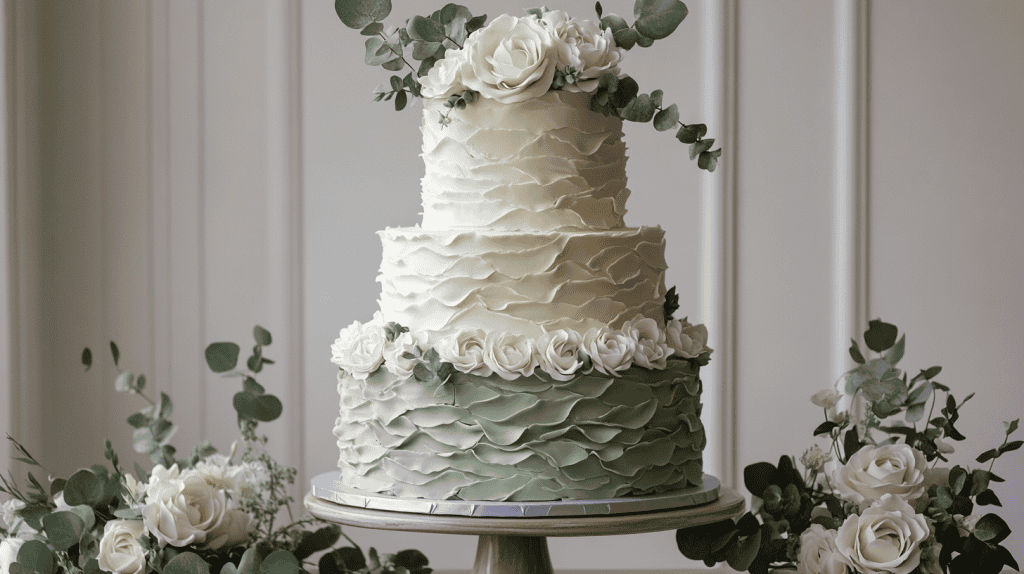
When you choose a sage green cake, you bring in a color tied to nature, growth, and balance. The muted green tone reflects leaves, herbs, and soft garden foliage rather than bold artificial shades.
Many couples select sage green wedding cakes for what the color represents. It suggests renewal and stability, which align with the start of a marriage. The association with herbs like sage also connects to ideas of wisdom and clarity.
In a garden ceremony, this symbolism feels consistent with your surroundings. Greenery, florals, and natural wood elements reinforce the message without forcing a theme.
Because sage green is understated, it supports your overall design instead of dominating it. You keep the focus on the setting and the celebration while still making a deliberate color choice.
Current Trends in Wedding Cakes
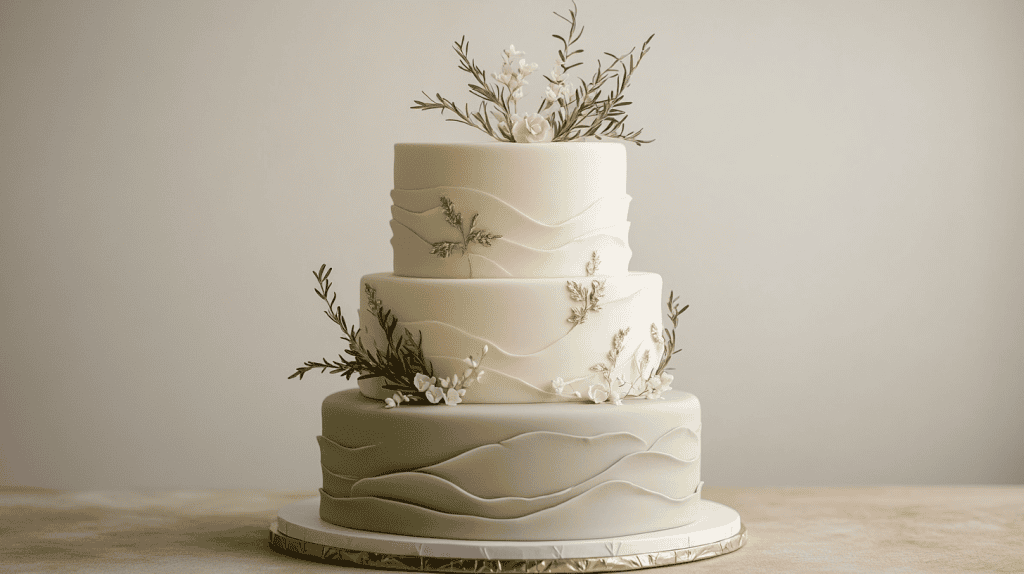
Sage green wedding cakes remain popular because they work across multiple design styles. Bakers use the shade in smooth fondant finishes, textured buttercream, watercolor effects, and semi-naked designs.
Modern couples often prefer soft, earthy palettes over bright tones. A sage green cake fits that shift toward organic colors and botanical details.
You can see this trend in designs such as:
- Gold or silver leaf accents for subtle contrast
- Hand-painted botanical elements
- Geometric tiers in muted green
- Semi-naked cakes with fresh eucalyptus or roses
The color also adapts to different tier counts. A single-tier sage green cake suits intimate gatherings, while a multi-tier version creates a structured focal point without feeling heavy.
This flexibility keeps the design current while avoiding short-lived trends.
Color Pairings for Garden Settings
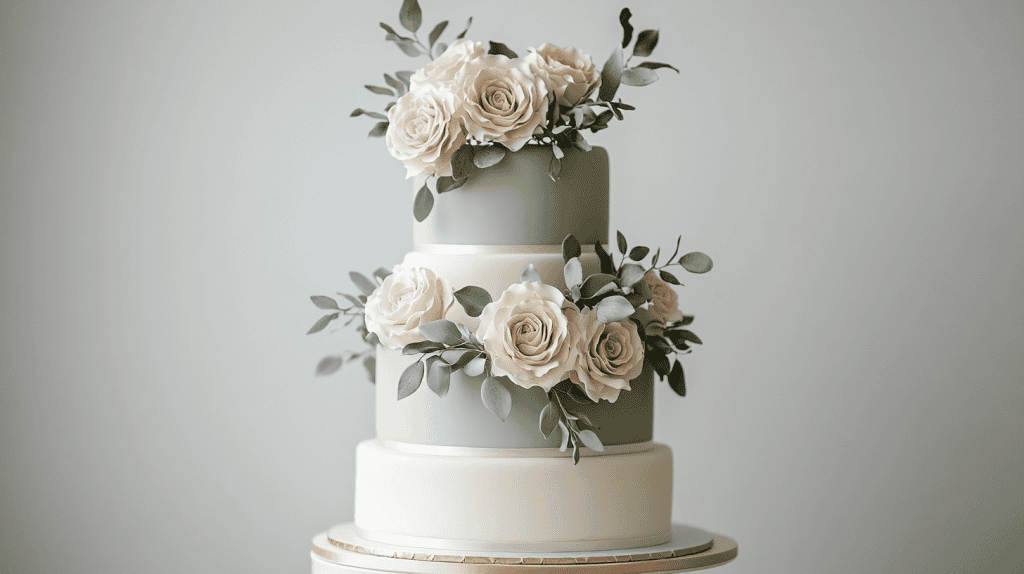
Sage green pairs well with common garden wedding palettes. You can combine it with soft neutrals, muted florals, and metallic details without clashing.
Consider these combinations:
| Primary Pairing | Effect in a Garden Ceremony |
|---|---|
| White or Ivory | Clean contrast against greenery |
| Blush or Dusty Rose | Soft, romantic tone |
| Cream and Beige | Warm, natural look |
| Gold Accents | Defined edges and subtle formality |
Fresh greenery such as eucalyptus or olive branches blends naturally with sage green wedding cakes. You create a seamless transition between the cake table and the surrounding landscape.
For table styling, use sage napkins, neutral linens, and simple floral arrangements. This approach keeps your sage green cake integrated into the setting instead of isolated as a separate design element.
Signature Elements of a Sage Green Wedding Cake
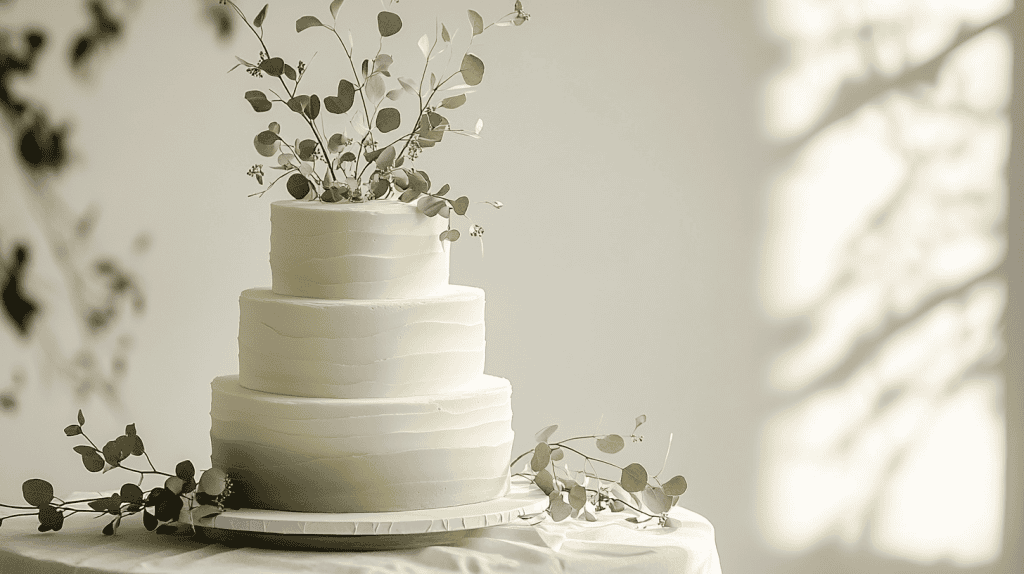
You define a sage green wedding cake through color, texture, and restraint. This muted shade pairs easily with garden settings and works across rustic, modern, and classic themes.
Finish and texture shape the overall look. A minimalist sage green cake often features smooth buttercream with clean edges and little decoration, which suits a refined outdoor ceremony. In contrast, a semi-naked cake reveals thin layers beneath soft sage frosting, creating a relaxed and natural feel.
Fondant offers a more structured result. A sage green fondant cake delivers a polished surface that supports details like lace piping, geometric accents, or subtle metallic touches. You can also use sage green fondant to create sculpted leaves or textured panels without overpowering the design.
Color variation adds depth. A sage green marble cake blends green with ivory or white for gentle movement across tiers. Ombre shading, two-tone swirls, or hand-painted botanical details introduce dimension while keeping the palette cohesive.
Garden-inspired accents complete the design:
- Fresh herbs such as rosemary or thyme
- Eucalyptus or olive branches
- White peonies or blush roses
- Simple gold leaf details
You keep the look balanced by limiting bold contrasts and focusing on natural elements. When you combine clean lines with organic textures, your cake aligns seamlessly with a garden ceremony setting.
1. Sage Green and White Buttercream Classics
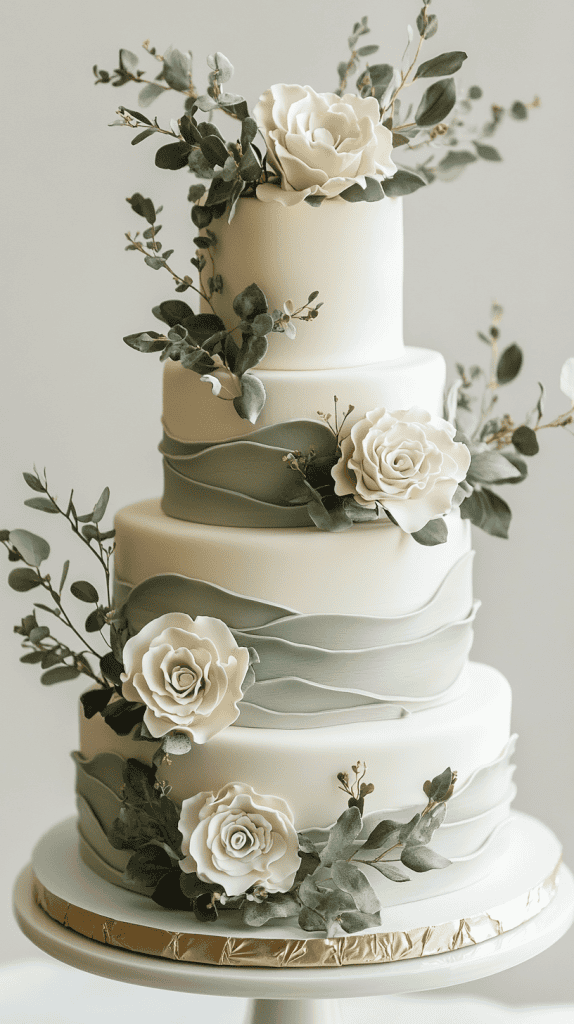
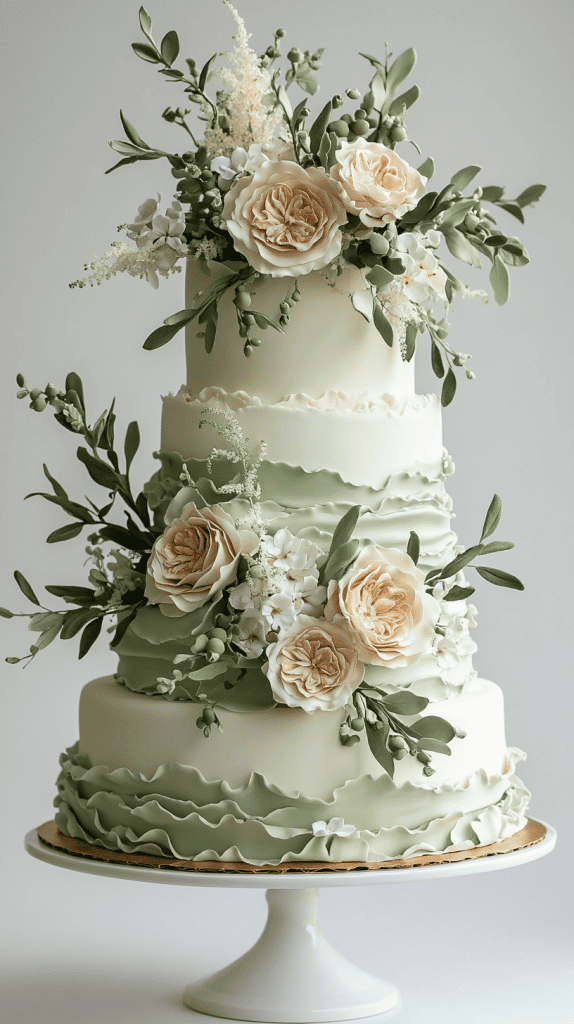
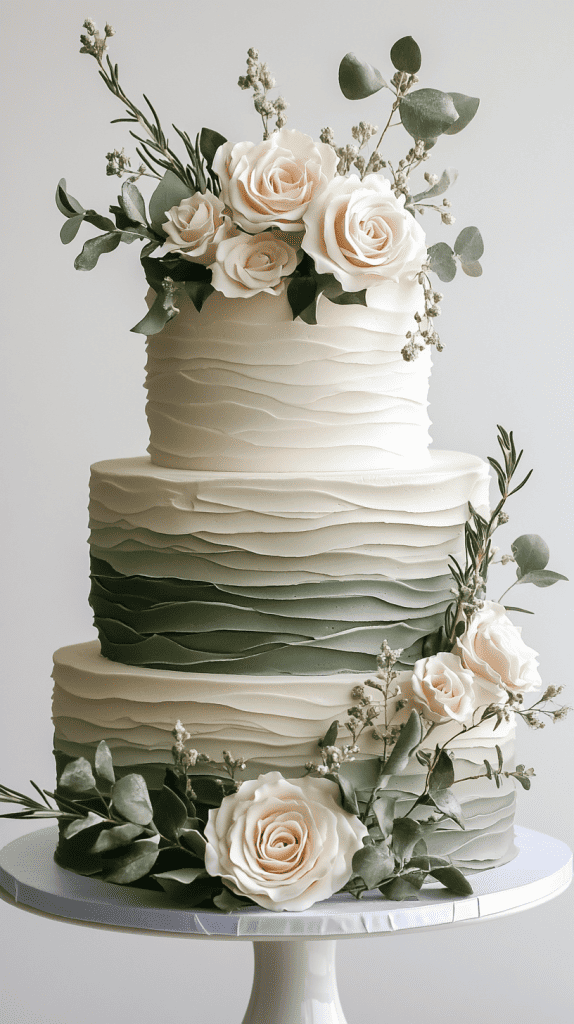
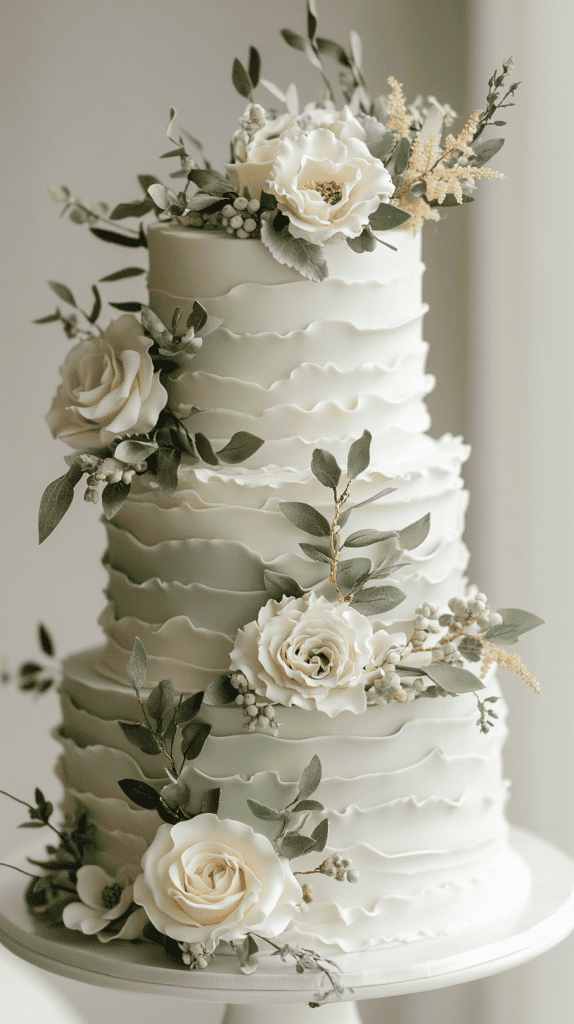
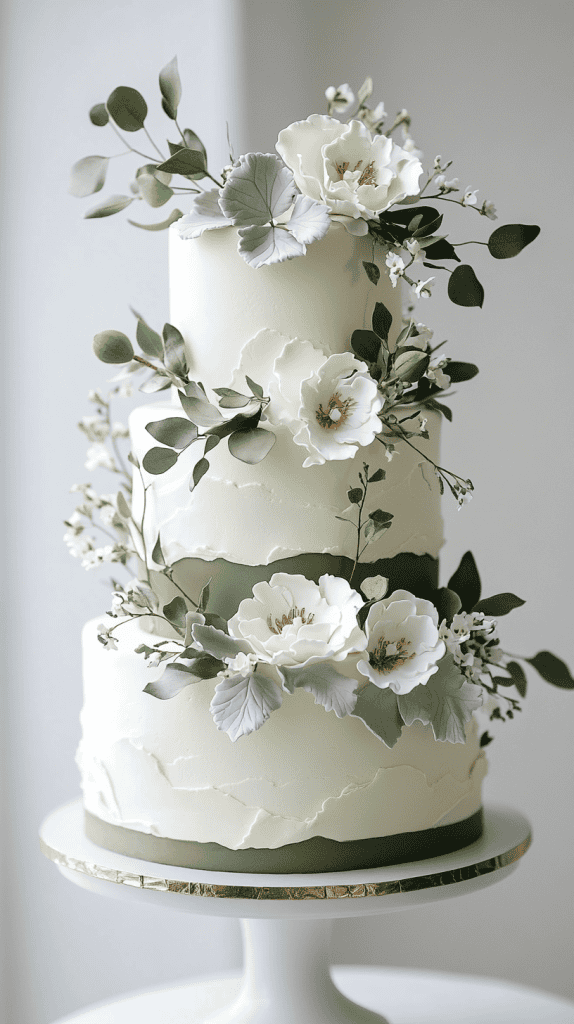
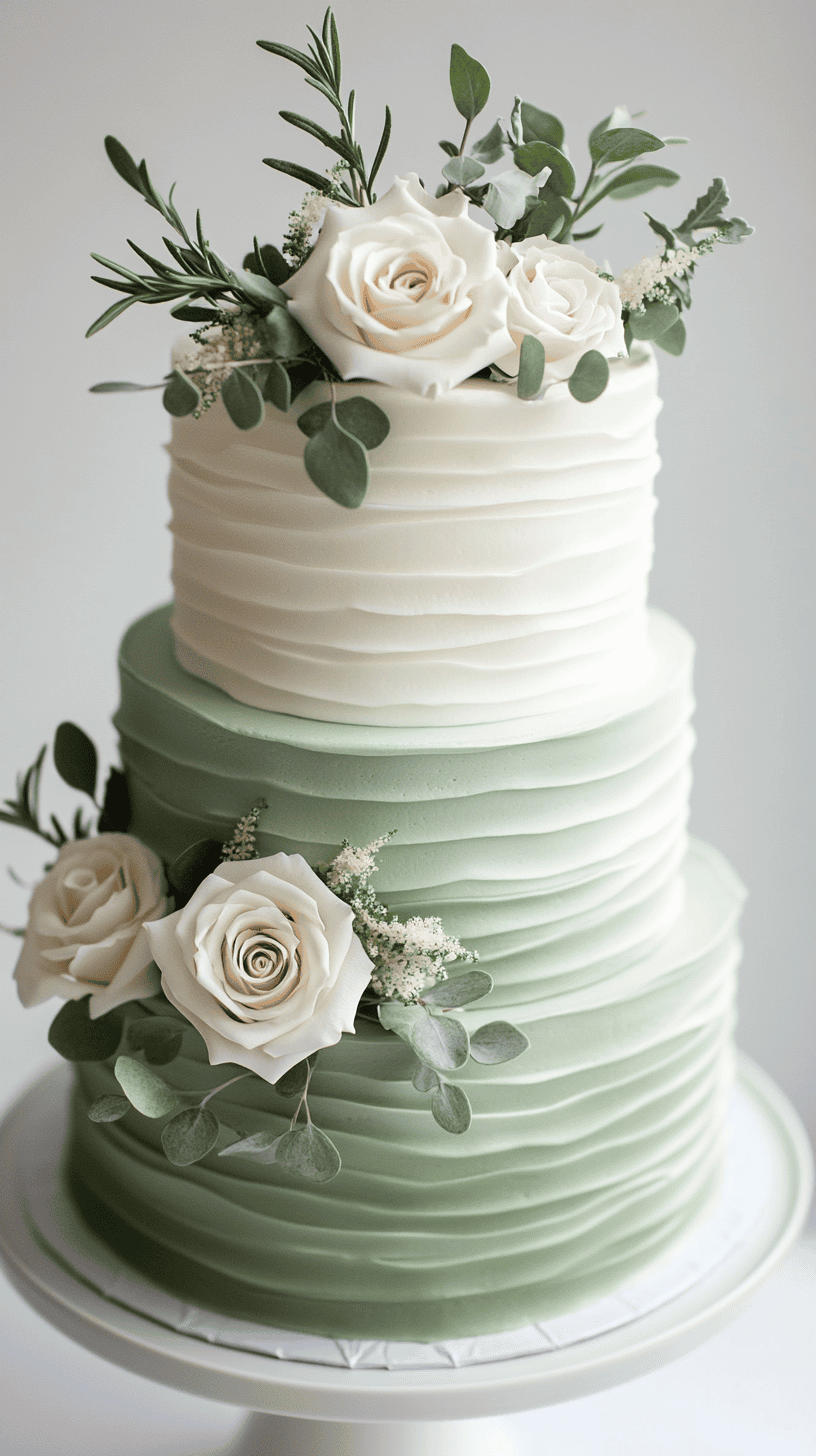
You can’t go wrong with sage green and white buttercream for a garden ceremony. This pairing feels clean and balanced while still reflecting the natural setting around you.
Choose smooth white buttercream as your base and add sage green in controlled accents. Think soft bands around each tier, subtle painted leaves, or a gentle two-tone swirl. The contrast keeps the design crisp without overpowering your floral décor.
A simple approach often works best:
- White tiers with sage green florals piped in buttercream
- A sage green base tier with white upper tiers
- Soft sage ombré fading into ivory
- White cake finished with sage green ruffle details
If you want added texture, ask your baker for horizontal buttercream ridges or a semi-naked finish. The exposed layers bring a relaxed, outdoor feel that suits garden venues.
Sage green pairs well with fresh greenery like eucalyptus, olive branches, or rosemary. You can also introduce restrained metallic accents, such as thin gold leaf lines, to add definition without distracting from the color palette.
For a timeless look, keep the structure traditional—two or three tiers with clean edges and minimal décor. The strength of this style comes from restraint, balanced color, and precise buttercream work.
2. Sage Green with Fresh Eucalyptus and Olive Branches
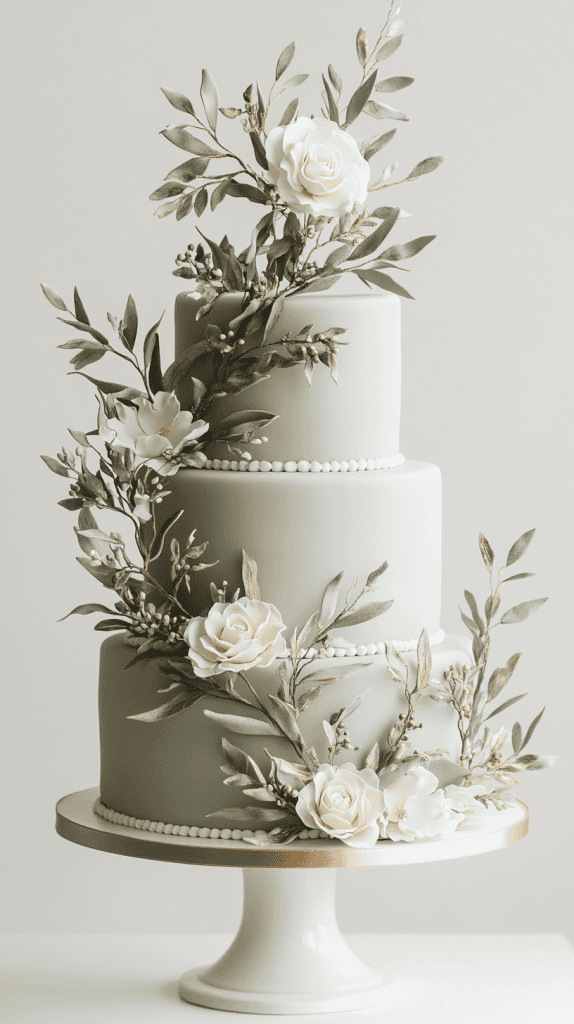

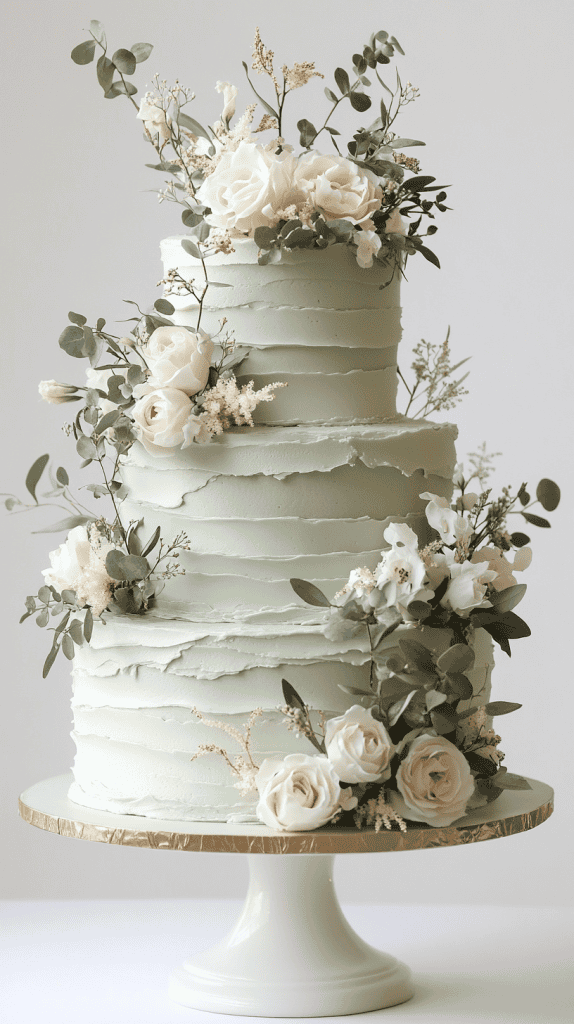
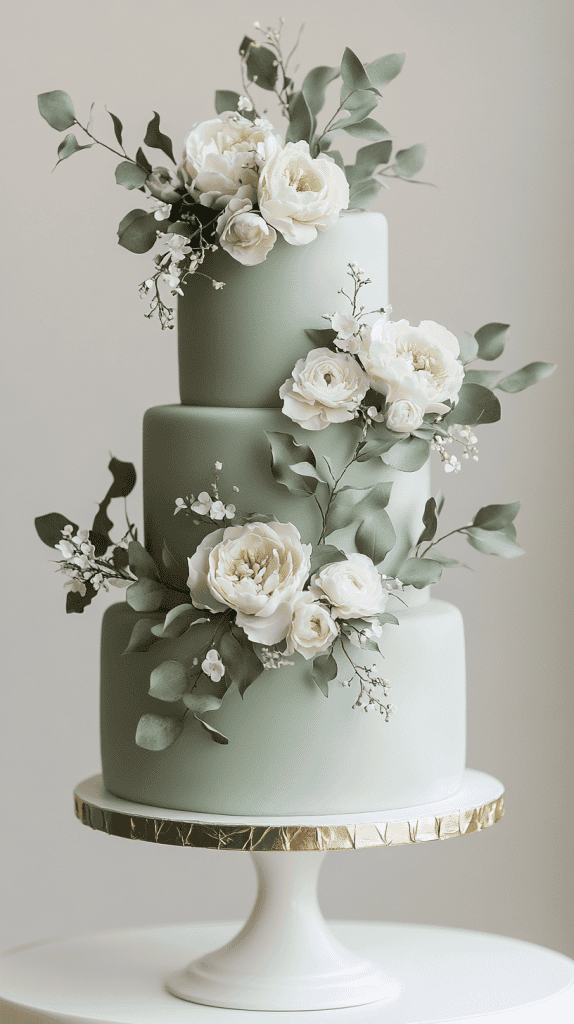
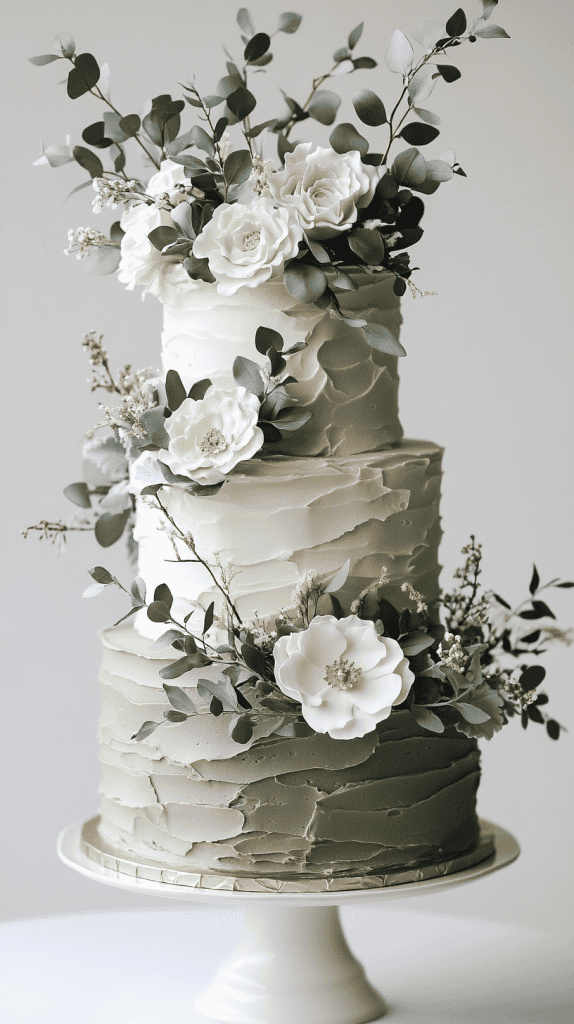
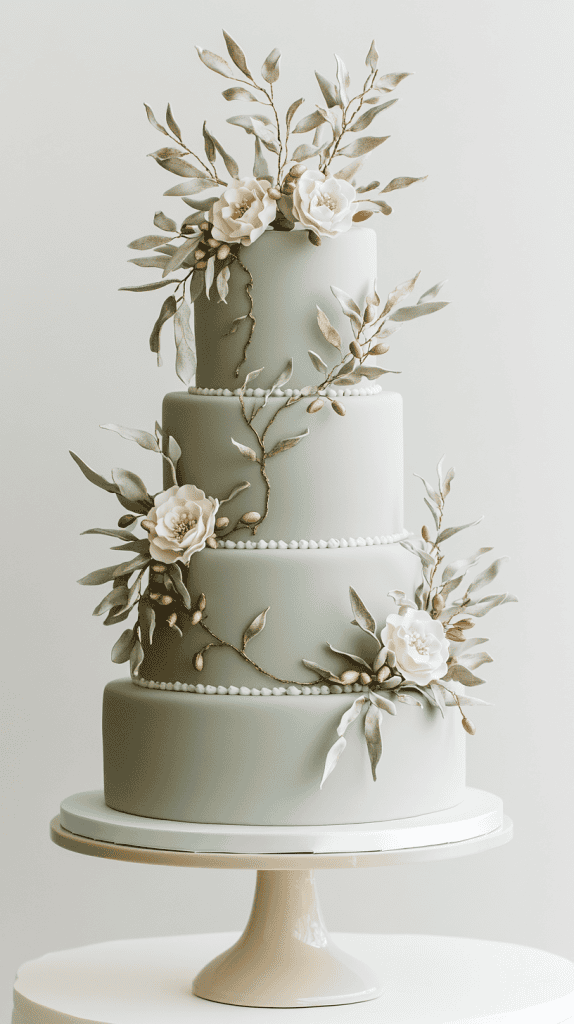
Choose fresh eucalyptus and olive branches when you want a cake that reflects your garden setting. These natural elements reinforce the soft, earthy tone of sage green without overpowering your design.
You can wrap olive branches around each tier or cluster eucalyptus at the base for a grounded look. Their muted green shades blend easily with sage frosting or fondant.
Why this pairing works:
- Soft green layers create depth without strong contrast
- Eucalyptus adds texture with rounded leaves
- Olive branches introduce structure with slender, elongated shapes
- Both complement outdoor and garden ceremonies
For a clean finish, use smooth buttercream in sage and press fresh greenery gently into the sides. If you prefer more structure, choose sage fondant and secure the foliage in defined placements between tiers.
You can also combine greenery with subtle accents such as:
- Thin gold leaf edging
- Small white blooms
- Neutral sugar flowers
Keep the arrangement balanced. Place greenery asymmetrically for a relaxed garden feel, or frame each tier evenly for a more classic presentation.
3. Sage Green Lambeth Piping and Vintage Detail
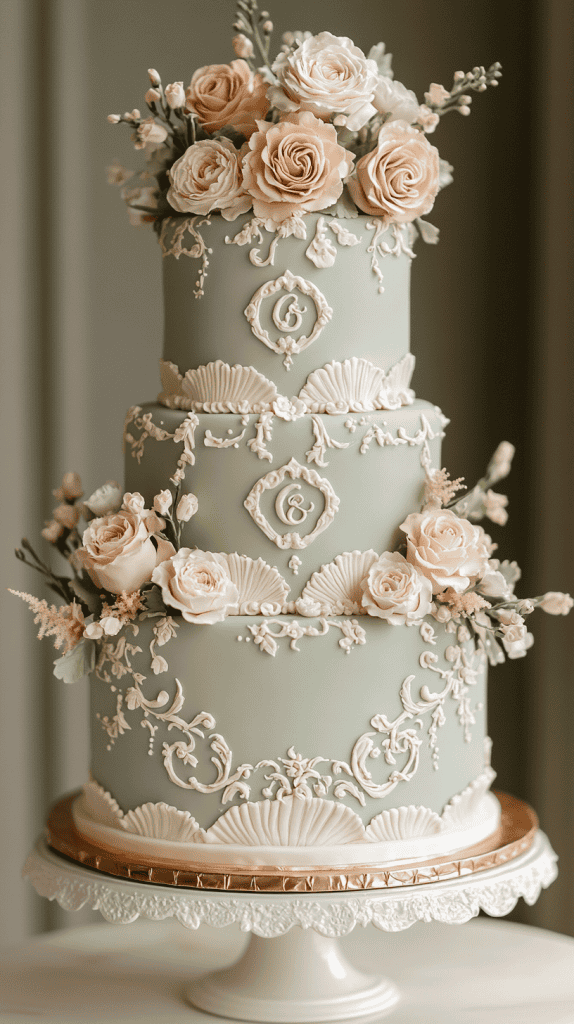
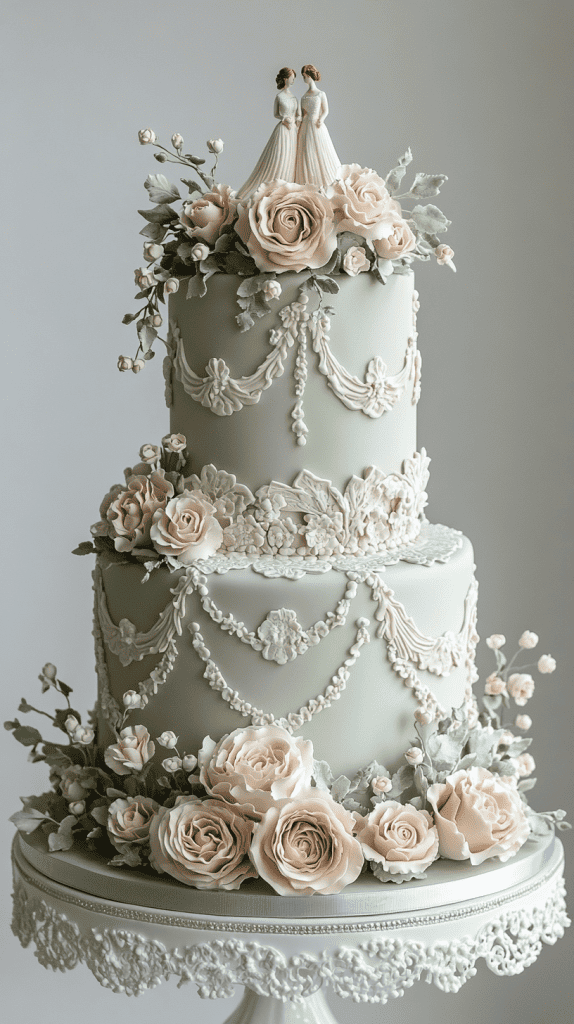
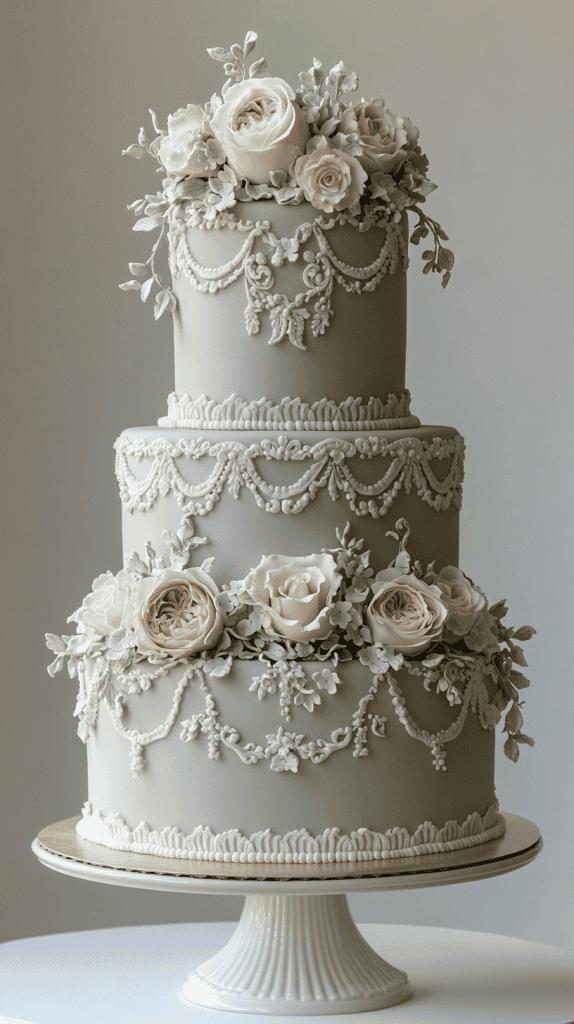
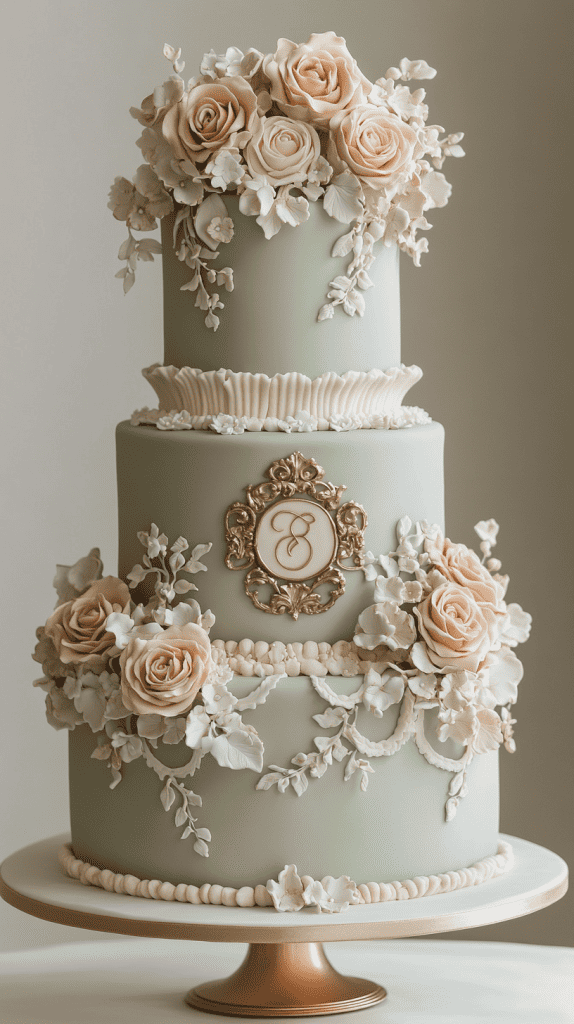

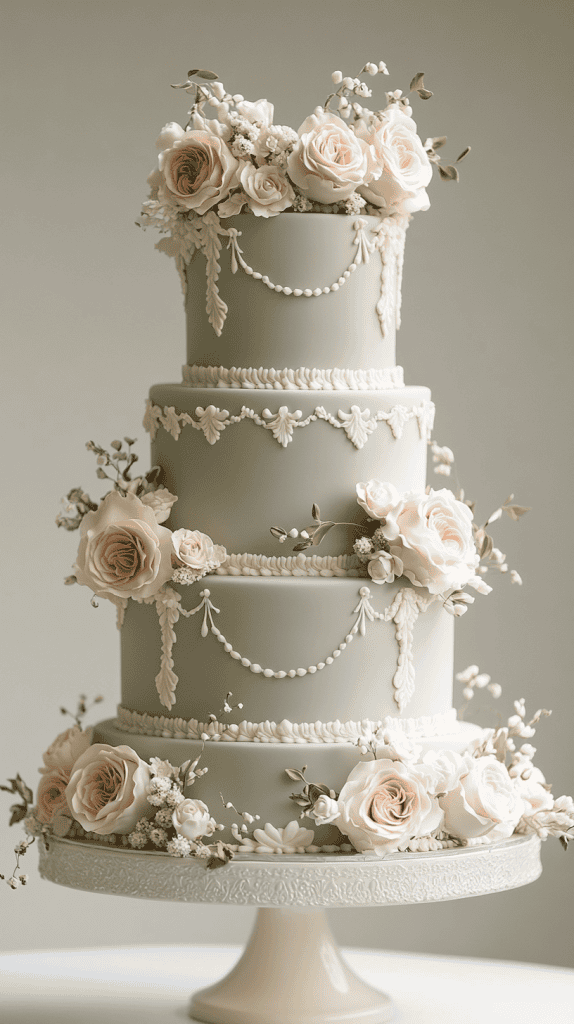
If you want a cake that feels refined and nostalgic, choose Lambeth piping in sage green. This style began in the 1930s and features layered, over-piped details that create depth and texture. The soft green tone keeps the look balanced and suited to a garden setting.
You can use scalloped borders, shell piping, and delicate stringwork to frame each tier. Add small rosettes or floral swags to introduce movement without overwhelming the design. The muted color palette prevents the ornate details from feeling heavy.
A sage base pairs well with subtle accent tones:
- Blush or dusty rose for warmth
- Ivory or cream for contrast
- Soft gold piping for a formal touch
Consider how detail placement affects the final look. Concentrate piping along the edges for structure, or cover the entire tier for a dramatic vintage effect. Keep smooth buttercream panels between piped sections to give the eye space to rest.
You can also personalize the design with small sugar flowers, monograms, or a classic bride-and-groom topper. These elements enhance the vintage style while keeping the cake relevant to your celebration.
For a quick planning reference:
| Design Element | Visual Effect |
|---|---|
| Over-piped garlands | Ornate, layered texture |
| Shell borders | Structured, traditional frame |
| Rosettes and swags | Soft, romantic detail |
| Smooth sage tiers | Clean contrast to piping |
This approach lets you showcase craftsmanship while maintaining the calm, natural feel that suits a garden ceremony.
4. Sage Green with Gold Accents and Edible Gilding
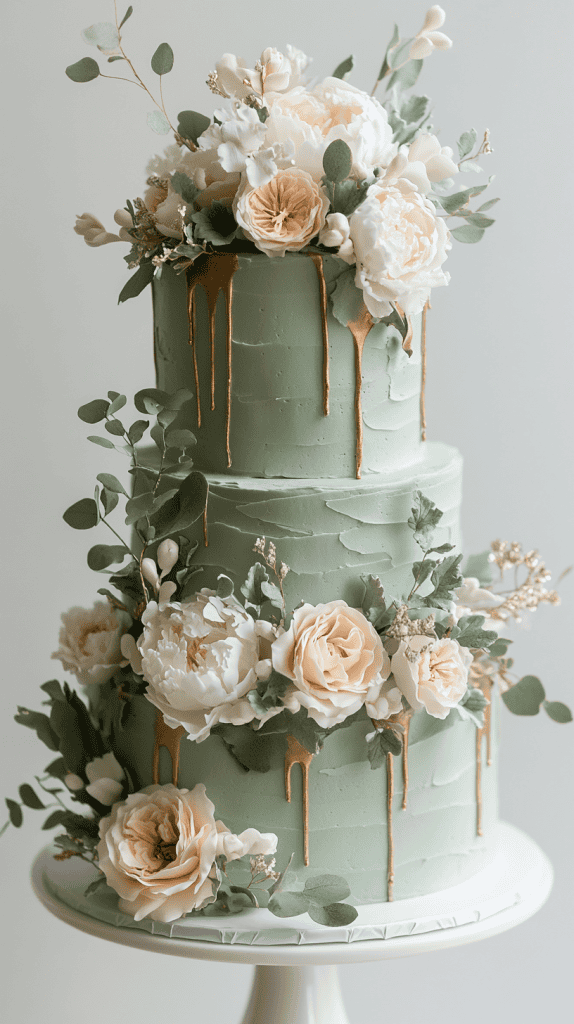
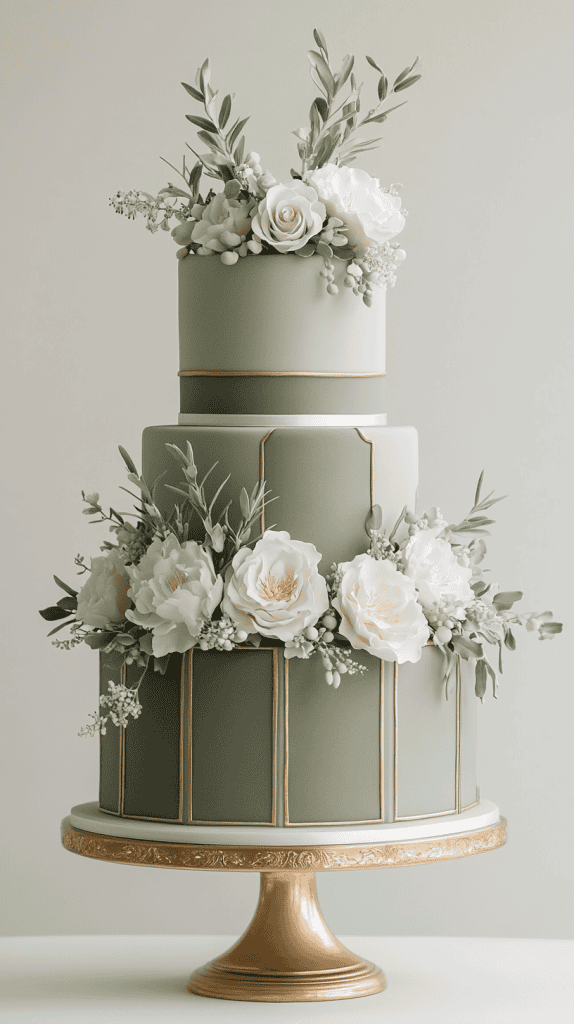
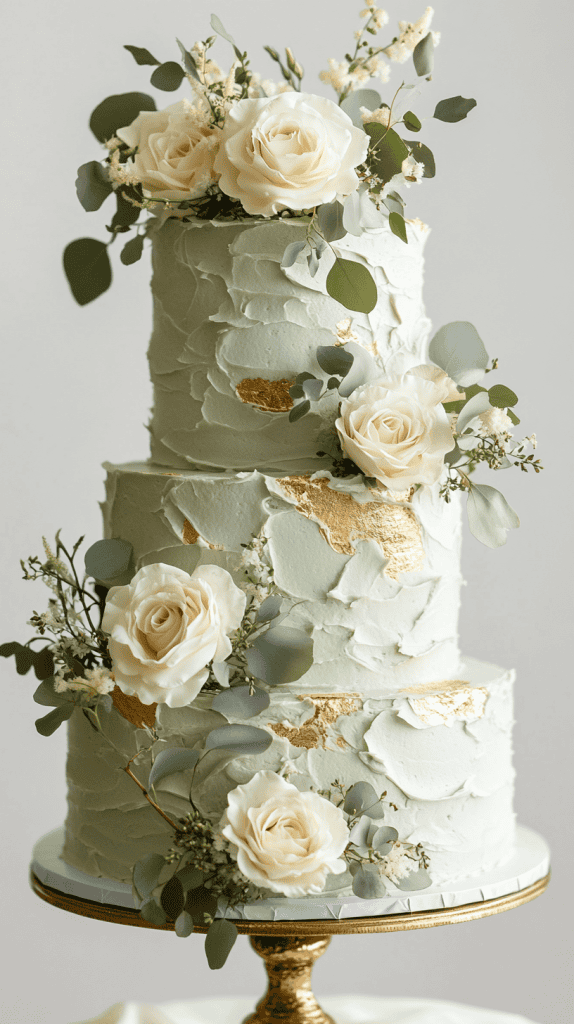
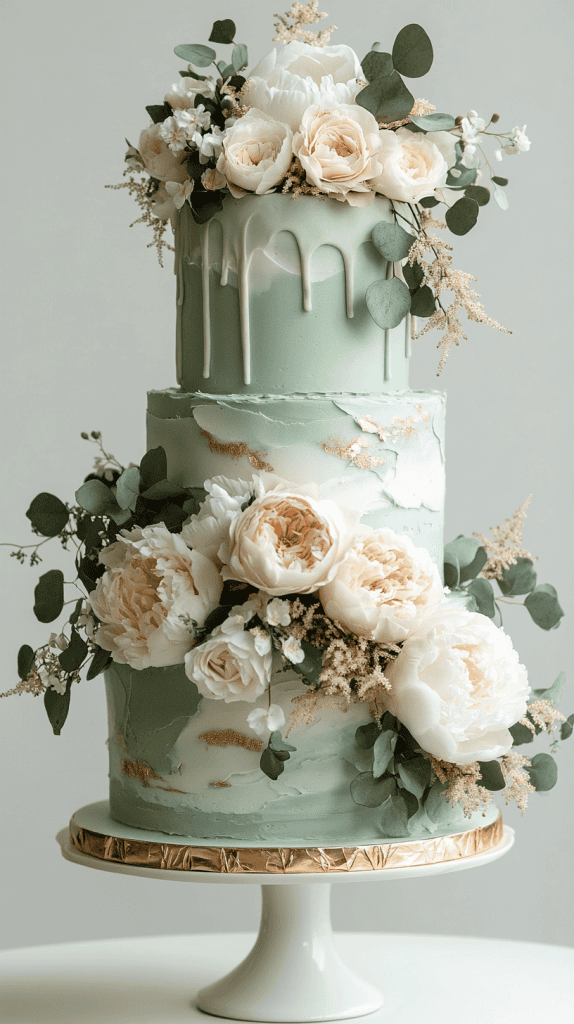
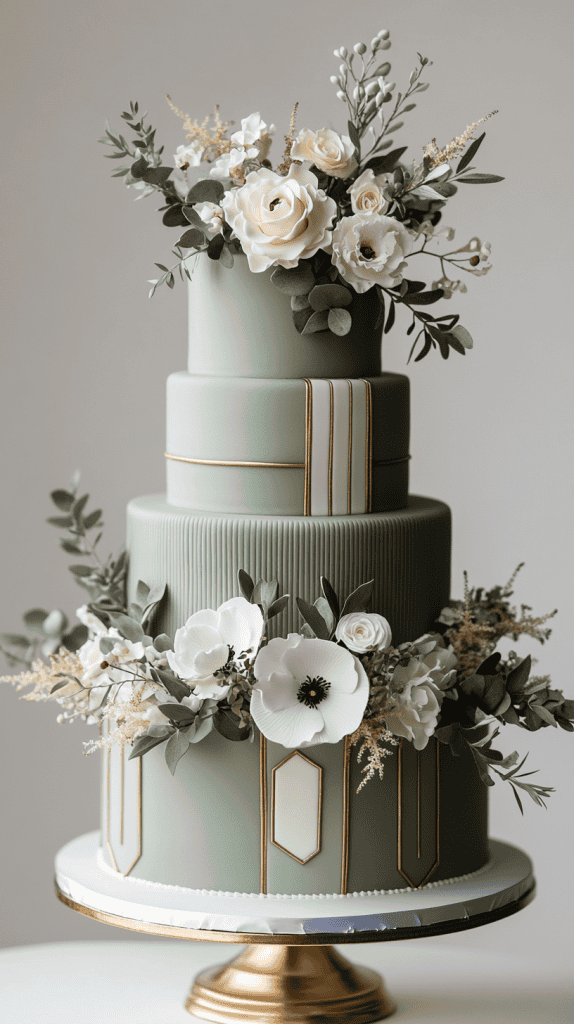
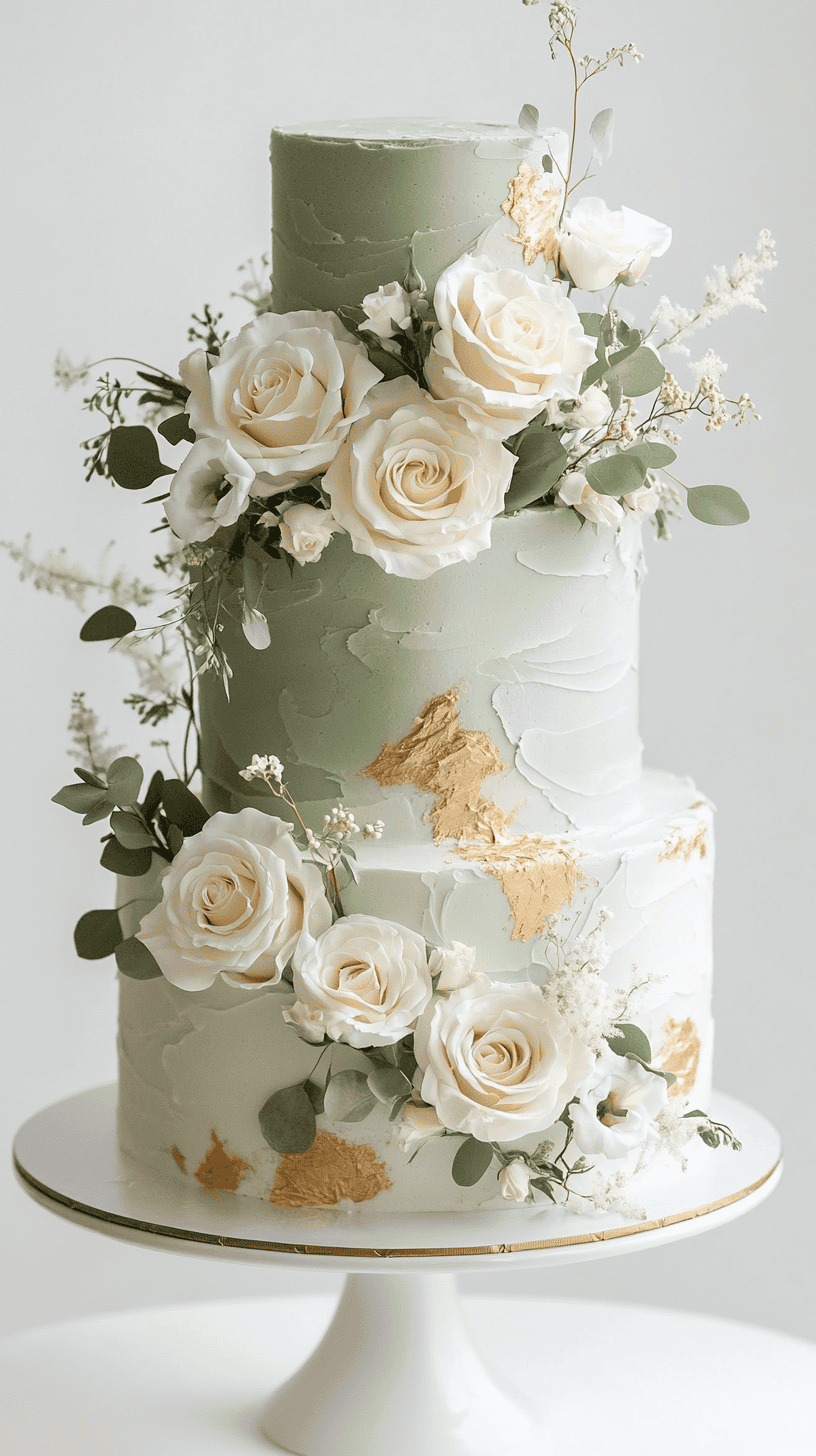
Pair sage green with gold when you want a refined look that still feels natural. The muted green keeps the design grounded, while gold adds structure and light contrast.
You can apply gold in subtle or defined ways. Choose accents that match your venue, tableware, and floral palette.
Popular gold detailing options:
- Edible gold leaf pressed onto buttercream or fondant
- Metallic gold drip over smooth sage frosting
- Hand-painted gold brushstrokes or geometric lines
- Gold foil flakes scattered along tier edges
- Thin gold bands separating tiers
A sage green buttercream cake with a soft gold drip works well for garden ceremonies. It keeps the texture organic while adding a clean metallic finish.
For a more formal design, cover the tiers in smooth sage fondant and apply structured gold shapes. Hexagons, thin stripes, or framed panels create a modern look without overpowering the color.
You can also combine gold with fresh florals. White peonies, blush roses, or eucalyptus soften metallic elements and connect the cake to your outdoor setting.
| Design Style | Best For | Finish Type |
|---|---|---|
| Gold drip on sage buttercream | Romantic garden weddings | Semi-smooth, textured |
| Gold leaf accents | Classic outdoor ceremonies | Soft, organic |
| Geometric gold detailing | Modern garden venues | Smooth fondant |
Keep the gold restrained. Let sage green remain the dominant color so the metallic details enhance the design rather than compete with it.
5. Two-Toned Sage and Cream Ombré Designs
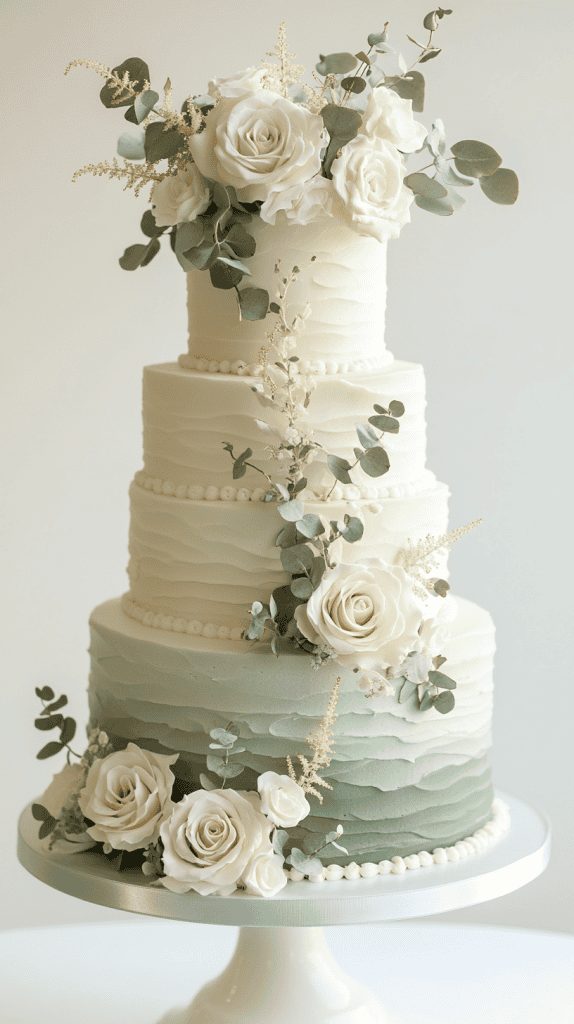
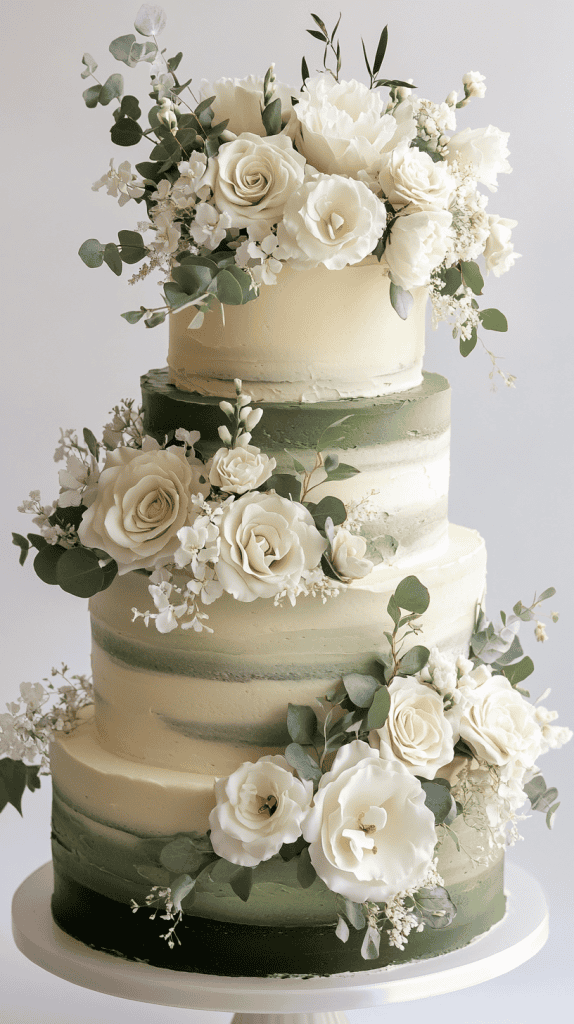
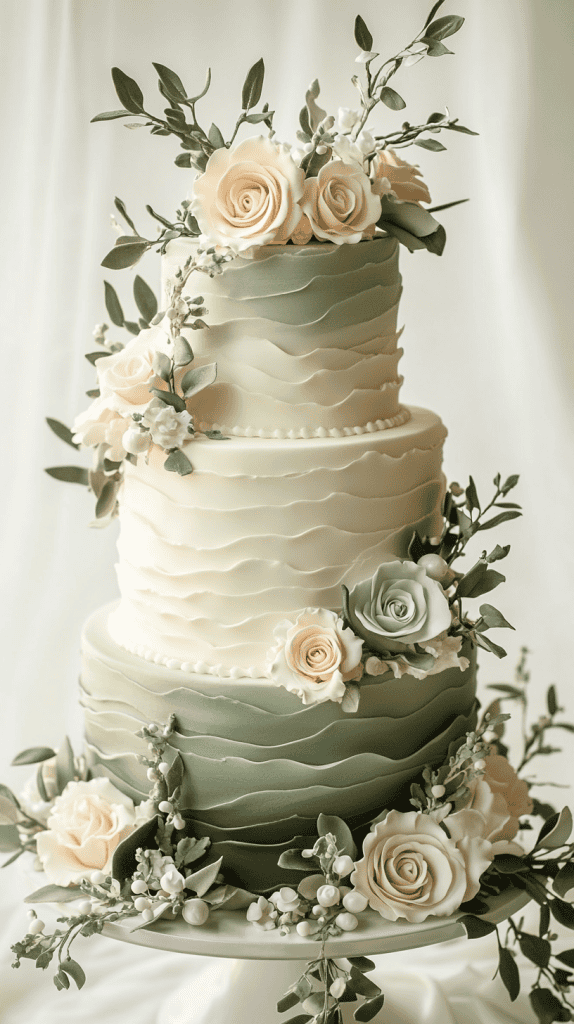
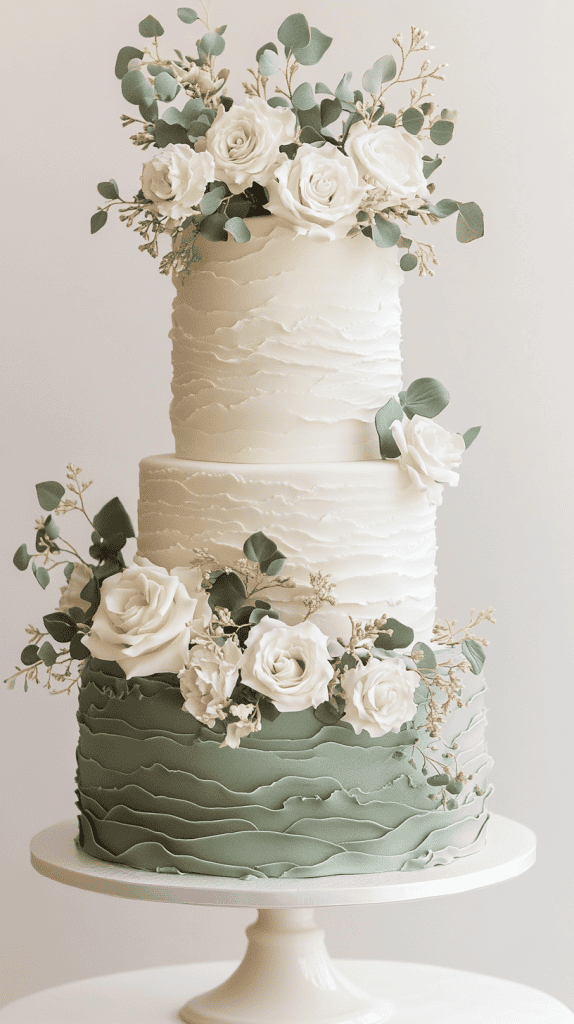
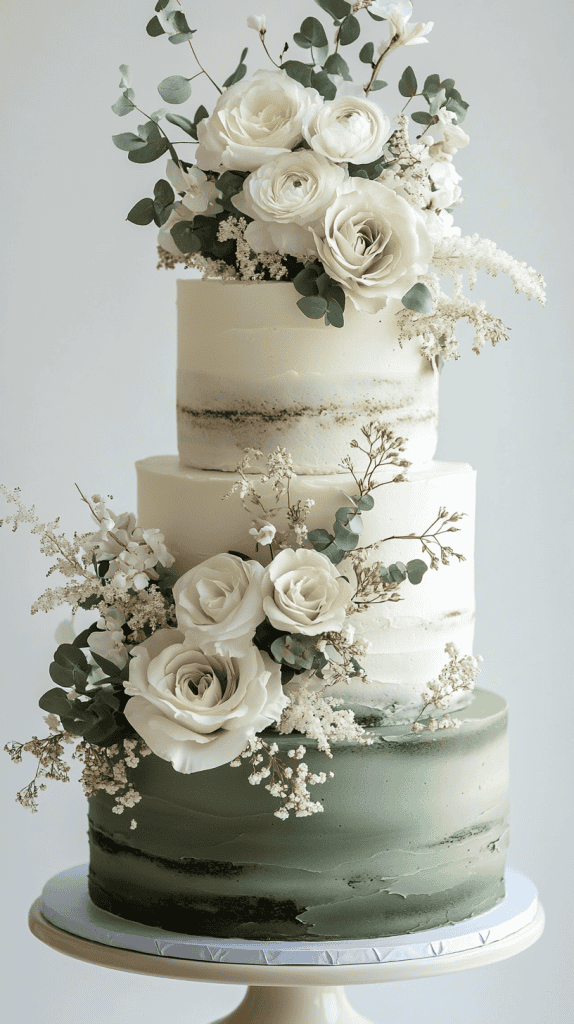
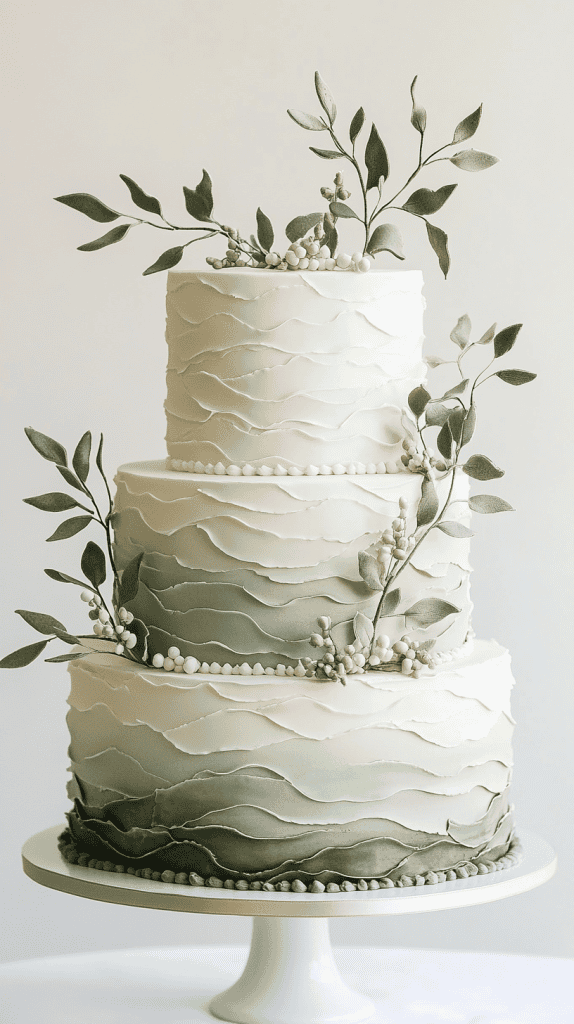
Two-toned sage and cream ombré cakes create a soft gradient that suits an outdoor garden ceremony. You blend earthy green with warm cream for a look that feels natural and structured.
You can fade from deep sage at the base to pale mint or cream at the top tier. This gradual shift adds depth without heavy decoration. It works especially well with smooth buttercream or fondant finishes.
Consider these popular variations:
- Vertical ombré tiers that transition shade by shade from bottom to top
- Horizontal blends where sage melts into cream around each tier
- Semi-naked ombré with subtle green-tinted frosting between exposed layers
- Sage-to-cream designs finished with delicate piping or thin textured ridges
Pair the gradient with restrained details. Fresh white roses, eucalyptus sprigs, or olive branches highlight the green tones without interrupting the fade.
For a polished look, add minimal accents such as fine gold leaf or thin sugar pearls. Keep embellishments light so the color transition remains the focal point.
You can also coordinate flavors with the palette. Pistachio, vanilla bean, lemon, or Earl Grey pair naturally with sage hues and complement a spring or summer garden setting.
This style suits both small single-tier cakes and tall, stacked designs. Adjust the intensity of the green to match your florals, table linens, and ceremony backdrop.
6. Sage Green with Pressed Flowers and Wildflower Details
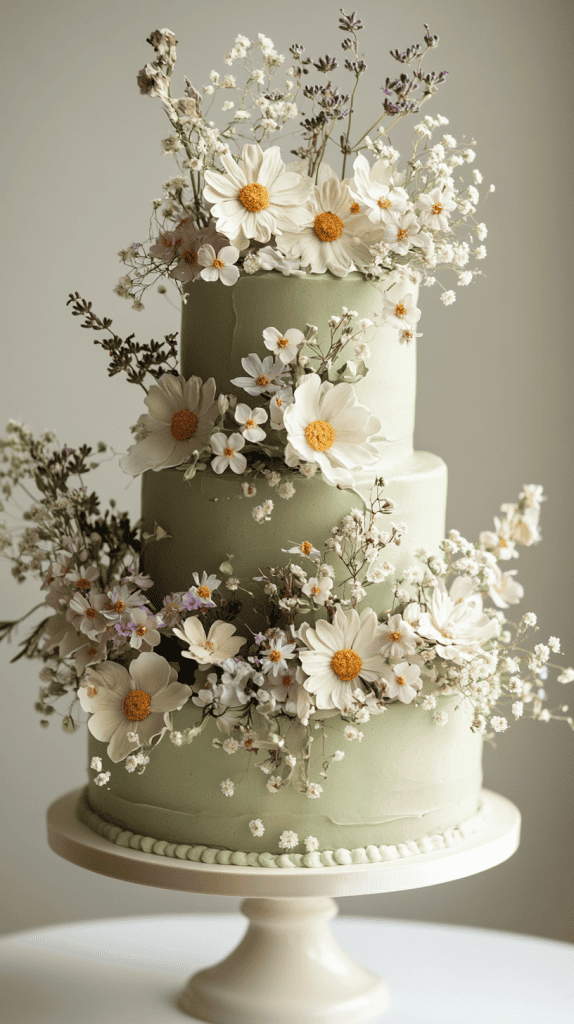
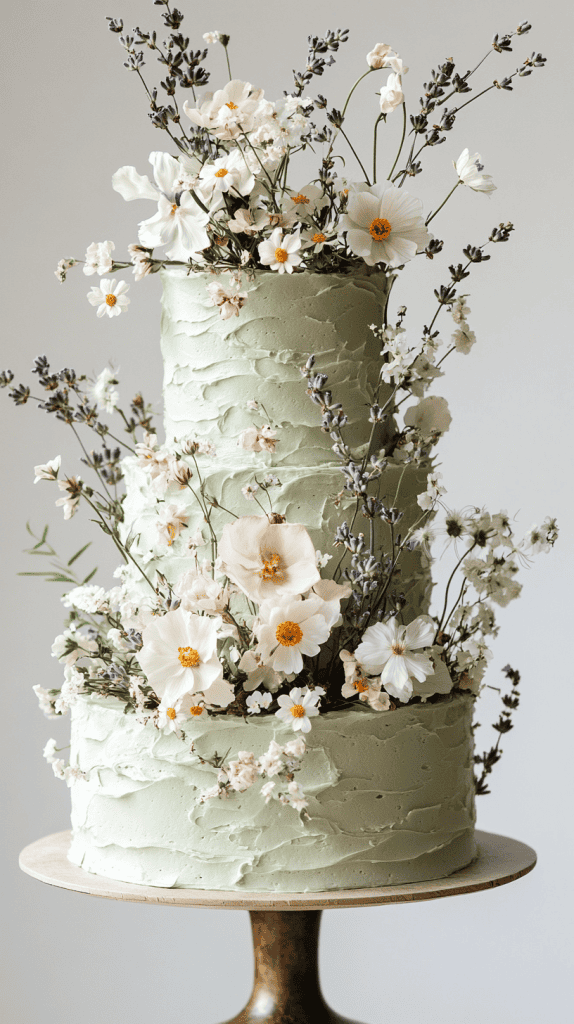
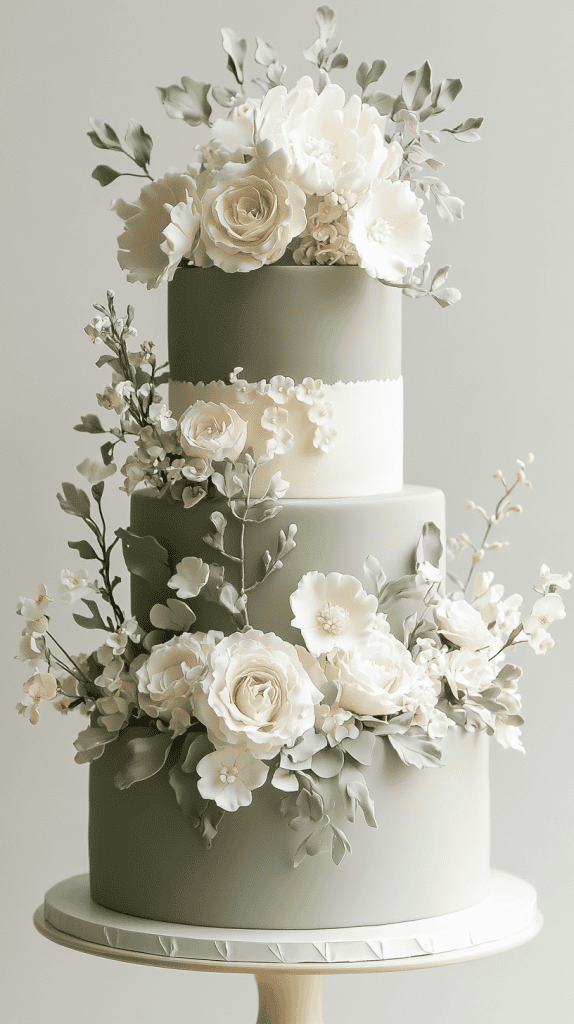
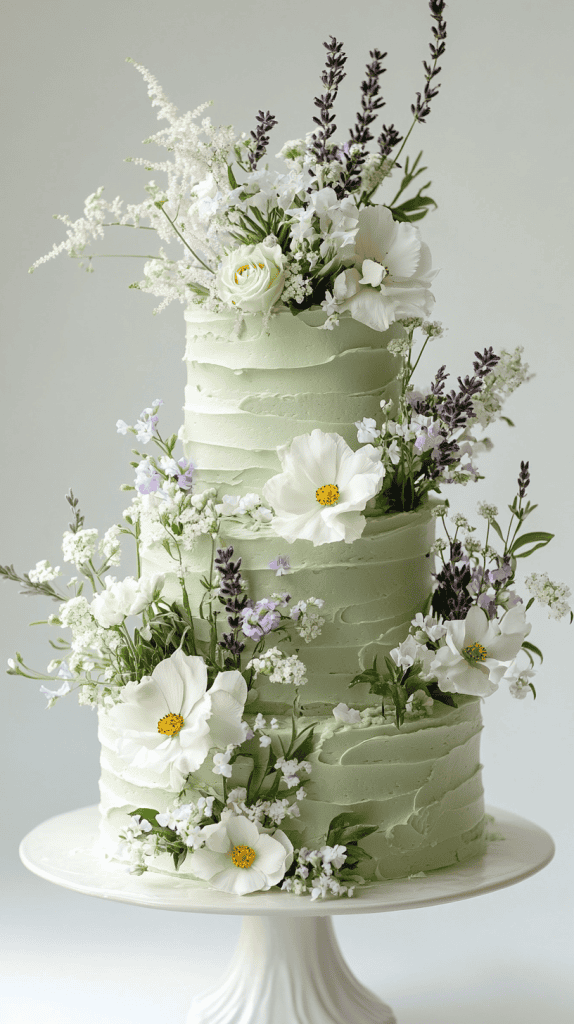
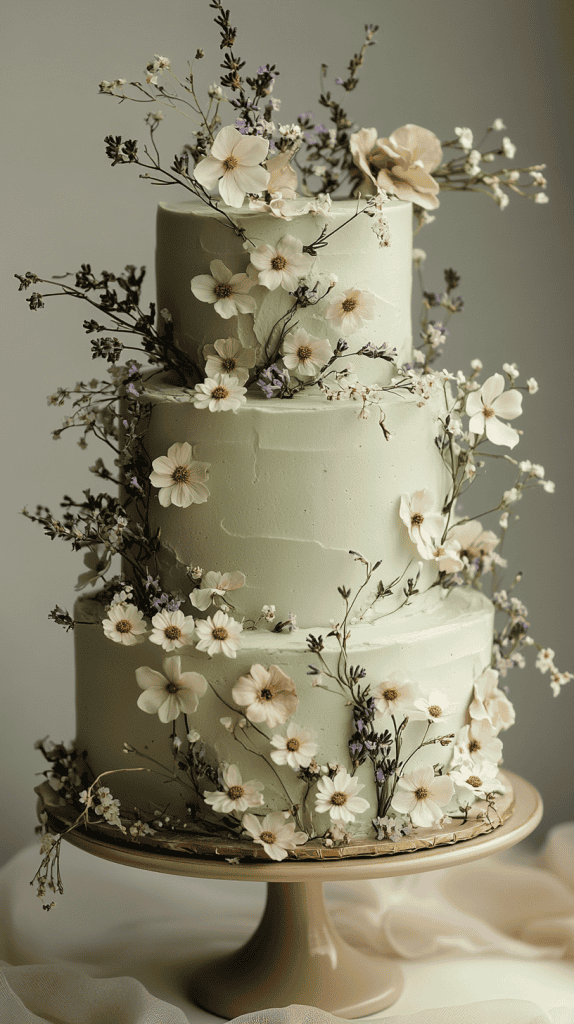
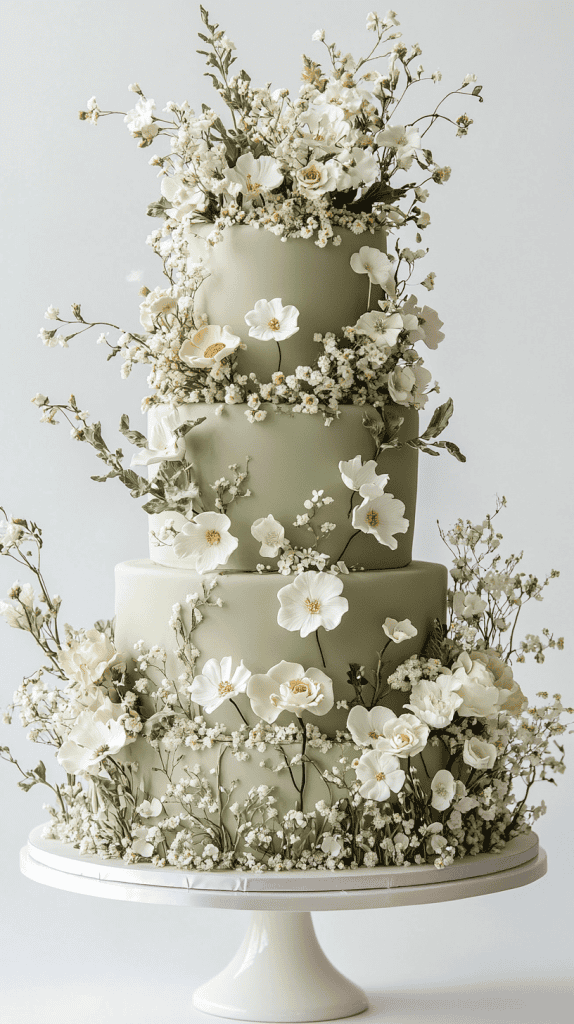
Choose a sage green base when you want your cake to reflect the natural setting of a garden ceremony. This muted tone supports delicate floral details without competing with them.
Pressed flowers create a flat, botanical finish that feels organic and refined. You can arrange edible blooms in scattered clusters or in a structured pattern around each tier. Keep spacing intentional so the design looks curated rather than crowded.
Wildflower details add softness and movement. Consider small daisies, buttercups, or lavender-toned accents to introduce subtle color contrast against the sage background.
Design elements to consider:
- Thin layers of sage buttercream with visible texture
- Smooth fondant tiers with pressed edible petals
- Semi-naked finishes paired with fresh wildflower sprigs
- White or ivory blooms to keep the palette balanced
You can also vary placement by tier for visual interest. For example:
| Tier | Floral Style | Effect |
|---|---|---|
| Top | Minimal pressed petals | Clean focal point |
| Middle | Scattered wildflowers | Soft, natural look |
| Bottom | Fuller floral band | Grounded, garden-inspired base |
Match your cake flowers to your bouquet or ceremony arch to create cohesion. When you coordinate colors and bloom types, your dessert table feels intentional and aligned with the rest of your décor.